Variable-gauge technology weighed for Rail Baltica
19.05.2026
Variable-gauge technology is being examined by Lithuania’s Ministry of Transport and Communications and LTG Group. The review concerns possible future connections to the Rail Baltica standard-gauge network. This is reported by the railway transport news portal Railway Supply.
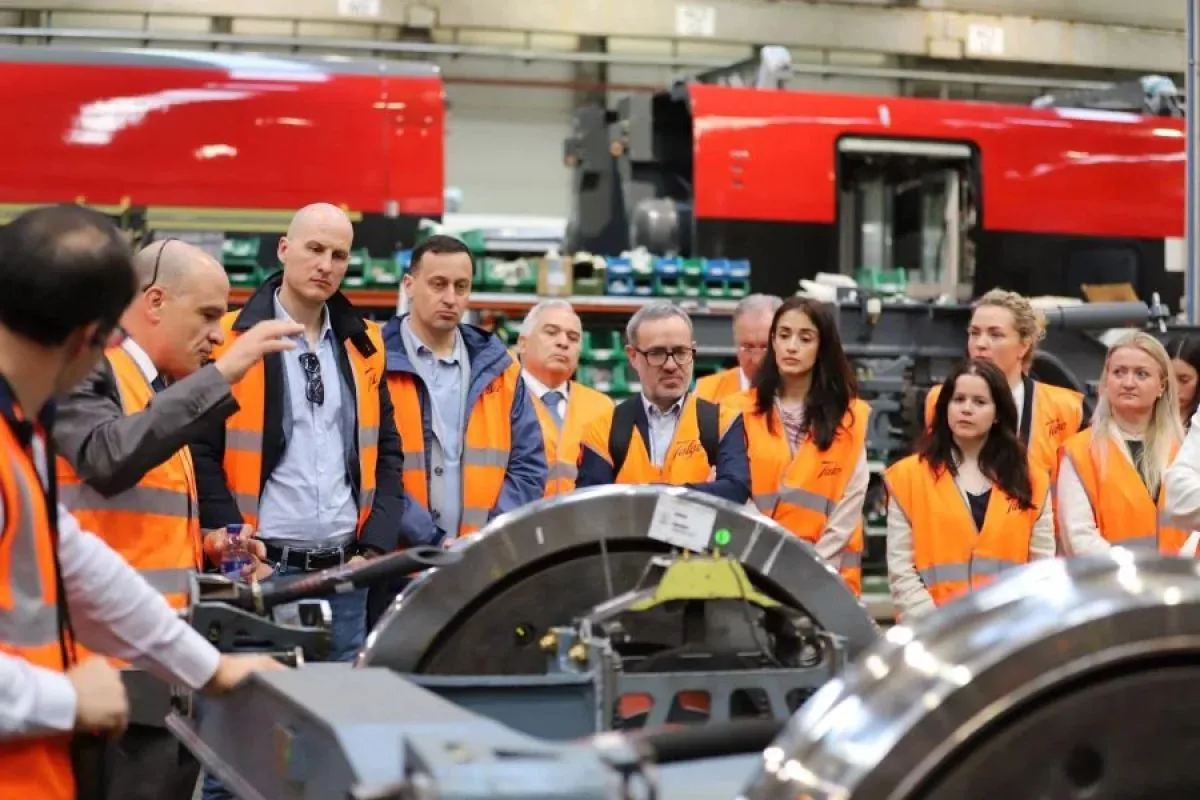
The topic was discussed during a May meeting in Madrid with Adif, Spain’s infrastructure manager, and Talgo, the Spanish rolling stock manufacturer.
Rail Baltica connection options under review
During the visit, the Lithuanian representatives studied Spain’s approach to operating two gauges within one national rail system. The Spanish dual-gauge model combines Iberian-gauge infrastructure of 1,668 mm with European standard-gauge lines of 1,435 mm. It also supports interoperability between conventional routes and high-speed corridors.
Also, variable-gauge systems allow trains to move between these networks. Passengers do not need to change trains.
The gauge change takes place at dedicated facilities. The wheelset locking mechanism is released first. The wheels then shift to the required gauge. The mechanism locks again after that. The operation takes several minutes. It is completed without the train stopping.
Spain developed this system while expanding its standard-gauge high-speed railway. That expansion ran alongside the existing Iberian-gauge network. According to the Lithuanian side, gauge-changing equipment can later be dismantled and relocated. This can happen once new standard-gauge sections are completed. In addition, this would allow the network to be developed in stages. Transitional infrastructure would not have to remain in place permanently.
Spain’s dual-gauge model and Lithuania’s assessment
Spain’s railway network covers almost 16,000 km of Iberian- and standard-gauge routes. Variable-gauge technology is used by about 60% of passenger services. Meanwhile, its high-speed fleet includes around 90 trains capable of gauge-changing operation. There are plans to increase this number to about 120 trains.
Lithuania is evaluating technical solutions that could improve the connection between Vilnius and the future Rail Baltica main line. According to the ministry, no decision has yet been made on specific technologies or suppliers. The available options will be assessed according to cost, interoperability and long-term transport policy goals.
Rail Baltica is planned as an electrified 1,435 mm railway connecting Lithuania, Latvia and Estonia with Central and Western Europe. Separately, the project is moving forward ahead of talks on the EU Multiannual Financial Framework for 2028–2034. During those talks, political and financial support will be sought.
News on railway transport, industry, and railway technologies from Railway Supply that you might have missed: