NHSRCL HSR design consultancy sets corridor framework
03.07.2026
NHSRCL design consultancy work for future high-speed rail schemes is now linked to the Chennai-Bengaluru and Delhi-Varanasi bullet train routes.
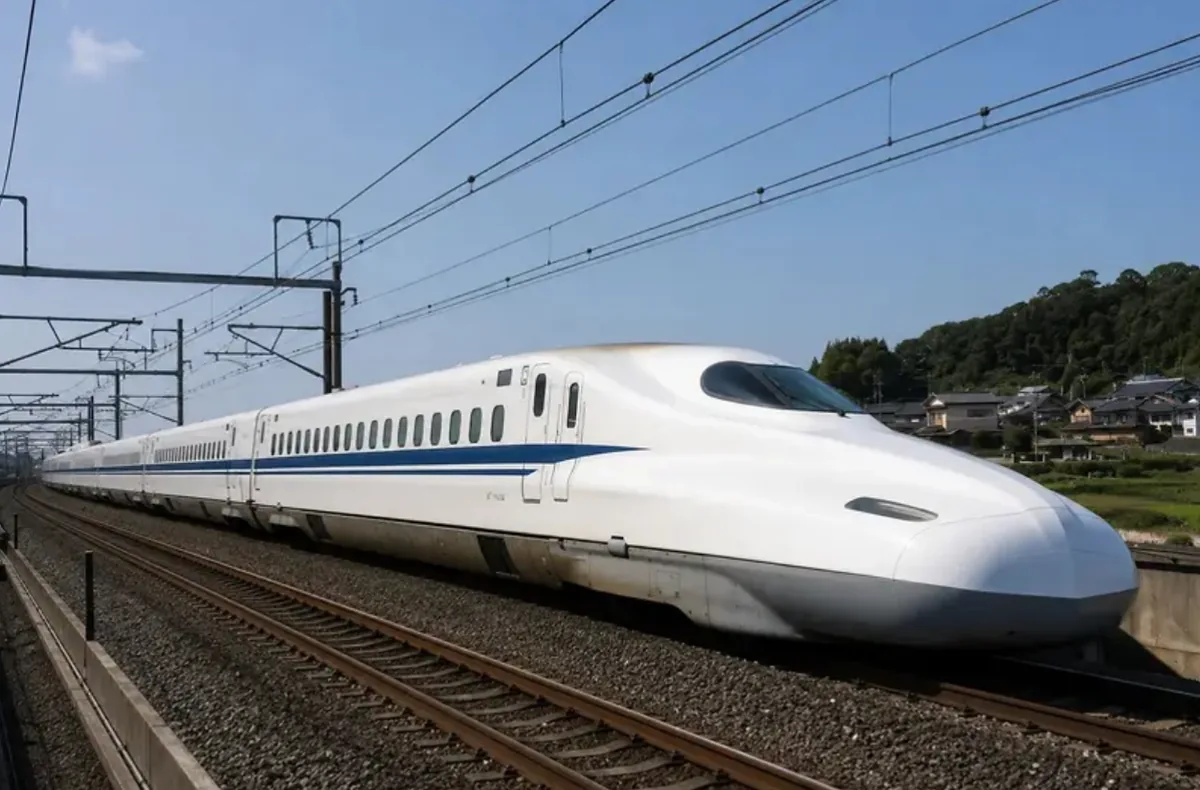
The 508-km Mumbai-Ahmedabad High Speed Rail corridor is expected to open in stages between August 15, 2027, and 2029. With that project approaching phased operation, National High Speed Rail Corporation Ltd is now preparing the engineering base for later corridors.
The latest consultancy tender is intended to appoint a consultant to develop standardised engineering designs for future HSR infrastructure. The immediate package covers the Chennai-Bengaluru HSR corridor and the Delhi-Varanasi HSR corridor, while the broader aim is to create reusable engineering templates instead of designing each new route entirely from the start.
NHSRCL expects this standardisation to shorten design work on future schemes and bring greater consistency to the planned high-speed rail network.
Don’t miss…All 13 Ahmedabad portal beam installations are complete
Chennai-Bengaluru HSR corridor
The Chennai-Bengaluru corridor receives the most detailed treatment in the bid documents, particularly its underground infrastructure in Chennai and Bengaluru.
Three underground stations are proposed on this route: Chennai, Whitefield and Byappanahalli. Chennai and Byappanahalli are planned as terminal stations, each with six lines, two island platforms and two side platforms for train operations. Whitefield is planned with two lines, one island platform and two side platforms, and all trains are expected to stop there.
The consultancy scope also includes three large tunnel sections: a 3.8-km tunnel near the Chennai terminal, a 14.7-km tunnel through the Mogili Ghat section of the Kaundinya Wildlife Sanctuary, and a 15.92-km tunnel on the approach to Bengaluru. Together, the tunnel sections on the corridor amount to about 34.6 km.
Delhi-Varanasi HSR corridor
The Delhi-Varanasi High Speed Rail corridor is also part of the same consultancy package.
For this route, the work includes an underground station at Jewar and a 9-km tunnel. Together with the Chennai-Bengaluru elements, these works form the first set of routes covered by NHSRCL’s current standard design exercise for underground stations and tunnel infrastructure.
The inclusion of both corridors indicates that engineering preparation for these future HSR projects is moving through the design stage.
Standardised engineering designs for future HSR projects
An official familiar with the project said:
“Unlike a conventional design contract for a single railway line, the consultancy is intended to create a standard engineering framework for India’s expanding bullet train network,”
The selected consultant will be responsible for designs covering elevated viaducts, major bridges, underground stations, tunnels, depots, maintenance facilities, earth structures and station architecture.
The assignment also extends to construction methods, technical specifications and design standards that NHSRCL can apply across several high-speed rail corridors.
According to the tender document, the Union Budget 2026-27 announced seven new high-speed rail corridors with a combined length of around 4,000 km. Detailed project reports have been sanctioned for four corridors, while surveys are continuing for the remaining routes.
The consultancy is linked to a wider high-speed rail programme outlined in Union Budget 2026-27. In an official backgrounder, the Press Information Bureau described high-speed rail as a planned part of India’s future passenger rail system and said the seven new corridors announced in the budget span nearly 4,000 km. The same document put expected investment for these corridors at approximately ₹16 lakh crore. This gives the standard design exercise a broader role: the work is not limited to one future line, but is meant to support repeatable engineering solutions for several HSR corridors.
Engineering standards for high-speed rail infrastructure
The consultancy will set engineering standards for future high-speed rail infrastructure. These standards will cover bridge systems, tunnel cross-sections, seismic design, derailment containment systems, noise barriers, drainage, waterproofing, tunnel ventilation and emergency evacuation systems.
The infrastructure is to be developed for trains operating at 320 kmph, with a design speed of 350 kmph. The standards will draw on both international best practices and Indian engineering requirements.
NHSRCL has also recently invited major rolling stock manufacturers to present their ability to design and build 350 kmph high-speed trains for India’s future HSR corridors. These presentations will review their experience in propulsion, TCMS, mechanical systems, quality control, Make in India plans, manpower and compliance with national security norms, with attention to trains adapted to Indian operating conditions.
News on railway transport, industry, and railway technologies from Railway Supply that you might have missed: