Passenger Rail News Weekly Review: August 3–9, 2026
INTERNATIONAL: This concise weekly review presents a selection of passenger rail news published from August 3 to August 9, 2026: fleet investment, infrastructure projects, capacity changes and service disruptions.
Fleet investment and new trains
Trenitalia order supports Paris–London expansion
FS Group’s order for 19 Hitachi high-speed trains forms part of an approximately €2 billion programme covering construction, long-term maintenance and technical support. The expanded fleet will serve Trenitalia France routes including Paris–Lyon, Paris–Milan and Paris–Marseille while supporting the planned Paris–London service for 2029. Infrastructure works and technical authorisations remain necessary before cross-Channel operations can begin.
Portugal expands CP’s new-train programme to 153 units
CP’s renewal programme now covers 153 Alstom Adessia Stream trains: 98 for urban and suburban networks and 55 for regional routes. Each three-car unit is designed for up to 450 passengers; CP puts the combined investment at €1.064 billion, while Alstom states €1.03 billion. First passenger service is planned from 2029, with final delivery brought forward to 2031.
Canada funds a 45-locomotive VIA Rail renewal
Canada will invest CAD 1.95 billion in 45 Stadler hybrid passenger locomotives and a new assembly and maintenance facility in Montréal. CAD 1.6 billion covers the locomotives and CAD 357 million the facility, with up to 36 locomotives to be assembled in Canada. The fleet will replace aging VIA Rail equipment outside the Québec City–Windsor corridor; delivery and facility completion dates were not disclosed.
Victoria doubles X’trapolis 2.0 fleet under order
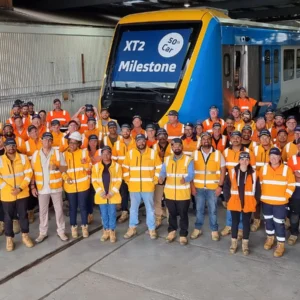
Victoria exercised a €270 million option for 25 additional Alstom X’trapolis 2.0 trains, doubling the programme from 25 to 50 six-car EMUs. The units retain a 60% local-content requirement and can carry 1,225 passengers. The first X’trapolis 2.0 entered service in May 2026, while the wider A$1.5 billion programme also includes upgrades to the Craigieburn maintenance facility.
Ukrzaliznytsia contracts 92 domestic passenger cars
Ukrzaliznytsia ordered 92 passenger railcars from Kriukiv Carriage Works for delivery in 2027–2028. The contract comprises 83 compartment cars and nine barrier-free cars, with unit prices of UAH 68 million and UAH 72 million respectively, financed from the state budget. The order expands a state-backed programme under which 358 new passenger cars are contracted and 187 already operate in commercial service.
Infrastructure and capacity changes
FrontRunner 2X moves into federal engineering
Utah’s FrontRunner 2X has entered the Federal Transit Administration’s Engineering phase, advancing 11 double-track segments, one realignment and 10 new trainsets. The 82-mile, 16-station corridor could receive an anticipated $1.28 billion Capital Investment Grants commitment after financial, technical and legal requirements are completed and subject to annual appropriations. The final train design remains undecided.
BART restores selected 10-car peak services
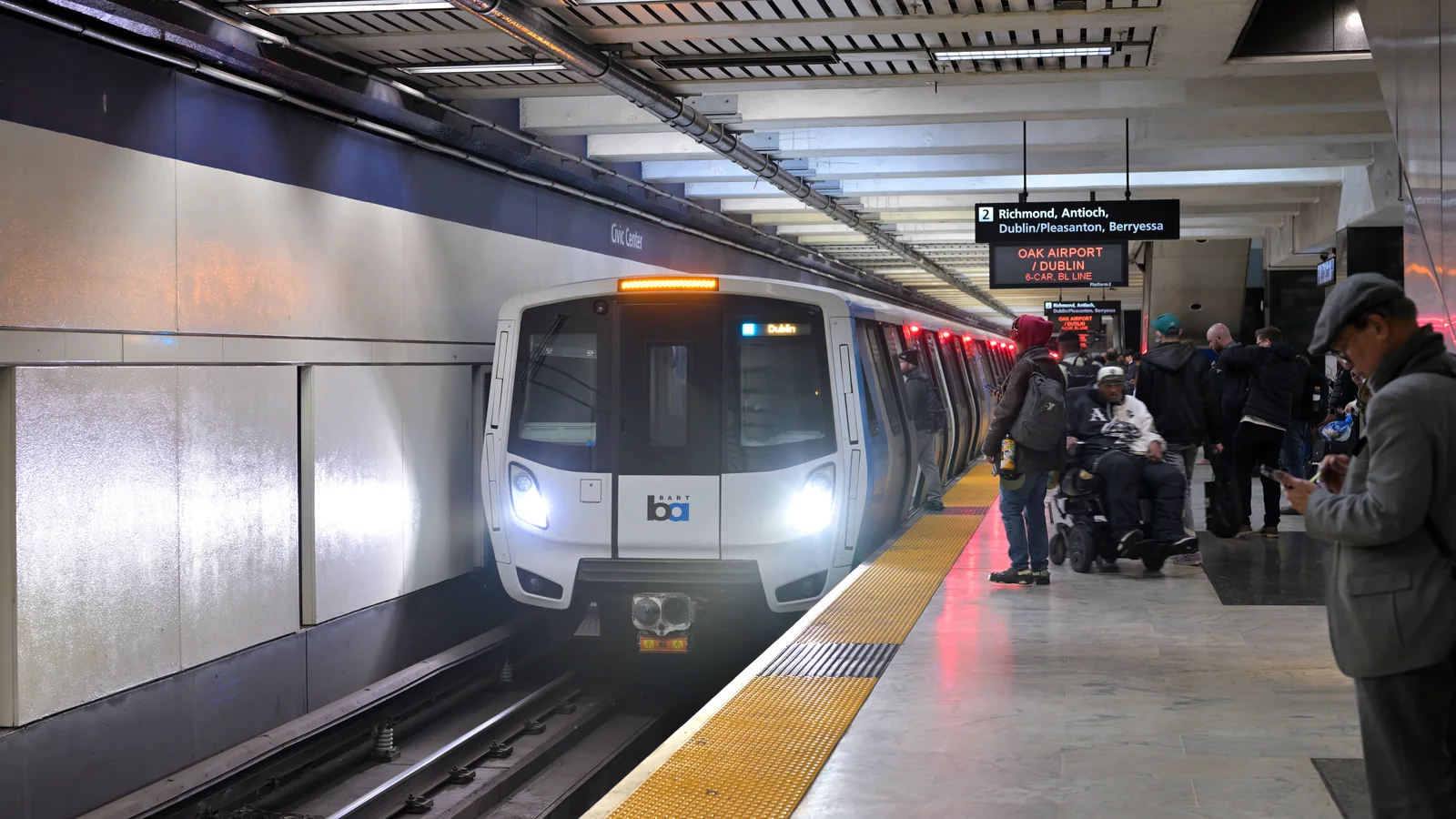
BART has restored 10-car peak trains to selected Red and Yellow Line services after years of shorter formations. The Red Line now uses 10-car trains in peak periods, while 14 of the busiest Yellow Line peak trains have grown from nine to 10 cars; the changes carry into the August 10 schedule. June ridership was 18.6% higher year on year, but BART has not published a networkwide capacity gain.
Passenger demand and network operations
Etihad Rail passes 70,000 passenger ticket sales
Etihad Rail ticket sales have exceeded 70,000 since the Abu Dhabi–Fujairah passenger service began on June 30, with customers booking an average of 12 days ahead. The 250 km journey takes 1 hour 45 minutes, and the passenger fleet comprises 13 trains with capacity for up to 400 people each. The operator is monitoring booking patterns as the introductory phase continues.
Portland–Seattle disruption has no reopening date
Amtrak’s Portland–Seattle disruption remained open-ended after fire damage left a warehouse beside Portland Union Station unstable and forced closure of the rail line between Vancouver and Portland. Some Cascades trains were cancelled outright and others replaced by buses, while Portland–Eugene trains continued normally. An August 14 demolition-start deadline is not a reopening date, and officials had not announced when rail traffic could resume.
Brenner corridor returns to regular operations
Regular passenger and freight trains returned between Innsbruck and Brenner after ÖBB completed scheduled maintenance on the Alpine corridor. Work included frost-damage repairs in the Mühltaltunnel and track maintenance between Patsch and Brenner; around 50 buses had covered regional and long-distance links during the closure. The August 2 reopening restored the normal timetable and ended the temporary operating restriction.
News on railway transport, industry, and railway technologies from Railway Supply that you might have missed: