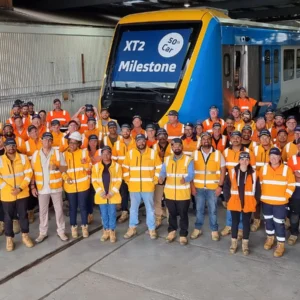
Alstom brings AI research to plant that will build VIA Rail carbodies
Alstom’s AI research program with three Quebec universities will test manufacturing tools at its La Pocatière plant, which on 3 September was assigned carbody work for VIA Rail’s 313-car order.
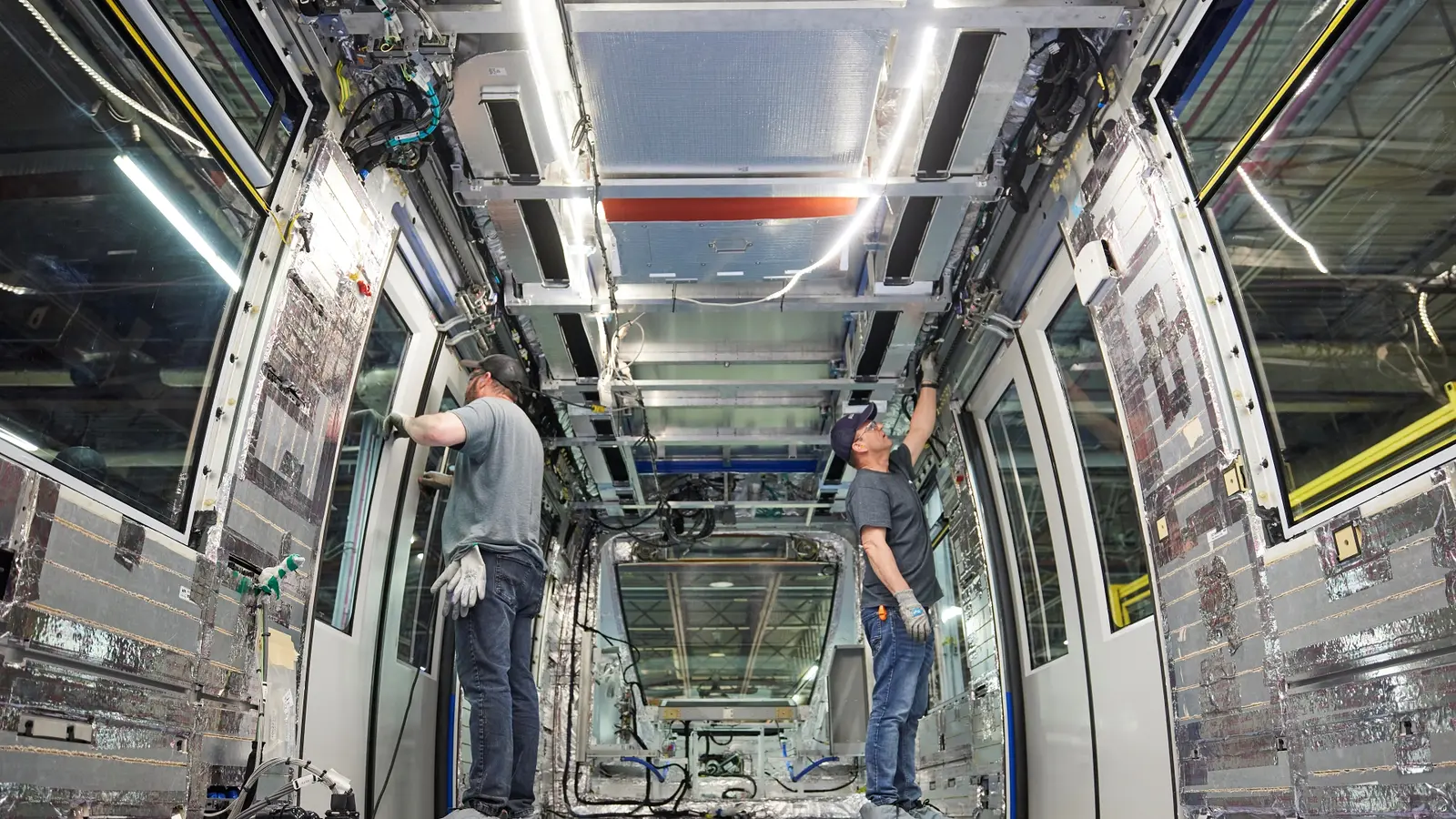
Alstom announced the partnership on 17 September 2026 with Université Laval, through its Lab-Usine, Université du Québec à Montréal (UQAM) and École de technologie supérieure (ÉTS). The work covers rail design as well as manufacturing in Canada. Professor Michael Morin of Lab-Usine leads it as principal investigator. All three universities belong to the SDG Innovation Network and will also receive funding from the Natural Sciences and Engineering Research Council of Canada (NSERC) and the research organization MITACS. The announcement does not give the budget, the amounts of public support or how long the program will run.
Welding, robotics and railcar-body design
Productivity is the stated focus. The teams will look at how welding procedures are set, how augmented reality can guide welders and assemblers on the shop floor, how work is scheduled across robotic welding cells, and how artificial intelligence can be applied when railcar bodies are designed. Alstom says the aim is to make better use of the data its factory already produces, give specialist teams practical support and build tools that work on a real production line.
Each university brings its own lab: Lab-Usine at Laval, the Internet of Things Laboratory at UQAM and the Advanced Manufacturing Process Optimization Laboratory at ÉTS. The program will train 11 highly qualified personnel, a group that mixes graduate and postdoctoral researchers with undergraduate interns, in applied research tied to industrial operations.
La Pocatière’s role in Alstom’s Canadian orders
Technologies from the program will be trialled at La Pocatière, and Alstom says they could support delivery of its Canadian orders from VIA Rail, the Toronto Transit Commission (TTC) and the Quebec City tramway project. The company does not say which order would use them first.
The VIA Rail order is the most recent of the three. Under the C$4.7 billion agreement signed on 3 September 2026, Alstom will build 313 Adessia cars to replace VIA Rail’s long-distance fleet. Design is based at Saint-Bruno-de-Montarville, carbodies will be made at La Pocatière and final assembly will take place in Thunder Bay, Ontario. The Quebec City contract, awarded in April 2023, covers 34 Citadis trams that Alstom said would be assembled at La Pocatière. For the TTC’s 70 new subway trains, Alstom named Thunder Bay for final assembly and Kingston for testing; its January announcement did not assign a role to La Pocatière.
How the three orders compare
| Order | Alstom announcement | Scope | Stated value | Role of La Pocatière |
|---|---|---|---|---|
| VIA Rail long-distance fleet | 3 September 2026 | 313 Adessia cars plus 15 years of technical support and spare parts supply | C$4.7 billion in total, of which about C$4 billion for the cars | Carbody manufacturing |
| Quebec City tramway | 25 April 2023 | 34 Citadis trams with 30 years of maintenance; option for up to five more | About C$1.34 billion (around €900 million) | Assembly |
| TTC new subway trains | 15 January 2026 | 70 six-car Metropolis trains; options for up to 150 more | C$2.3 billion | Not specified; final assembly in Thunder Bay, testing in Kingston |
Two of the three orders place work at La Pocatière: carbodies for VIA Rail and assembly of the Quebec City trams. The VIA Rail agreement has the highest stated value, but the totals cover different services, so they are not comparable per vehicle.
Sources: Alstom announcements on the VIA Rail agreement, the Quebec City tramway and the TTC subway trains.
Earlier welding research at La Pocatière
The ties between the plant and Université Laval are not new. Jonathan Gaudreault, who directs Lab-Usine, said the collaboration with Alstom and the La Pocatière facility began in 2019.
In November 2022, Alstom launched a five-year welding research program with ÉTS and Université Laval, led by Gaudreault and Morin together with two ÉTS professors. It set out to measure how aspects of the laser welding process affect the mechanical properties of welded parts and to apply machine learning to welding work, bringing about ten student researchers together with Alstom engineers at La Pocatière. Alstom described the plant at the time as its welding center of excellence for North America. The 2026 partnership adds UQAM and lists augmented reality, robotic cell scheduling and carbody design among its topics; the announcement does not say whether the 2022 program continues alongside it.
The 2022 and 2026 programs side by side
| Feature | 2022 program | 2026 partnership |
|---|---|---|
| Announced | 9 November 2022 | 17 September 2026 |
| University partners | ÉTS and Université Laval | Université Laval (Lab-Usine), UQAM and ÉTS |
| Research topics | Effect of laser welding on the strength of welded parts; machine learning for spotting defects and refining welding procedures | Welding procedures, augmented reality for welders and assemblers, scheduling of robotic welding cells, AI in railcar-body design |
| Participants | About ten student researchers with Alstom engineers | 11 highly qualified personnel |
| Duration | Five years | Not disclosed |
| Public funding named | Not stated | NSERC and MITACS |
Both programs use La Pocatière as the test site. The 2026 partnership adds UQAM and new topics such as augmented reality and robotic cell scheduling, while its duration has not been published.
Sources: Alstom announcements of the 2022 welding program (in French) and the 2026 partnership.
Expected results beyond one plant
Alstom expects the program to improve its production processes and strengthen its manufacturing base in Canada, and says the knowledge could also help other Canadian industries that build complex metal structures. Éric Rondeau, Innovation Director for Alstom Canada, said the results need not stay at one site:
“These methods and solutions can also be adapted and deployed across other Alstom sites worldwide.”
Alstom reports more than 5,200 employees in Canada and describes itself as the country’s only rolling stock manufacturer.