Alstom planner keeps parts flowing to Ballarat-built X’Trapolis 2.0 trains
Alstom has profiled Irtiza Amjad, a material planner at Ballarat and Newport keeping the X’Trapolis 2.0 supply chain moving for trains built with at least 60 per cent local content.
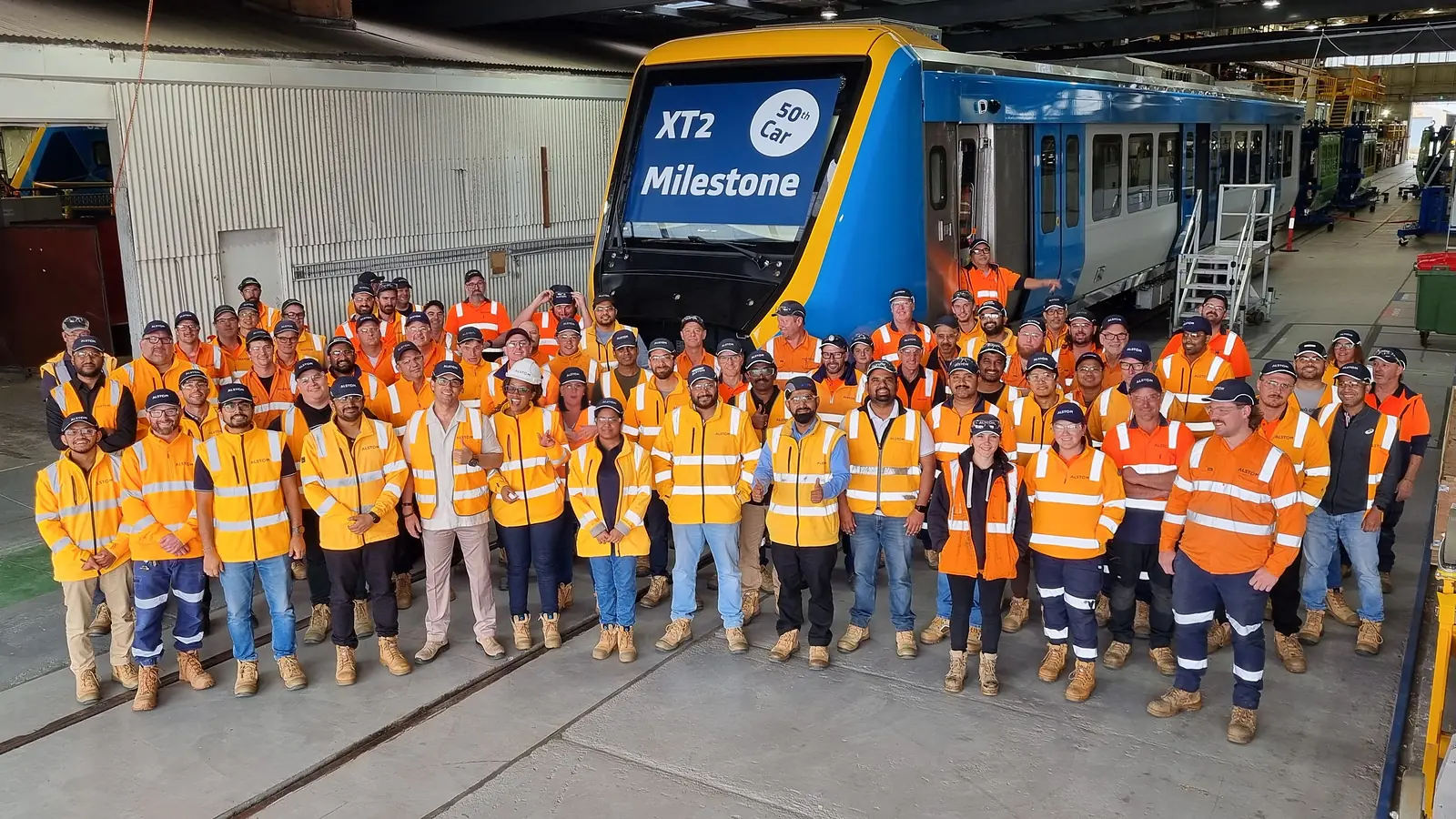
Amjad, a Supply Chain Graduate and Material Planner known to colleagues as Izzy, sits between suppliers, warehouses and production teams on the X’Trapolis 2.0 (XT2) project, making sure the materials needed to deliver trains arrive where and when the work requires them.
Local content and suppliers behind XT2
According to the Victorian Government, XT2 trains are built in Ballarat with at least 60 per cent local content, above the state’s minimum requirement of 50 per cent. Local suppliers provide components such as accessibility ramps, passenger windows, heating and ventilation systems, and the couplers that join the carriages. The government says the project supports up to 750 manufacturing and supply chain jobs, including up to 150 in the Ballarat area.
From the Ballarat production line to network testing
Production of the 25 trains began in Ballarat in March 2024, when the Victorian Government said workers were assembling and fitting them out under an A$986 million investment. The first XT2 rolled off the production line in November 2024 and then moved to testing on the network. The trains carry around 1,225 people, the government said at the time, nearly 10 per cent more than the Comeng fleet they are replacing.
First trains in service and the second batch
Alstom announced on 4 May 2026 that the first XT2 had entered passenger service in Melbourne. It is the first train from an initial €300 million order for 25 trains placed by the Victorian Government. The government has also allocated budget funding for a further 25 trains, which would bring the fleet to 50. Alstom said in May that it had not yet received that second order. The new trains are rolling out on the Upfield, Craigieburn and Frankston lines and will allow the gradual retirement of the Comeng fleet.
Alstom says further XT2 trains will enter passenger service progressively as the rollout continues. Metro Trains Melbourne operates the fleet and maintains it at the Craigieburn Train Maintenance Facility, which has been upgraded for the six-car trains.
| Item | Figure | What it covers | Source |
|---|---|---|---|
| Initial Alstom order | €300 million | First 25 trains, ordered by the Victorian Government | Alstom, 4 May 2026 |
| State investment in the first batch | A$986 million | The same 25 trains, built in Ballarat | Victorian Government, 12 March 2024; 19 November 2024 |
| Second batch | Budget funding allocated | A further 25 trains; Alstom had not yet received this order as of 4 May 2026 | Alstom, 4 May 2026 |
| Whole programme | A$1.5 billion | 50 trains plus upgrades to the Craigieburn Train Maintenance Facility | Victorian Government, page updated 29 May 2026 |
The €300 million figure is the value of Alstom’s order, while the A$986 million and A$1.5 billion figures are state investment totals in Australian dollars with their own scope, so the three should not be compared directly.
A planner working across two sites
Amjad joined Alstom in September 2024. Splitting his work between two sites has meant balancing competing priorities, coordinating with stakeholders and helping to resolve supply chain problems that have a direct effect on production. He has followed the programme from the early stages of Trainset 1 through to preparing later trainsets for service.
Describing what the job means to him, Amjad said:
“We’re not just completing day-to-day tasks. We’re helping build Melbourne’s newest train and seeing it enter service is incredibly rewarding.”
Originally from Pakistan, he studied Petroleum Engineering in Malaysia and moved to Melbourne in 2022 to complete an MBA in Supply Chain Management at Deakin University. After joining Alstom, he relocated from Melbourne to Ballarat, a decision he says he never doubted, crediting both his team and the local community for making him welcome.


