US Railway News: FRA Splits $5.3bn Across 23 States
USA: This concise weekly review presents a selection of US railway news published from August 10 to August 16, 2026: federal funding awards, freight regulation and passenger service changes.
Washington sets the week’s agenda
A record grant round reaches 23 states
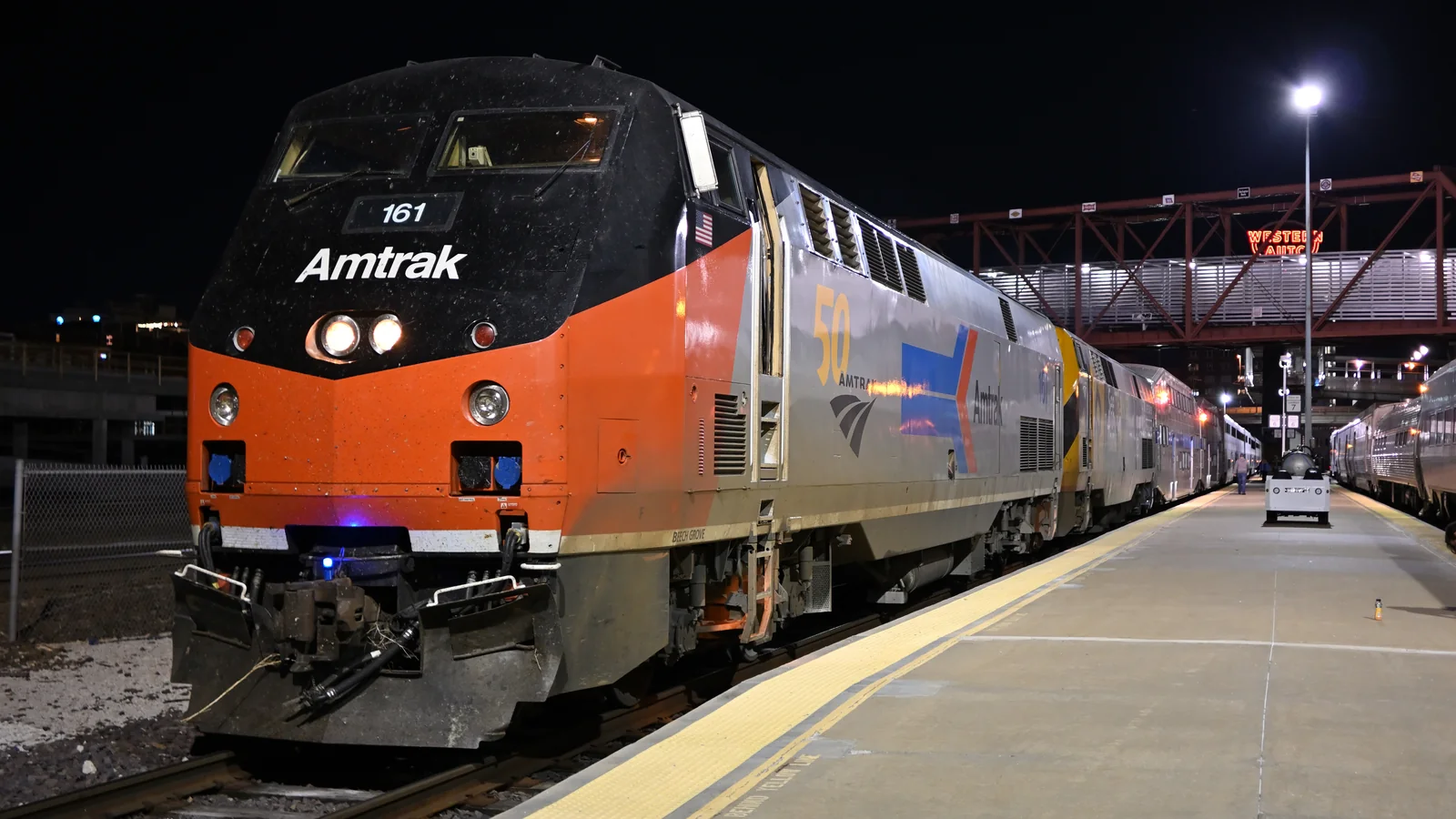
The Federal Railroad Administration is distributing $5.3 billion through the National Railroad Partnership Program across 23 states. Amtrak takes the largest share: $2.05 billion for 43 US-built trainsets destined for routes including the Cascades, Hiawatha and Keystone, $572 million for a new Chicago-area maintenance facility, and $140.6 million to overhaul 41 Siemens Charger locomotives. Most of the remaining 41 projects target grade crossings, which the agency links to more than 2,000 incidents a year. Demand far exceeded supply — 103 eligible applications sought $11.66 billion — and the agency has not said whether a second round will open.
The crew-size rule survives its appeal
Six railroads and two industry bodies asked the 11th Circuit to overturn the rule requiring two crewmembers on most operations, arguing the agency exceeded its authority and ignored compliance costs. The court denied the petitions, with one judge dissenting. Because the petitions were denied rather than the rule vacated, the framework stays in place, including defined exceptions for one-person operations. Rehearing or a certiorari petition remains possible.
Rail customers want the UP–NS deal stopped before it is examined
Six shipper organisations, among them the American Chemistry Council and the National Grain and Feed Association, want the Surface Transportation Board to reject the $85 billion Union Pacific–Norfolk Southern application outright rather than examine it. A group of Republican state attorneys general filed along similar lines, and BNSF argues the proposed competitive commitments neither protect existing shipper options nor create new ones. The board has not ruled, and a full public-interest proceeding remains possible.
What changes for riders
Connecticut loses about 30% of weekend seats
Metro-North, Amtrak and Connecticut DOT have set five reduction weekends between September 12 and November 1 while the 130-year-old WALK Bridge over the Norwalk River is replaced. Seats between Stamford and New Haven drop by about 30%, and on two September weekends crews demolish legacy catenary, forcing diesel operation between Grand Central and New Haven at roughly 90-minute intervals. October timetables are due in late September.
A Chicago station gets its first work since 1962
A $25.6 million rebuild has given the Green Line’s Austin station an elevator, escalator, ADA ramp, extended platform and reconstructed stairs. With it, 110 of the CTA’s 146 rail stations meet ADA standards, lifting system accessibility from 70% to 75%. Federal funds covered $20.3 million of the cost, and 36 stations remain on the remodel list without a stated timeline.
One free pass replaces a $99 single-operator card
About 32,000 San José State students became eligible on August 15 for the Clipper BayPass, which covers 24 Bay Area operators including BART, Caltrain, VTA and AC Transit. It replaces a $99 annual pass valid on Caltrain alone and is funded through a student fee approved in May. The rollout extends a Metropolitan Transportation Commission pilot already running at three other campuses; whether the SJSU version outlives that pilot is not stated.
BART evens out its longest scheduled gaps
The August 10 timetable does not raise frequency; it redistributes it. Richmond-bound Red and Yellow trains move from 5/15-minute spacing to 10/10, and Green and Blue services from 3/17 to 8/12, cutting the longest scheduled wait by five minutes in each case. A new four-minute MacArthur transfer saves 17 minutes, according to BART. Performance data confirming shorter real-world waits had not been published.
Corridors, cargo and one unresolved risk
California high-speed rail now runs on dated deadlines
The programme’s 62nd major structure opened this month, but the harder numbers sit ahead. Track laying on Package 2 is anticipated from November 30, 2026, and revised procurement requires three initial trainsets ready for dynamic testing in the Central Valley no later than February 2030, with 19 further sets as options. No trainset contract has been executed. The inspector general says financing must be secured by December 2027 to hold the Merced–Bakersfield schedule.
An inland Georgia terminal outpaces its own record
The Appalachian Regional Port at Crandall, linked to Savannah by CSX, moved 4,800 containers in July, up 41% year on year — a monthly pace running ahead of the record 49,319 containers it handled across fiscal 2026. Savannah’s Mason Mega Rail Terminal lifted 44,981 containers, 2% more than a year earlier. The Georgia Ports Authority did not explain what is driving the inland terminal’s acceleration.
Portland questions hazmat moves past a collapsing warehouse
The city says 13 cars carrying residual hazardous materials passed the fire-damaged Centennial Mills warehouse, confirmed through the AskRail app, despite Union Pacific’s earlier commitment to restrict such traffic through the collapse zone. The railroad says it has suspended loaded cars carrying toxic inhalation hazards. Demolition began August 14 with light equipment rather than heavy machinery; the building has tested positive for lead and asbestos.


