Portland Presses Union Pacific Over Hazmat Rail Cars
USA: As demolition finally begins on Portland’s fire-damaged Centennial Mills warehouse, a separate dispute has surfaced: the city says Union Pacific ran 13 rail cars carrying residual hazardous materials past the unstable building, despite the railroad’s earlier promise to restrict such traffic through the collapse zone.
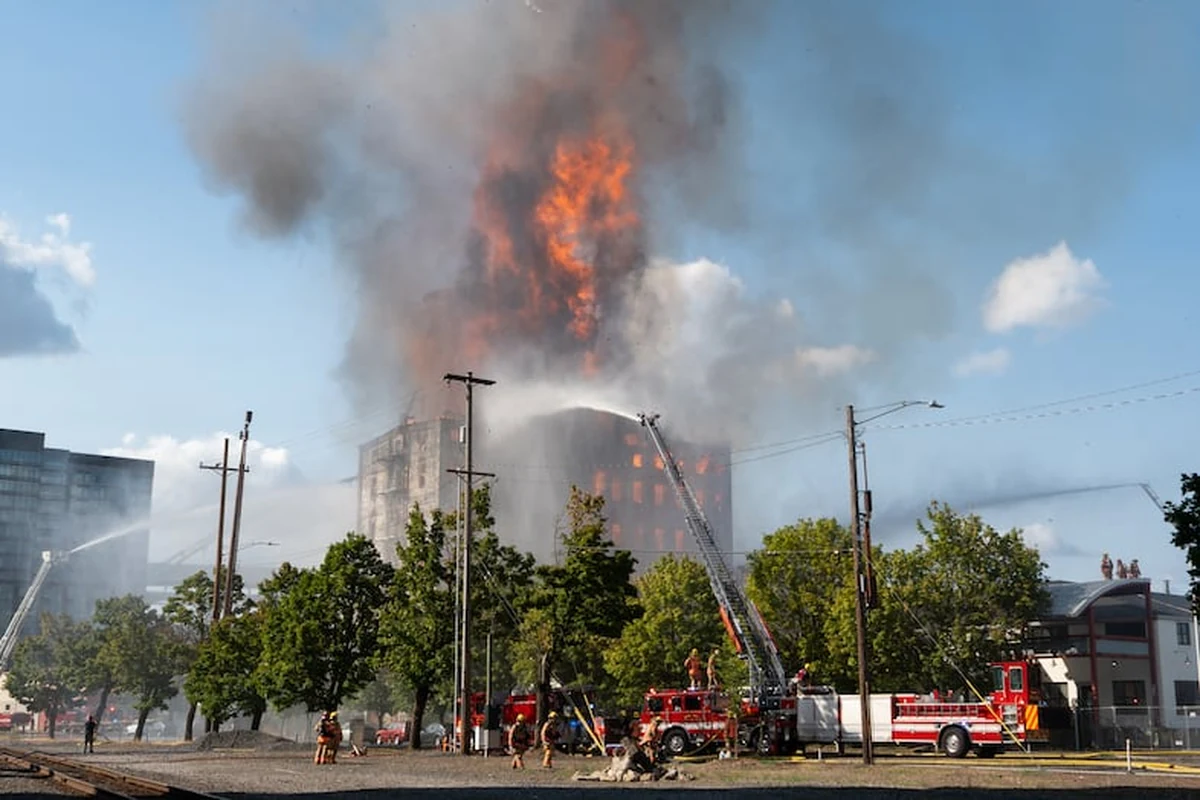
Saj Sundaram / OPB. www.opb.org
Railway Supply has been tracking the resulting Amtrak Cascades disruption since it began, most recently in Seattle–Portland Rail Suspension to Aug. 14. This piece covers a different angle: the freight-safety standoff between the city and Union Pacific, and the demolition’s actual start.
Don’t miss…Union Pacific long rail starts at Pueblo mill
A promise, then 13 cars
Portland City Administrator Raymond C. Lee III sent Union Pacific a letter on Aug. 11 after the city says it used the AskRail app to confirm that 13 rail cars carrying residual hazardous materials had passed the fire-weakened warehouse. City spokesperson Dan Douthit said that “immediately raised serious concerns, particularly given Union Pacific’s previous commitment to restrict moving hazardous materials through the collapse zone,” according to OPB. Even cars empty of their original cargo can retain a small residual volume of hazardous chemicals, the city said, citing Portland Fire & Rescue’s hazmat coordinator — a release from a train damaged by a building collapse could still trigger a hazardous plume requiring emergency response.
Union Pacific told OPB on Friday it “has suspended running ‘loaded rail cars’ transporting toxic and poisonous inhalation hazards,” but the railroad did not answer additional questions about the cars that passed through after the fire.
Demolition starts, slowly
The Aug. 2 fire left the 116-year-old warehouse’s floors collapsed and its structure at risk of further failure. Portland’s Director of Permitting and Development, Eric Kutch, said demolition began Aug. 14 with a cherry picker removing steel plates rather than the heavy machinery some onlookers expected; full-scale work, including a controlled takedown of the building’s rooftop water tower, is set to begin Aug. 17. The city has confirmed the building tested positive for lead and asbestos. Kutch said the structure could be reduced to roughly half its current height within about two weeks, though the announcement does not give a full completion date — or a date for reopening the Seattle–Portland rail corridor.
News on railway transport, industry, and railway technologies from Railway Supply that you might have missed:


