
BART’s New Schedule Cuts Longest Gaps on Two Line Pairs
USA: BART’s August 10 timetable has replaced several uneven train gaps with more balanced spacing and shorter scheduled transfers, including a four-minute MacArthur connection that BART says saves riders 17 minutes.
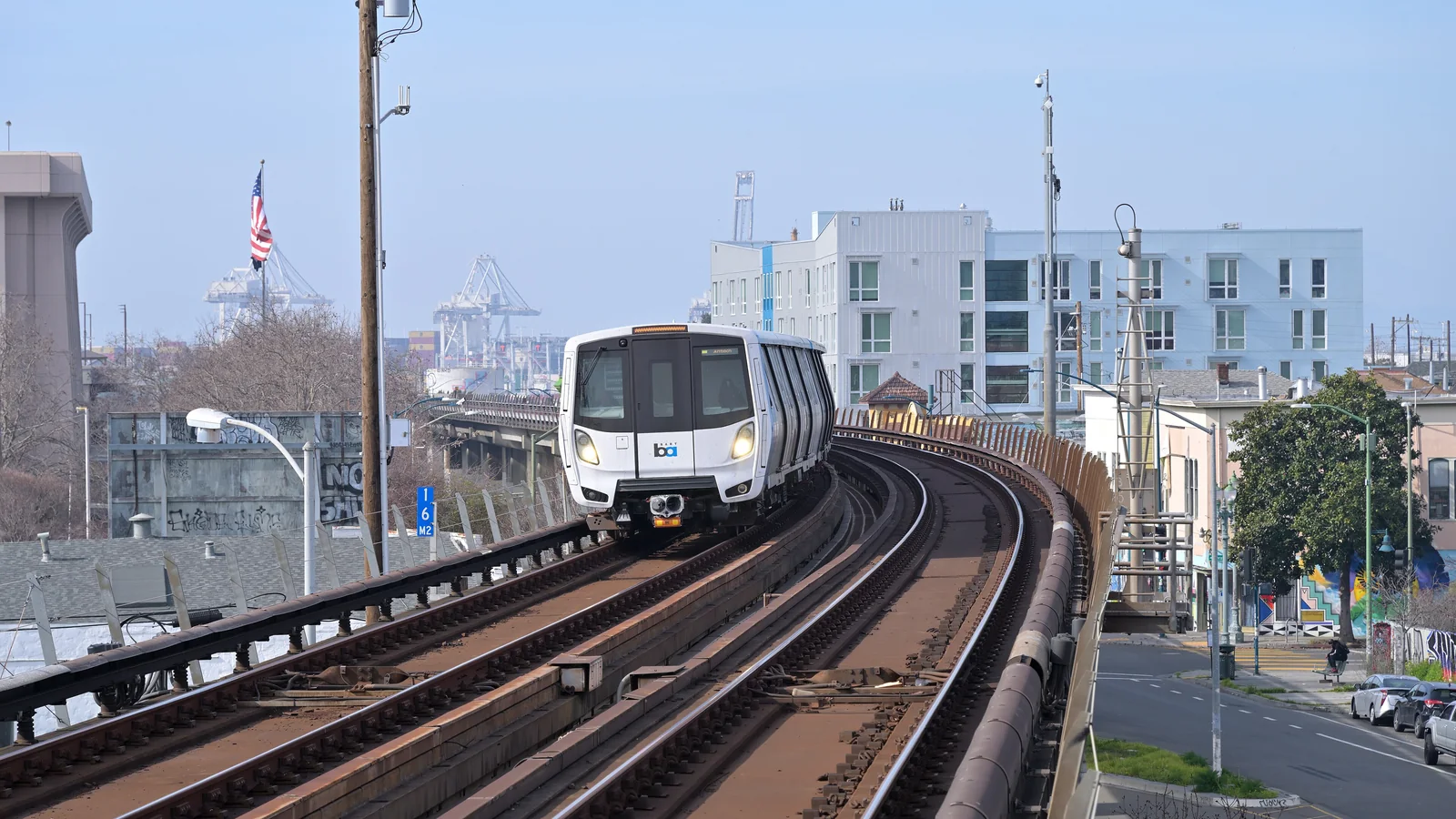
The change is now part of BART’s published weekday and weekend schedules. It does not create a uniform 10-minute frequency across the network. Instead, the timetable targets specific passenger flows where two lines were arriving in uneven pairs.
Two line pairs cut their longest scheduled gaps by five minutes
For passengers travelling from San Francisco toward Berkeley, El Cerrito and Richmond, Red and Yellow Line trains were previously spaced five and 15 minutes apart. Under the new pattern, the two services are scheduled 10 minutes apart.
For this paired-line spacing pattern, the two gaps still total 20 minutes; the change redistributes them rather than presenting a higher combined frequency. For a passenger who just misses the less favourably spaced train, the longest scheduled gap falls from 15 to 10 minutes — a five-minute reduction.
The same maximum-gap change appears on the Green and Blue lines for Dublin- and Berryessa-bound passengers. Their previous three- and 17-minute spacing becomes eight and 12 minutes, reducing the longest scheduled gap from 17 to 12 minutes.
Don’t miss…Amtrak Modernization Marks a New Era for U.S. Rail
In its August schedule announcement, BART says some San Francisco passengers heading toward Bay Fair had been waiting as long as 17 minutes between these trains. The agency expects the more even pattern to reduce platform waiting and crowding, but those are expected operating benefits, not yet measured post-launch results.
| Passenger flow | Previous pattern | August 10 pattern | Confirmed scheduled effect |
|---|---|---|---|
| Richmond-bound via Red + Yellow | 5 / 15 min | 10 / 10 min | Maximum gap falls 5 min |
| Dublin/Berryessa-bound via Green + Blue | 3 / 17 min | 8 / 12 min | Maximum gap falls 5 min |
| Dublin ↔ Berryessa transfer at Bay Fair | 19 min transfer | Trains scheduled to pull up together | New cross-platform connection; exact new transfer duration not stated |
| Antioch → Berkeley/El Cerrito/Richmond at MacArthur | — | 4 min transfer | BART says riders save 17 min |
MacArthur has the largest explicit time saving
Among the changes for which BART gives a specific savings figure, the MacArthur transfer is the clearest. Riders arriving from Antioch on the Yellow Line and continuing toward Berkeley, El Cerrito or Richmond via the Orange or Red lines are scheduled for a four-minute transfer from Platform 4 to Platform 1. BART says that is 17 minutes faster than the previous connection.
Bay Fair is different. BART says the Dublin–Berryessa transfer previously took 19 minutes and that the connecting trains will now pull up together for a cross-platform change. But the agency does not state a new transfer duration. It would therefore be misleading to describe the full 19 minutes as a confirmed saving.
The timetable also changes connections at the BART-to-Antioch transfer platform in Pittsburg and alters how Red and Yellow Line trains are spaced at SFO. These changes are intended to reduce knock-on delays and uncertainty over which train will depart first.
Daly City changes are the operating mechanism behind the reset
BART links the wider timetable redesign to a new operating pattern at Daly City. Platform 3 is now used as the terminal for Blue and Green Line trains, while boarding is concentrated on Platforms 1 and 2. Red and Yellow Line trains can pass through without being held behind trains leaving service for the nearby yard.
The agency describes the package as cost-neutral and says it was developed by its Operations Planning Department. The same August schedule also carries forward longer peak-period trains introduced from July 20, including 10-car Red Line trains during peak periods and selected 10-car Yellow Line services.
Those train-length changes are part of the wider service reset, but they are not evidence that every route received more capacity. Some off-peak and Orange Line formations remain shorter.
First-day performance evidence is not yet available
The new timetable took effect on August 10, but BART had not published a post-launch performance assessment by August 11. Its public Ridership Watch page still showed blank entries for August 10 and 11 at the time of review, and the official news archive contained no first-day reliability or headway report.
That means the strongest verified conclusion is still about the schedule itself: the longest planned gaps on two paired-line flows are five minutes shorter, MacArthur has a four-minute scheduled transfer with a stated 17-minute saving, and Bay Fair has a newly coordinated cross-platform connection.
Whether those changes produce lower actual waits, less crowding or better systemwide on-time performance will require post-launch operating data.
News on railway transport, industry, and railway technologies from Railway Supply that you might have missed:


