All 13 Ahmedabad portal beam installations are complete
11.07.2026
All 13 Ahmedabad portal beam installations are complete, allowing the Mumbai–Ahmedabad High-Speed Rail viaduct to cross active railway lines without disrupting conventional train operations in the city.
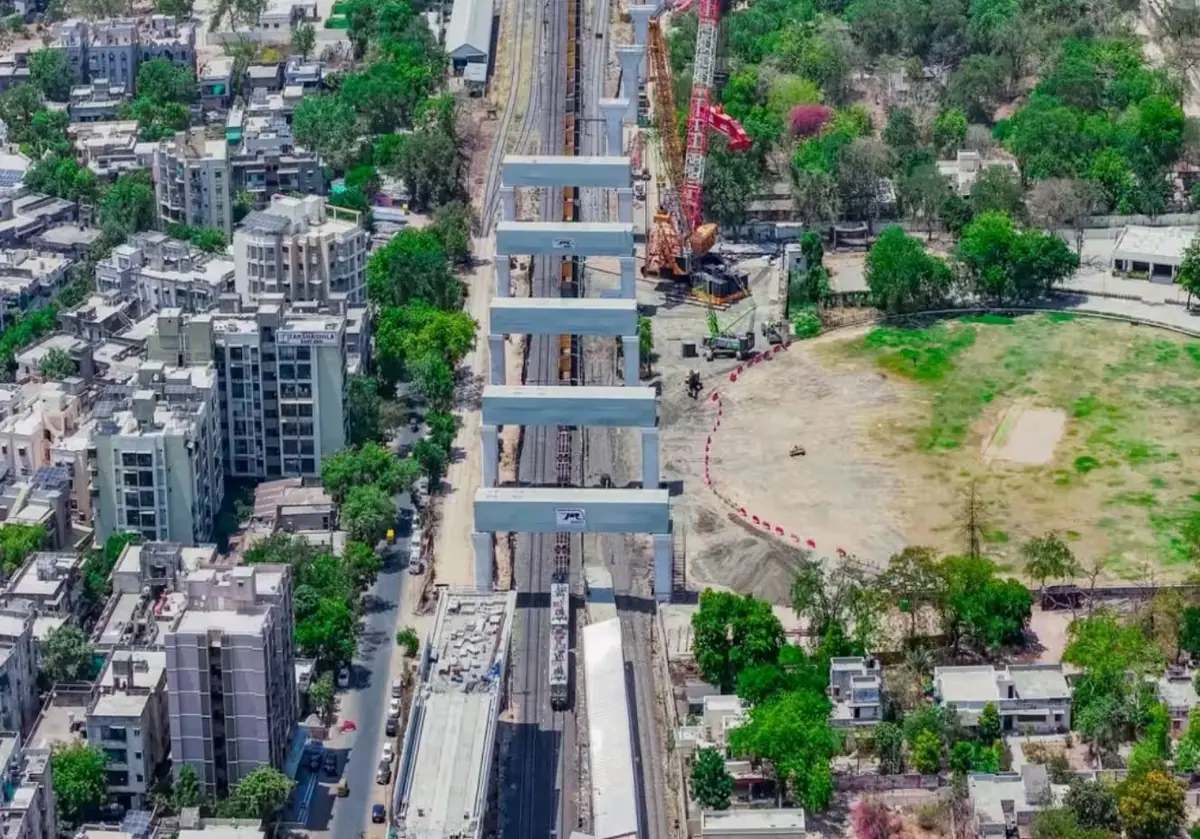
Ahmedabad portal beam installations in the city
Ahmedabad’s high-speed rail section runs for 18 kilometres through the city. Its specialised portal beams were designed to carry the elevated viaduct across some of western India’s busiest railway lines. Infrastructure engineers note that working above operational rail infrastructure requires detailed planning, specialist lifting machinery and close coordination between project authorities and railway operators to maintain safety and keep services running.
The last structure was placed above the Ahmedabad–Delhi railway corridor near Sabarmati. At approximately 1,640 metric tonnes and 34.5 metres long, it is the largest portal beam installed within Ahmedabad. Heavy-duty crawler crane technology lifted the precast concrete element into position during a coordinated operation, while trains continued to run beneath the construction site.
Earlier installations included portal beam crossings over the Mumbai–Ahmedabad railway line at Maninagar and Vatva. Together with the Sabarmati structure, they complete the principal railway overpasses required for the Ahmedabad alignment.
Don’t miss…Eurostar Economic Contribution Estimated at 2 Billion GBP
Sabarmati connections and remaining corridor work
The Mumbai–Ahmedabad High-Speed Rail corridor is being developed as India’s first dedicated high-speed railway and is expected to reshape inter-city mobility between the two cities. High-speed rail is also widely regarded as a lower-emission alternative to long-distance road journeys and short-haul flights when integrated with clean energy sources and efficient urban transit systems.
Ahmedabad will serve an important interchange function through the planned Sabarmati Multimodal Transport Hub. The facility is intended to connect high-speed services with conventional rail services, metro infrastructure and other forms of public transport. Urban mobility specialists consider this multimodal connectivity essential for efficient transfers between local and regional transport systems.
As civil works continue, attention is expected to turn to track installation, electrical systems, signalling, station infrastructure and operational testing. These stages will determine whether the corridor is ready for commercial high-speed services to begin.
The wider Mumbai–Ahmedabad High-Speed Rail corridor extends for 508 kilometres and includes 12 stations between Mumbai and Sabarmati. NHSRCL says limited-stop services are planned to cover the route in about 2 hours 7 minutes, while approximately 90% of the alignment is being built on elevated structures.
Within Ahmedabad, the viaduct is planned to pass through 31 crossings, including railway tracks, flyovers, a canal, the Sabarmati River and six steel bridges. The completed portal beams form part of this broader programme of elevated crossings through the city.
Completing the portal beam programme in Ahmedabad also demonstrates the domestic infrastructure sector’s growing expertise in delivering technically complex railway projects at scale. The corridor’s long-term value, however, will depend on its integration with sustainable urban planning, multimodal connectivity and transit-oriented development that supports inclusive regional growth.
News on railway transport, industry, and railway technologies from Railway Supply that you might have missed:



