
Mumbai-Ahmedabad Bullet Train Tunnel Enters New Phase
National High Speed Rail Corporation Limited said the Mumbai-Ahmedabad bullet train tunnel entered a new phase as a second giant TBM began excavating beneath Thane Creek.
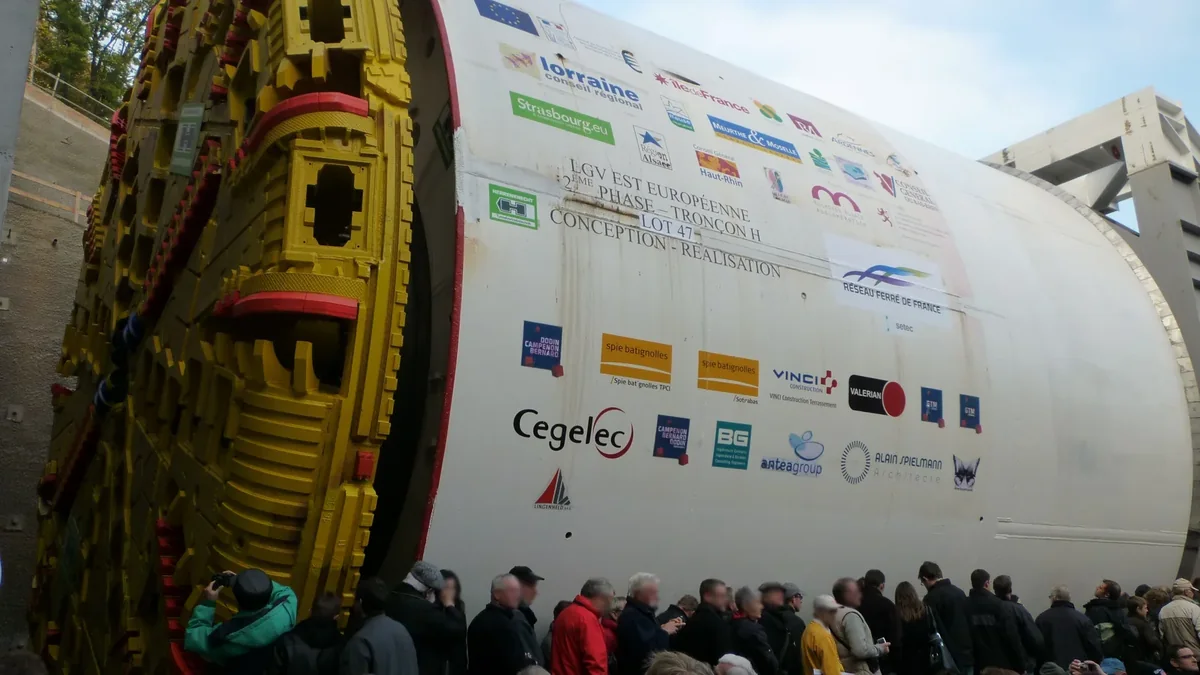
The machine started its drive from the 39-metre-deep Sawli shaft near Ghansoli and is moving toward Vikhroli. It is expected to excavate about 10 km, including roughly 7 km beneath the intertidal zone of Thane Creek, where India’s first undersea railway tunnel is being built.
The launch follows the start of the first TBM from Vikhroli on July 5. That machine is driving approximately 6 km toward the underground Mumbai bullet train station at Bandra Kurla Complex. A further 5 km between Ghansoli and Shilphata has already been excavated using the New Austrian Tunnelling Method.
Don’t miss…Port of Long Beach Environmental Award Marks Green Progress
Together, these sections form a 21-km single-tube tunnel designed to carry both tracks of the Mumbai–Ahmedabad High-Speed Rail corridor. NHSRCL awarded the construction package for the BKC–Shilphata tunnel in 2023.
Mumbai-Ahmedabad bullet train tunnel uses Mixshield technology
The second machine is one of the largest TBMs deployed for railway construction in India. Its cutterhead measures 13.6 metres in diameter, while the complete machine is about 96 metres long and weighs approximately 3,200 tonnes.
“The machine is configured as a Mixshield type, semi-automatic, slurry-based TBM.”
A Mixshield machine uses pressurised bentonite slurry to support the excavation face while the cutterhead advances. This system is designed for variable geological conditions and high groundwater pressure, which are important considerations during the drive toward and beneath Thane Creek.
As excavation proceeds, the TBM installs precast concrete lining segments behind its shield. NHSRCL says the tunnel is being constructed as a waterproof structure, with double-layer EPDM gaskets and hydrophilic seals intended to prevent water ingress. Real-time systems will monitor structural behaviour, groundwater conditions and construction safety.
The tunnel’s dimensions are also unusual. Unlike many urban metro projects that use separate smaller bores for each direction, the Maharashtra package will use one large tube for both high-speed tracks. Equipment rooms will be constructed at multiple locations beside the tunnel.
Mumbai-Ahmedabad bullet train tunnel reaches Thane Creek
The Sawli–Vikhroli drive brings mechanised excavation into the project’s most technically prominent section. Around 7 km of the alignment passes beneath Thane Creek, while the complete BKC–Shilphata tunnel crosses urban, coastal and hilly terrain.
NHSRCL previously said the tunnel would generally lie between 25 and 65 metres below ground. Its deepest construction point is expected to reach approximately 114 metres beneath Parsik Hill near Shilphata. Three shafts at BKC, Vikhroli and Sawli were prepared for launching and retrieving the TBMs.
The latest launch is a major construction milestone, but it does not mark completion of the undersea section. The next stages include sustained TBM advance, installation of the segmental lining, treatment of slurry and excavated material, and the eventual connection with the Vikhroli worksite.
The Mumbai–Ahmedabad project is India’s first high-speed railway corridor. The 21-km tunnel will provide the underground approach into Mumbai and create the route’s most complex engineering connection between BKC and the elevated alignment beyond Shilphata.
News on railway transport, industry, and railway technologies from Railway Supply that you might have missed:



