
Penn Station Capacity Could Rise by 33% Under FRA Plan
Penn Station capacity during the morning peak could rise by roughly 33% under a federal plan combining targeted platform upgrades, faster passenger circulation and operational changes.
Penn Station capacity plan focuses on platforms
The U.S. Department of Transportation released the first phase of its New York Penn Station Service Optimization Study on July 15. The Federal Railroad Administration tested 86 operating scenarios using train and pedestrian simulation tools and identified a three-zone operating concept as the most practical balance of capacity, reliability and flexibility.
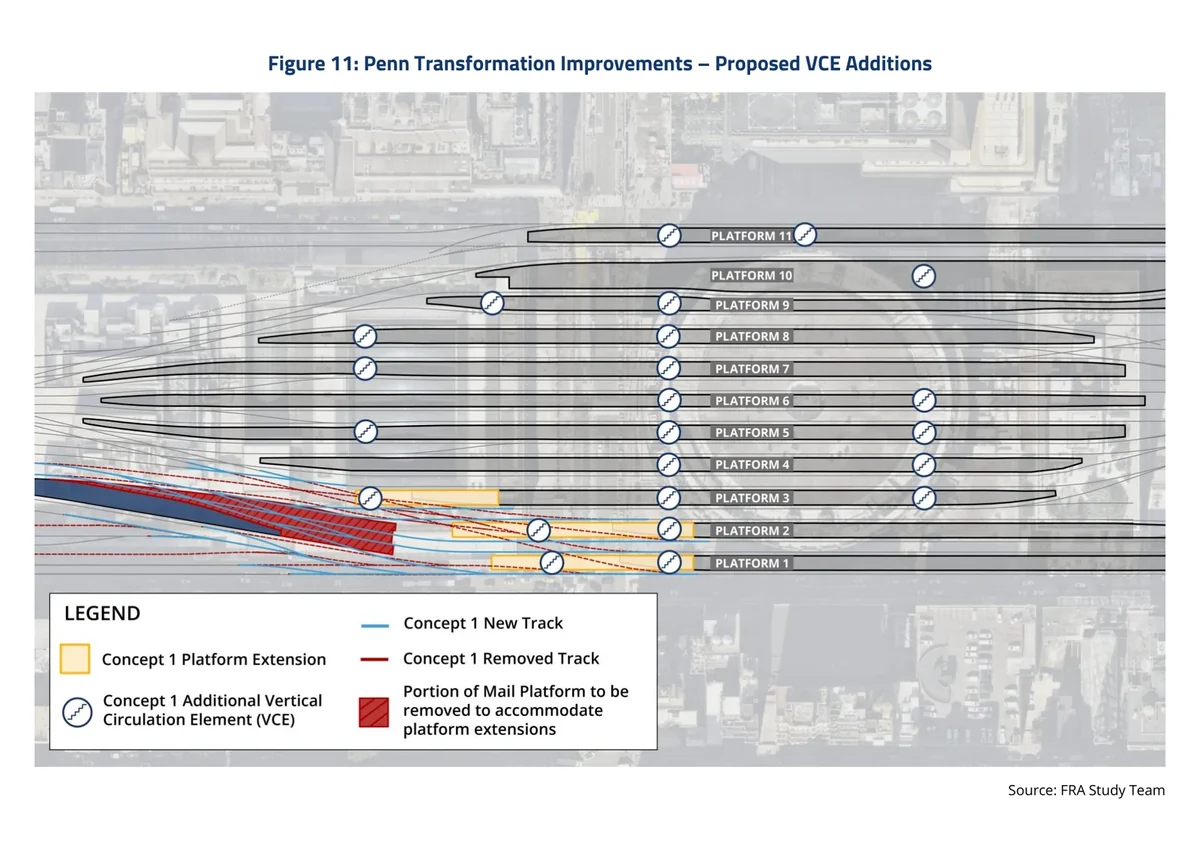
The proposed package would extend Platforms 1, 2 and 3 westward by about 200 to 350 feet, enabling longer NJ Transit trains to use more doors. It also calls for up to 23 additional vertical circulation elements — 19 stairs and four escalators — with at least one new connection on every platform.
Other measures include removing equipment and utility cabinets from passenger areas, improving signage, rebuilding track connections and shortening dwell times. FRA modeling indicates the changes could reduce average platform clearance and boarding time by 2.4 minutes, or 28%.
Don’t miss…AAR Launches Freight Rail Research Consortium in US
Together, the upgrades could increase cross-Hudson throughput from 24 trains per hour per direction to as many as 32 during the morning peak and 30 during the evening peak. The operating concept also allows up to four regional commuter trains per hour in each direction to continue through Penn Station, alongside four existing or planned Amtrak through services.
“We will improve the track-level operations and infrastructure to deliver more capacity without delaying this vital project,” FRA Administrator David Fink said.
Penn Station capacity gains depend on reliability
The findings are not a final construction or operating plan. FRA said Phase I remained within the existing Penn Station footprint and did not establish an implementation strategy, while several capital elements are not yet funded.
The report also warns that capacity above 32 trains per hour would require broader regional improvements, especially more consistent on-time performance for trains approaching the station. Phase II will examine infrastructure outside Penn Station, rolling stock, governance, labor, costs, funding and operating agreements, with completion planned for 2028.
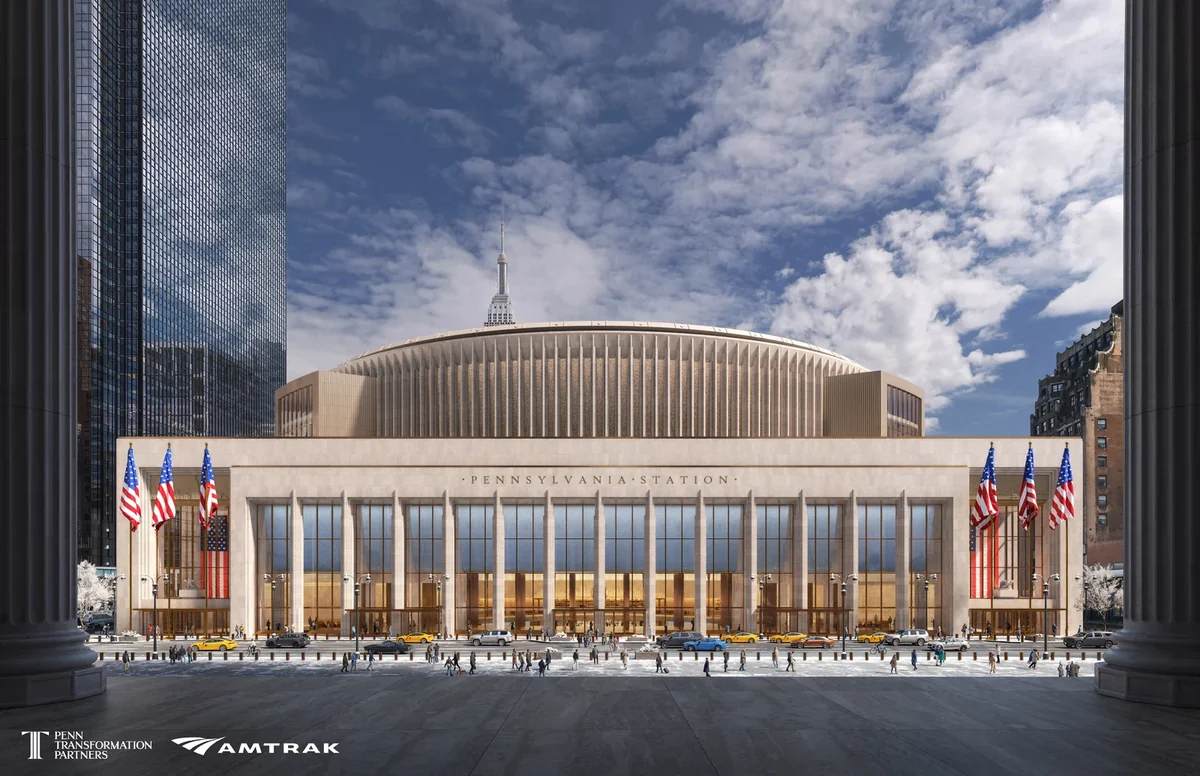
The study will inform track-level design for the wider Penn Station Transformation project. Amtrak and Penn Transformation Partners are developing a single-level concourse, a new Eighth Avenue entrance and limited through-running capability. Amtrak estimates the redevelopment at $7 billion to $8 billion and expects construction to begin by the end of 2027.
News on railway transport, industry, and railway technologies from Railway Supply that you might have missed:



