FrontRunner 2X Is Argued on 2034 and Costed to 2050
20.08.2026
USA: Utah’s FrontRunner is planned to run every 15 minutes at peak after the 2X double-tracking project is completed around 2030 — giving the upgraded railway roughly three to four years of operation before the 2034 Winter Olympics, while its demand forecasts extend to 2050.
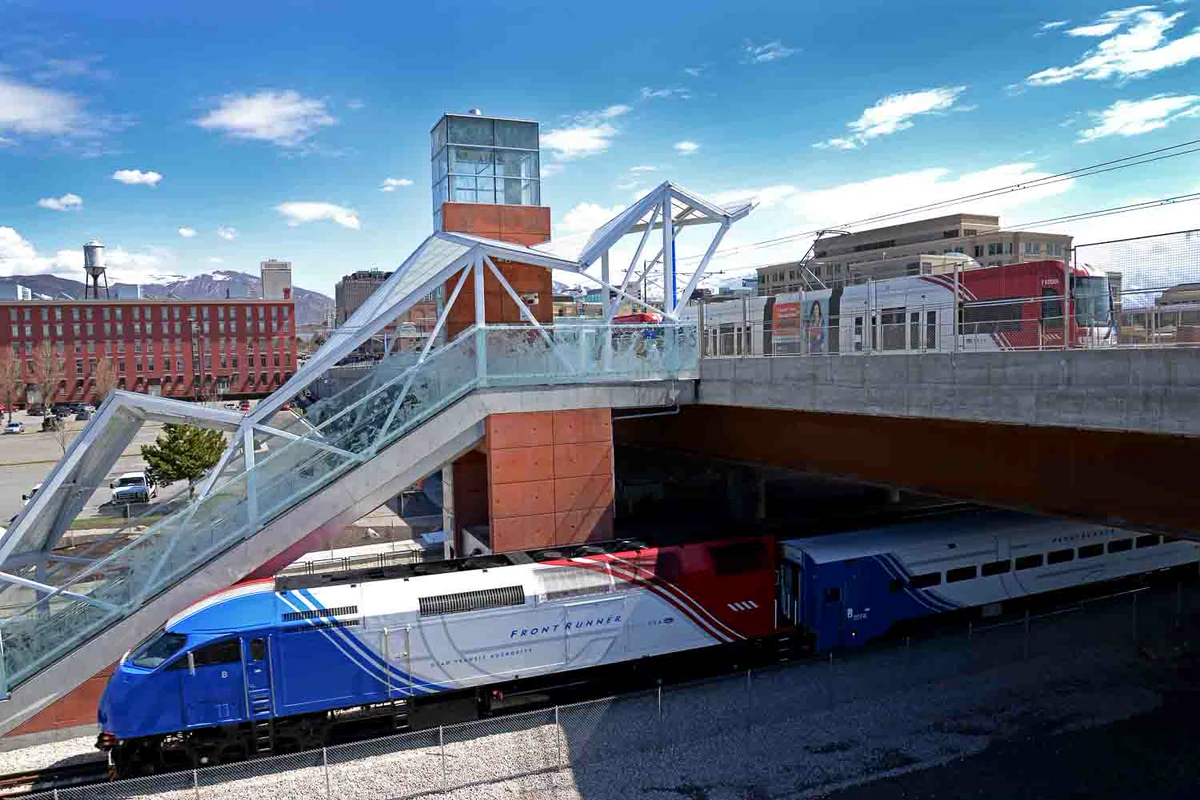
The Federal Transit Administration approved the project to enter the Engineering phase of the Capital Investment Grants programme on Aug. 7, moving it toward a funding commitment of $1.28 billion, subject to completion of FTA requirements and annual appropriation by Congress.
Don’t miss… FrontRunner 2X Advances Double Track and 10 New Trains
What the project actually buys
The headline benefit is frequency, and it comes from removing the constraint that has shaped the timetable since the line opened: most of the route is single track, so opposing trains have to wait for each other.
| Element | Detail |
|---|---|
| Double track added | 26.1 miles across 11 sections |
| Realigned section | 1 |
| New station | 1, at The Point in Bluffdale |
| Trainsets | 10 new |
| Other | New vehicle maintenance facility, signal upgrades |
| Service | Now | After completion |
|---|---|---|
| Peak frequency | Every 30 minutes | Every 15 minutes |
| Off-peak frequency | Every 60 minutes | Every 30 minutes |
The project’s own summary estimates that by 2050 FrontRunner journeys will be 17% faster than travel on I-15 and forecasts a 53% increase in ridership.
The Olympic deadline and the 2050 case
Official statements from the FTA, UDOT and Senator John Curtis connect the Engineering milestone with preparations for the 2034 Winter Games. The Deseret News account of Curtis’s meeting with UTA on Aug. 19 also pairs the Olympics with the Salt Lake Temple open house as major reasons Utah needs more transit capacity.
The updated UDOT schedule anticipates construction from 2027 through 2030, subject to completion of the federal grant process. An earlier project timeline placed design, procurement and construction work in 2026–2029, followed by substantial completion, vehicle testing and the start of 15-minute peak service in 2030.
That schedule does not conflict with the Olympic argument: it would give UTA several years to test and operate the upgraded service before the Games. But the project is not justified by a two-week event alone. Its travel-time and ridership forecasts extend to 2050, and officials cite population growth alongside the Olympics.
UTA Executive Director Jay Fox told KSL in June that officials wanted the project completed well before the Olympics because it would be a “game-changer.” The Games provide a deadline and political urgency, while the published forecasts describe a longer-term transport case.
What is not settled yet
Entering Engineering is not the same as having the money. Full-scale construction waits on a full funding grant agreement, and UDOT’s project director told KUER that only preliminary work — utility relocation and site preparation — could start as early as this autumn.
KSL reports an estimated total project cost of $3.2 billion, with Utah having committed $850 million. The anticipated $1.28 billion FTA grant would therefore cover only part of the programme.
The fleet descriptions are not necessarily inconsistent. The FTA calls the 10 vehicles diesel multiple-unit trainsets, while KUER and KSL describe the planned Stadler fleet as hybrid-electric units using diesel and electric power. The procurement was still under negotiation when the Engineering milestone was announced.
The project also has property impacts not visible in the frequency tables. Planning material presented in Provo in September 2025 identified five potential full property acquisitions affecting 20 residences across two complexes, as well as a partial acquisition next to a third complex.
News on railway transport, industry, and railway technologies from Railway Supply that you might have missed:
Don’t miss… UTA Plans S-Line Extension Service for Fall 2027