A Rail Grant Aimed at Rockfall and the Colorado River
20.08.2026
USA: Colorado’s federal rail safety award funds six pre-positioned hazmat and emergency-management caches for mountain rail corridors — equipment placed closer to potential incidents because the terrain that increases derailment risk can also delay the response.
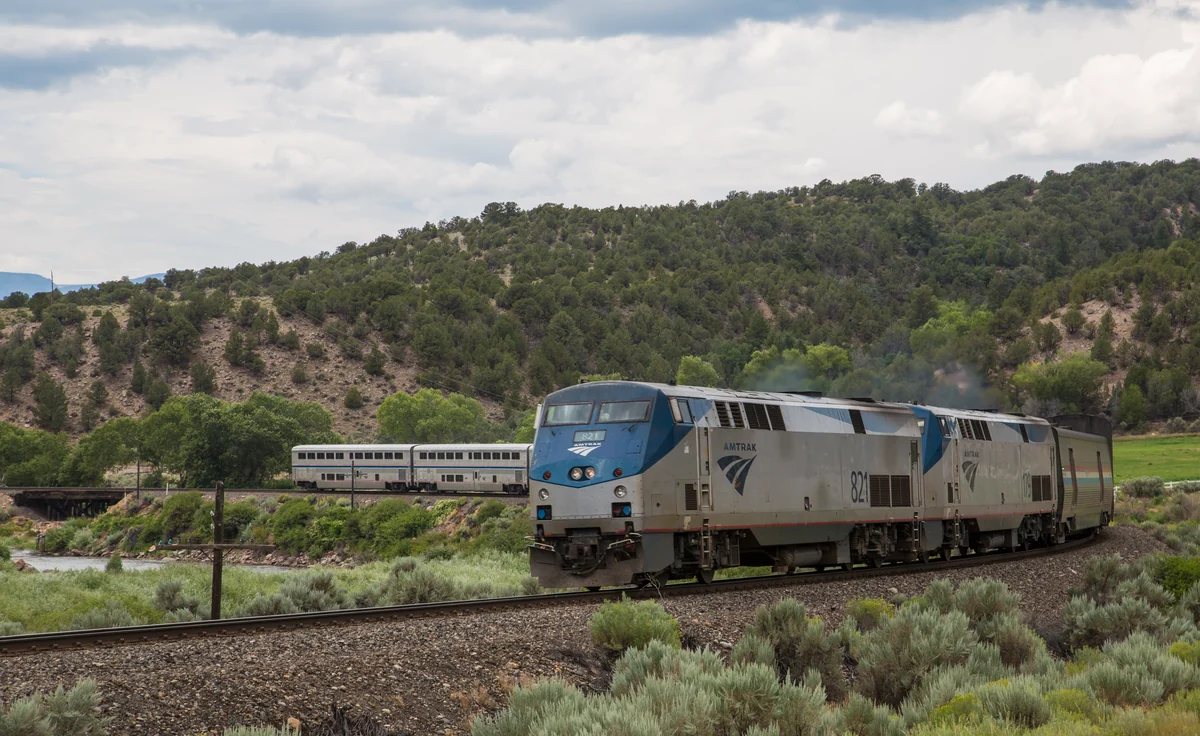
The award of up to $44 million comes from the Federal Railroad Administration. Combined with $11 million from the state’s Infrastructure Investment and Jobs Act Cash Fund, it will support the $55 million programme CDOT calls SAFER Travel — Safe, Agile, Fast, and Efficient Rail Travel — according to the governor’s office.
Don’t miss… Colorado Board Approves Final Front Range Rail Plan
A programme built around mountain hazards
The $5.3 billion national funding round covers a wide range of needs, including grade crossings, rolling stock, stations, bridges and capacity improvements. Colorado’s selection stands out because much of its scope is tailored specifically to mountain hazards and difficult emergency access.
The governor’s office names rockfall, multiple crossings and remote terrain as the risks along the central and western corridors. A further stated objective is protecting the Colorado River from hazardous material releases — the railway follows the river for much of its route through the mountains.
| Element | What it covers |
|---|---|
| Rockfall mitigation | Union Pacific-owned mountain corridor used by the California Zephyr |
| Hazmat and emergency-management caches | Six to be procured and installed |
| Crossing analysis | Seven diagnostic analyses in six communities |
| Federal award | Up to $44 million |
| Non-federal match | 20%; planned $11 million from Colorado’s IIJA Cash Fund |
| Total programme | $55 million |
FRA identifies six communities for the seven diagnostic analyses: Hot Sulphur Springs, Dotsero, Parachute, Steamboat Springs, Eldora and Fraser. The selection summary does not specify which community accounts for the seventh analysis.
Why equipment is bought before it is needed
A cache is a stock of response equipment stored closer to potential incident sites so that it can be deployed without first being transported from a distant base.
Public documents do not provide an itemised equipment list. FRA describes six hazmat caches, while a letter supporting CDOT’s application calls them hazmat and emergency-management caches available to both rail and highway corridors.
The case for pre-positioning is particularly strong in the Colorado mountains. Local supporting material says steep and winding terrain makes access difficult for hazmat crews and lengthens emergency-response and maintenance times.
The same geography connects the two halves of the programme. Rockfall-prone slopes also complicate emergency access, while hazardous material releases along the railway could threaten the Colorado River that the route follows through much of the mountain corridor.
Studies, not construction, at the crossings
The crossing element is described as diagnostic analysis. Nothing in the announcement commits to rebuilding, separating or closing any of the locations, and no construction schedule is given for that part of the work.
That distinction matters for reading the programme. The rockfall and cache elements are physical deliverables; the crossing element is the stage that precedes them, and whether it leads to construction depends on funding decisions that have not been made.
News on railway transport, industry, and railway technologies from Railway Supply that you might have missed:
Don’t miss… FRA Awards $5.3B to Upgrade US Passenger Rail