Three Redesigns Later, East Montréal Still Has No Line
20.08.2026
CANADA: Montréal’s mayor has called for reviving the REM de l’Est, four years after the original rapid transit project was cancelled and Quebec reimbursed CDPQ Infra about C$94 million for its planning work.
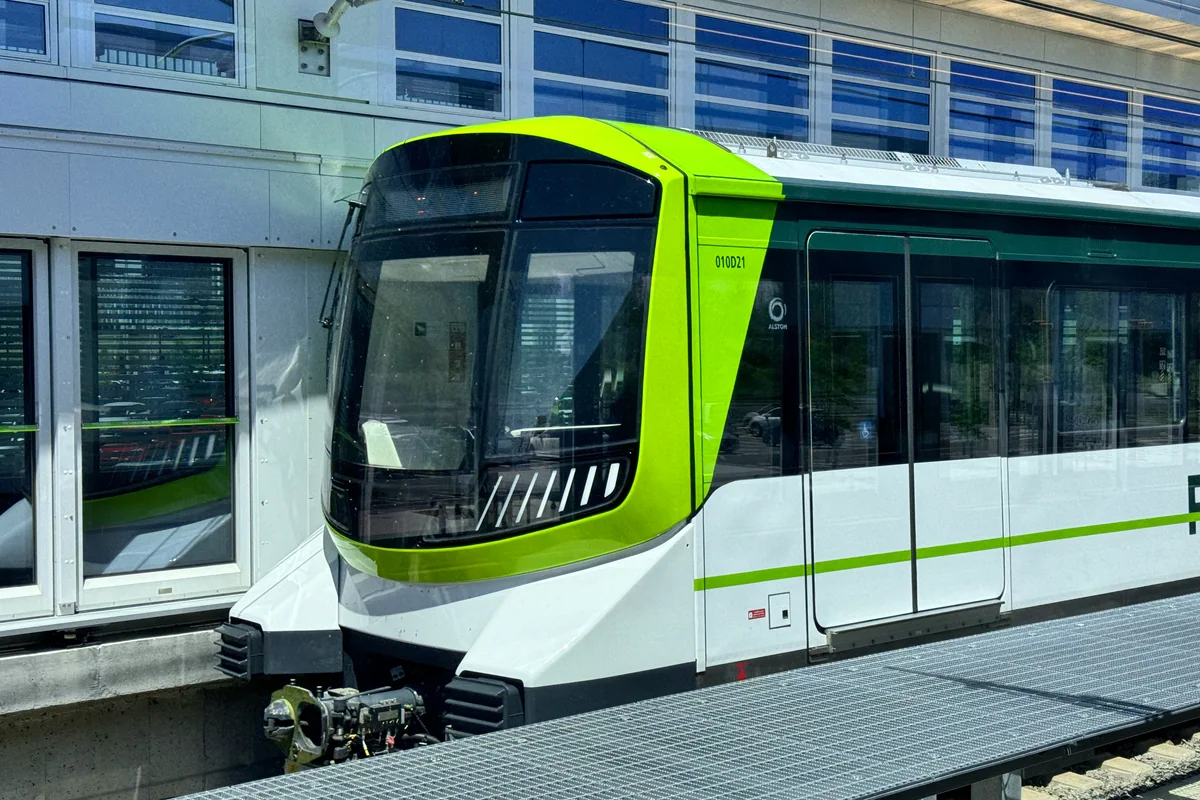
Mayor Soraya Martinez Ferrada made the case on Aug. 18, days before the expected start of Quebec’s provincial election campaign, Le Devoir reported. She argued that the east of the island is as large as Quebec City and accounts for roughly a tenth of the province’s population, and that the area cannot go on without a rapid transit network.
Don’t miss… REM Halted for Five Hours, Quebec Demands Answers
Three redesigns, no construction
The original REM de l’Est was planned as a mostly elevated automated light-metro line led by CDPQ Infra. In May 2022, Quebec and Montréal removed its downtown section over urban-integration and social-acceptability concerns, after which CDPQ Infra withdrew. The project was reassigned to an ARTM-led working group and renamed the Projet structurant de l’Est.
What followed, according to La Presse, was a sequence of proposals, none of which reached delivery.
| Version | Project lead | Scope and estimate |
|---|---|---|
| REM de l’Est, until May 2022 | CDPQ Infra | Mostly elevated automated light-metro line with a downtown link; abandoned |
| Underground metro, 2023 | ARTM | Fully underground, about C$36 billion; rejected by Quebec |
| Surface tramway, early 2024 | ARTM | 28 stations, about C$13 billion |
| Expanded tramway, May 2024 | ARTM | 38 km, 31 stations, about C$18.6 billion |
Every version after the first dropped the direct downtown connection that had been the point of the original scheme. La Presse reports that the ARTM teams working on the project have since been reduced.
The obstacle now is administrative
Quebec created Mobilité Infra Québec to run major transit projects, and the PSE was to move to it. That transfer has not happened: as of early August, ARTM had not handed the file over because the government decree enabling it had not been issued, EST MÉDIA Montréal reported.
In July, ARTM published eight zones for longer-term transit planning. The existing PSE corridor was not listed as a new study zone, although Saint-Laurent–Ahuntsic–Montréal-Nord and Les Moulins were among the eight areas.
A return to a REM model could reopen the question of CDPQ Infra’s involvement, but the mayor did not announce a new mandate, delivery structure or transfer of the file. La Presse reported that Quebec and CDPQ Infra had not responded to requests for comment.
What is actually at stake
The far east of the island relies heavily on buses feeding the Green Line, while other parts of eastern Montréal are also served by the Blue Line, the Pie-IX bus rapid transit corridor and Exo’s Mascouche commuter rail service. The REM branches currently in operation serve the South Shore, Deux-Montagnes and the West Island, but not eastern Montréal.
A brief titled “Oubliés au terminus,” prepared by the youth council of Rivière-des-Prairies–Pointe-aux-Trembles, argues that poor transit access reinforces educational inequality. It cites 2021 data showing that 20% of RDP-PAT residents held a bachelor’s degree or higher, compared with 38% across Montréal.
For now, the latest published proposal remains ARTM’s C$18.6 billion tramway plan. ARTM continues preliminary work while awaiting a government decree transferring the file to Mobilité Infra Québec; no construction mandate or delivery schedule has been confirmed, and the provincial election campaign is about to begin.
News on railway transport, industry, and railway technologies from Railway Supply that you might have missed:
Don’t miss… Siemens and AtkinsRéalis Sign TramCité Contract