BTP’s First London Underground Facial Recognition Deployment: 33,545 Estimated Faces, No Alerts
14.08.2026
UK: British Transport Police has completed its first live facial recognition deployment on the London Underground at Victoria, scanning an estimated 33,545 faces over 6.5 hours against a 673-person watchlist and generating no alerts.
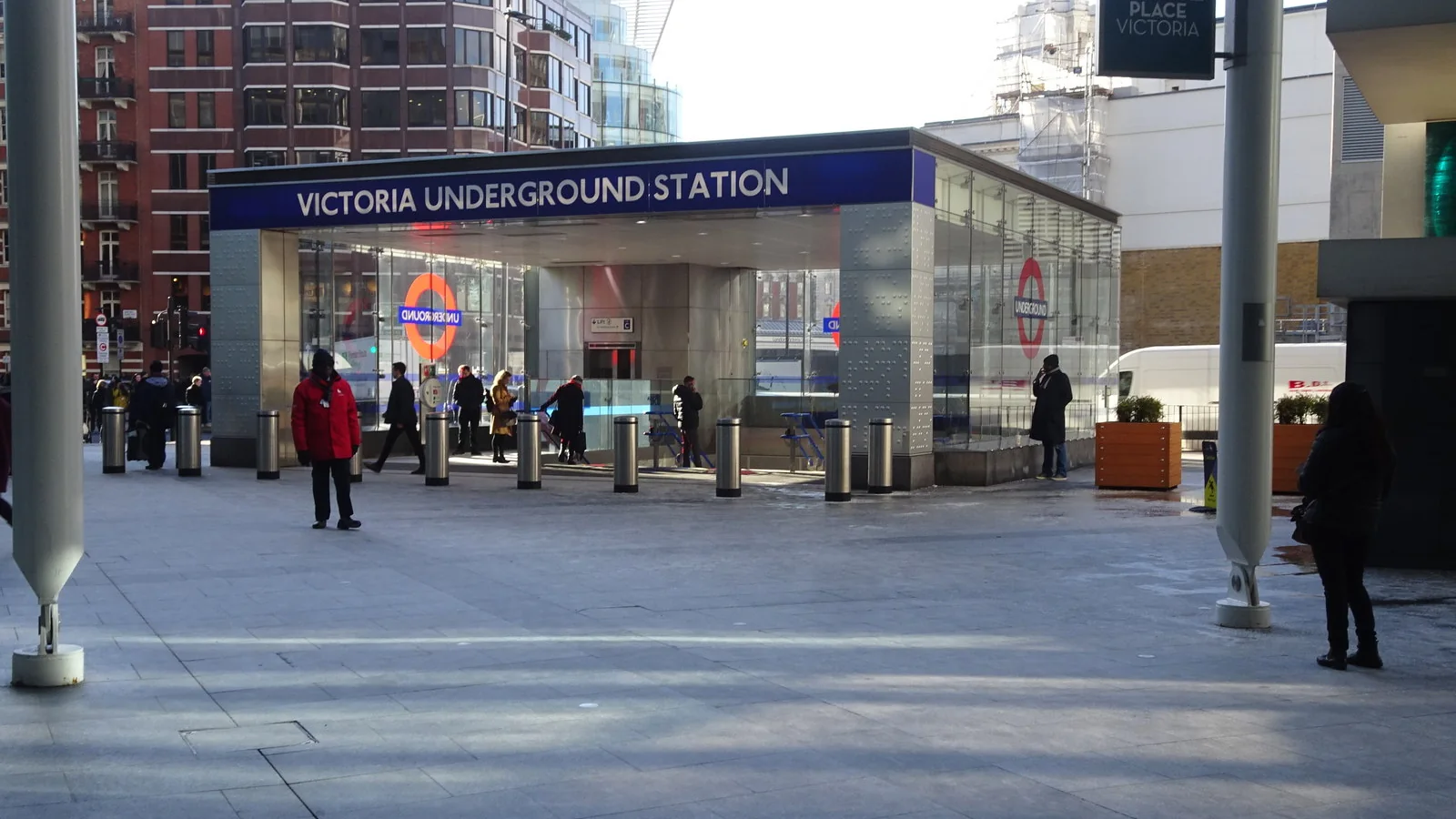
British Transport Police moved its live facial recognition (LFR) pilot into the Underground on 11 August, one day after announcing that Victoria would become its first Transport for London deployment. The move is no longer only a planned expansion: BTP’s official deployment register now provides the first performance record from an Underground station.
The Victoria operation lasted 6 hours 30 minutes. BTP classified the location as a crime hotspot, used a minimum matching threshold of 0.64 and checked passing faces against a 673-person watchlist. The register records zero total alerts, zero confirmed or unconfirmed true alerts, zero false alerts and zero enforcement outcomes.
BTP says the wider pilot began on 11 February and has been extended until November. It is intended to test how LFR performs in railway environments, its effect on public safety and public response before a full assessment is carried out after the pilot.
The railway pilot logged one confirmed false alert before the Underground phase
The first deployment in the trial took place at London Bridge railway station on 11 February. Over 4 hours 35 minutes, BTP recorded an estimated 16,156 faces against a 381-person watchlist and generated no alerts.
Across the 18 railway-station deployments listed in the register before the Victoria Underground operation, the entries total an estimated 537,697 face observations. They record one alert — at King’s Cross on 24 February — which BTP classifies as a confirmed false alert. The same 18 entries record no confirmed true alerts and no arrests.
| Deployment | Date | Duration | Watchlist size | Total alerts | Faces seen (estimate) |
|---|---|---|---|---|---|
| London Bridge railway station | 11 Feb 2026 | 4h 35m | 381 | 0 | 16,156 |
| Victoria Underground station | 11 Aug 2026 | 6h 30m | 673 | 0 | 33,545 |
The register describes the final column as an estimate of faces seen, so these figures should not be treated as counts of unique individuals. The absence of an alert also does not, by itself, establish whether a deployment was effective: it does not show how many people on the watchlist, if any, actually passed through the recognition zone. BTP’s full evaluation remains pending.
Don’t miss…Amtrak Takes Defined Role in Reading–Philadelphia Rail Plan
How LFR works at a BTP station deployment
BTP uses NEC’s NeoFace M40 algorithm. Cameras cover a defined recognition zone and compare faces with a watchlist prepared for the operation. When the system produces a possible match, an officer compares the camera image with the person in view and decides whether to engage; an algorithmic alert is therefore not an automatic police decision.
BTP says deployments are intelligence-led and targeted at network crime hotspots where data indicates a likelihood that high-harm offenders will pass through. Its public guidance says watchlists can include people wanted by police or courts and people subject to relevant court-order conditions. Victoria Underground was recorded as a crime-hotspot deployment.
The BTP LFR policy requires visible public notification around deployments. It also states that officers must be told they have no power to require a person’s cooperation in having their image captured and that reasonable alternative routes around the recognition zone must be available.
What BTP deletes — and what it can retain
The data rules are more specific than a simple statement that non-matches are deleted. Under BTP’s policy, biometric data that does not generate an alert is deleted immediately by the LFR software. The deployment watchlist must be deleted as soon as reasonably practicable and no later than 24 hours after the operation.
When an alert is generated, related biometric data is also to be deleted as soon as practicable and within 24 hours, subject to defined exceptions for law-enforcement, legal or complaints purposes. Separate CCTV footage from the LFR cameras is not treated as biometric data under the policy and is normally deleted within 31 days, again with specified exceptions.
BTP also requires each deployment to be authorised and reviewed for necessity and proportionality, with a post-deployment review and an entry in the public register.
Privacy and accuracy concerns remain part of the debate around the Underground expansion. Critics including Big Brother Watch have raised concerns about misidentification, data handling and demographic differences. BTP’s deployment register can show how many alerts occurred, but it is not an independent assessment of privacy impact or demographic accuracy.
The legal framework is layered — and a new national framework is being developed
BTP’s legal mandate for LFR states that law-enforcement use of live facial recognition is not governed by dedicated primary legislation. Instead, BTP relies on a combination of common-law police powers, legislation including the Human Rights Act 1998, Equality Act 2010 and Data Protection Act 2018, and national and local codes, guidance and internal policy.
That legal structure is itself under review nationally. A Home Office consultation on a new law-enforcement biometrics and facial-recognition framework says an existing legal framework does apply, but describes it as complicated and difficult to understand and proposes clearer statutory limits, safeguards and oversight.
Accuracy questions also require a distinction between algorithm testing and BTP’s own operational evidence. BTP cites National Physical Laboratory testing commissioned by the Metropolitan Police Service and South Wales Police of the NEC algorithm used by BTP, including testing for differences associated with race, age and sex. That work is not a completed evaluation of BTP’s 2026 railway and Underground pilot.
What happens next
BTP says deployments will rotate between Underground and Network Rail stations while the trial continues through November. The force plans a full assessment after the pilot to review outcomes, lessons and future use.
For now, the Victoria register entry provides the first concrete Underground baseline: one 6.5-hour deployment, a 673-person watchlist, an estimated 33,545 faces and no alerts. It expands the evidence beyond the original announcement, but it does not settle the larger questions about effectiveness, accuracy, proportionality or the future scale of LFR on the transport network.
News on railway transport, industry, and railway technologies from Railway Supply that you might have missed: