
Alternative Fuels for Railway Locomotives
In Europe, an analysis of alternative fuels for railway locomotives is underway, as reported by the railway portal Railway Supply, citing AERRL.
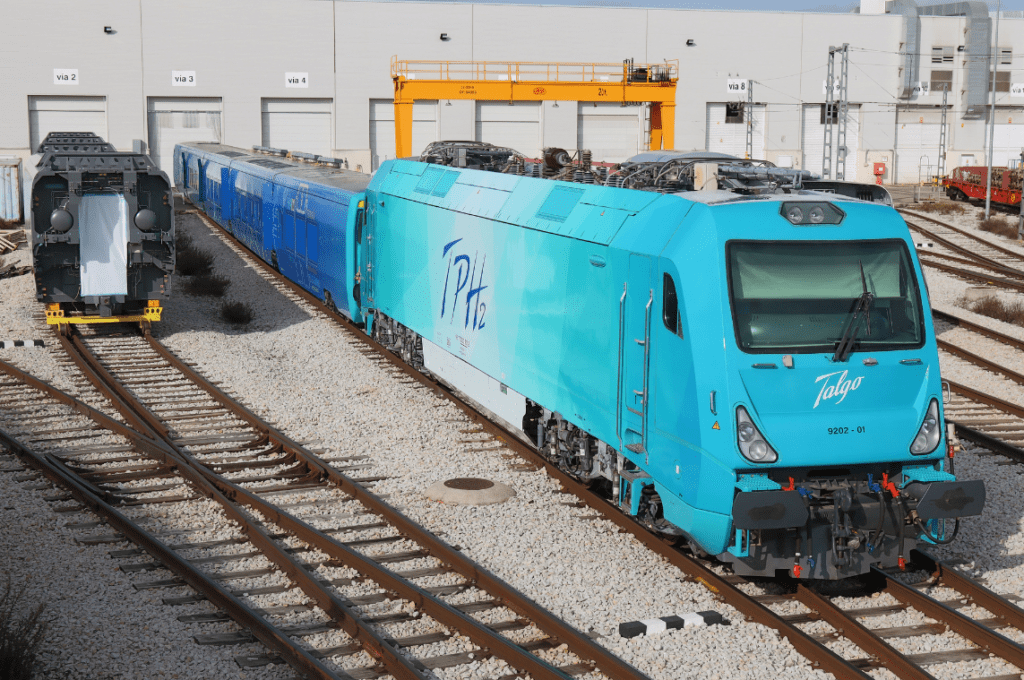
AERRL has published the first part of a study on alternatives to diesel propulsion available in the market for both freight and passenger trains.
This research was commissioned by the consulting company eolos and conducted with the support of AERRL, as well as leasing companies Akiem, Beacon, Cargounit, and several major European banks.
The Association of German Transport Companies (VDV) has shared challenges related to transitioning to alternative energy sources and electrification.
The study conducted by AERRL and consultants encompasses the regulatory framework of the European Union and national policies, relying on interviews with representatives of the European industry, operators of freight and passenger transport, research institutions, and other organizations.
The primary goal of this research is to initiate discussions on effective policy measures to promote the adoption of low-carbon propulsion in the European Commission.
The second part of the study, to be published later, will provide detailed assessments of the environmental impact of each alternative.
The relevance of this research stems from the European Union’s aspiration to become the first climate-neutral continent by 2050.
To achieve this goal, it is necessary to increase the volume of railway freight transport, which currently accounts for less than 0.5% of the total CO₂ emissions in the EU. However, approximately 50% of the European rolling stock still relies on diesel fuel.
Package “Railway Supply: Sales”
According to AERRL, there are currently over 10,000 diesel locomotives in operation in the region, with an average service life of at least 20 years.
According to researchers, electrification remains the most favorable option, even if the construction of the necessary infrastructure requires significant investments and time. Currently, 40% of the railway network in Europe, responsible for 20% of all freight transport, is not yet electrified.
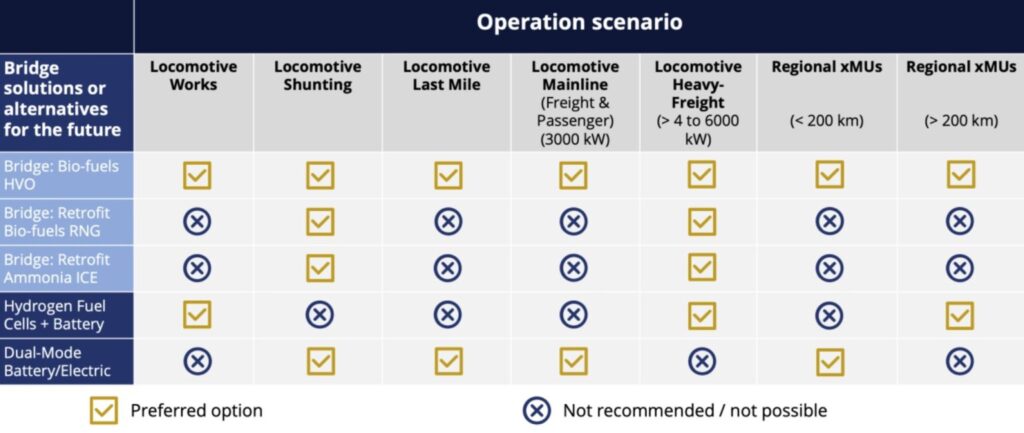
AERRL suggests that transitioning to hydro-treated vegetable oil (HVO) as a source of traction could be a temporary solution. Using HVO does not require engine modifications or refueling station upgrades, and its primary advantage is ease of implementation.
When using HVO, CO₂ emissions can be reduced by 85–90%. However, a liter of HVO costs 30 euros more than diesel fuel, and fueling stations must comply with specific standards depending on the type of fuel.
Biomethane and ammonia are considered short to medium-term solutions. Both options will require rolling stock modernization and the construction of refueling infrastructure, with the adaptation of ammonia for railway traction taking five years.
Consultants from Eolos cite the example of DiGas, a Latvian company that conducted successful experiments with partial diesel-to-gas fuel replacement in switcher locomotives.
This solution has proven to be technically feasible and economically efficient, provided that local companies can supply biomethane at affordable prices.
According to AERRL, the most promising long-term solution is electric and battery-powered traction, which will reduce the need for electrification by 26–50%.
However, researchers note that battery traction is primarily suitable for passenger trains and is not suitable for freight locomotives.
Furthermore, many experts anticipate a future shortage of materials required for manufacturing lithium-ion batteries, such as cobalt and lithium.
The authors of the study recommend considering the use of rolling stock with hydrogen fuel cells if other alternatives prove to be economically impractical.
Package “Railway Supply: Exhibitions”
However, this requires access to a sufficient supply of green hydrogen. Both hydrogen and ammonia are considered long-term alternatives for freight rolling stock.
The last part of the published document represents a plan for the immediate decarbonization of rail transport and corresponding regulatory measures.
The authors propose extending subsidies for electrification, the development of biofuel production, research into the implementation of traction using biomethane and ammonia, as well as updating the technical specifications (TSI) to consider alternative technologies in the future.
In late May, the European Parliament’s Committee on Transport and Tourism (TRAN) approved a new agreement, requiring EU countries to submit projects for national policies on alternative fuel development for the transportation sector and the corresponding infrastructure to the European Commission by January 1, 2025.
The agreement also calls for an assessment of the implementation of rolling stock using alternative forms of traction on sections of the railway network that cannot be fully electrified due to technical or economic reasons.
On the other hand, since the production of alternative fuels is expanding slowly and affecting other factors, VDV expects a shortage of these types of fuel by 2030.
The transition to alternative and more environmentally sustainable fuel sources for railway locomotives is a complex challenge that requires extensive efforts and investments.
Europe has set ambitious goals for reducing carbon emissions and transitioning to clean energy, which implies significant changes in the transportation sector.
Key aspects of this transformation include:
1. Electrification: Continuing the process of electrifying railway networks will help reduce dependence on diesel fuel. Electrification enables the use of more environmentally friendly energy sources such as wind and solar power to power electric trains.
2. Alternative Fuel Types: Research and development in alternative fuel types such as hydro-treated vegetable oil (HVO), biomethane, ammonia, and hydrogen play a crucial role in transitioning to cleaner railway traction. They can be used as temporary solutions or for specific applications.
3. Batteries and Battery Traction: Battery traction and batteries are interesting options for passenger trains, especially on short to medium distances. However, for freight trains, this option may be less practical due to the weight and charging time.
4. Collaboration and Investment: Effective implementation of these changes requires collaboration between governments, railway operators, investors, and innovative companies. Funding and support for innovation play a crucial role in achieving carbon reduction goals.
5. Long-Term Perspective: Transitioning to more sustainable railway traction is a long-term task. It’s essential to develop and implement plans that consider economic feasibility and the availability of alternative solutions.
The European Parliament’s Committee on Transport and Tourism is actively working on regulatory measures and policies to support the transition to cleaner railway traction. In the meantime, European railway companies and the industry are conducting research and experiments to find optimal solutions for reducing CO₂ emissions and achieving a sustainable railway transportation system.
News in railway transportation you might have missed:


