LTG Begins AI Railway Trials and 3D Scanning in Lithuania
26.07.2026
LTG Group has begun testing artificial intelligence and 3D infrastructure scanning across Lithuania’s rail network, creating tools for automated maintenance while treating driverless trains as a longer-term prospect.
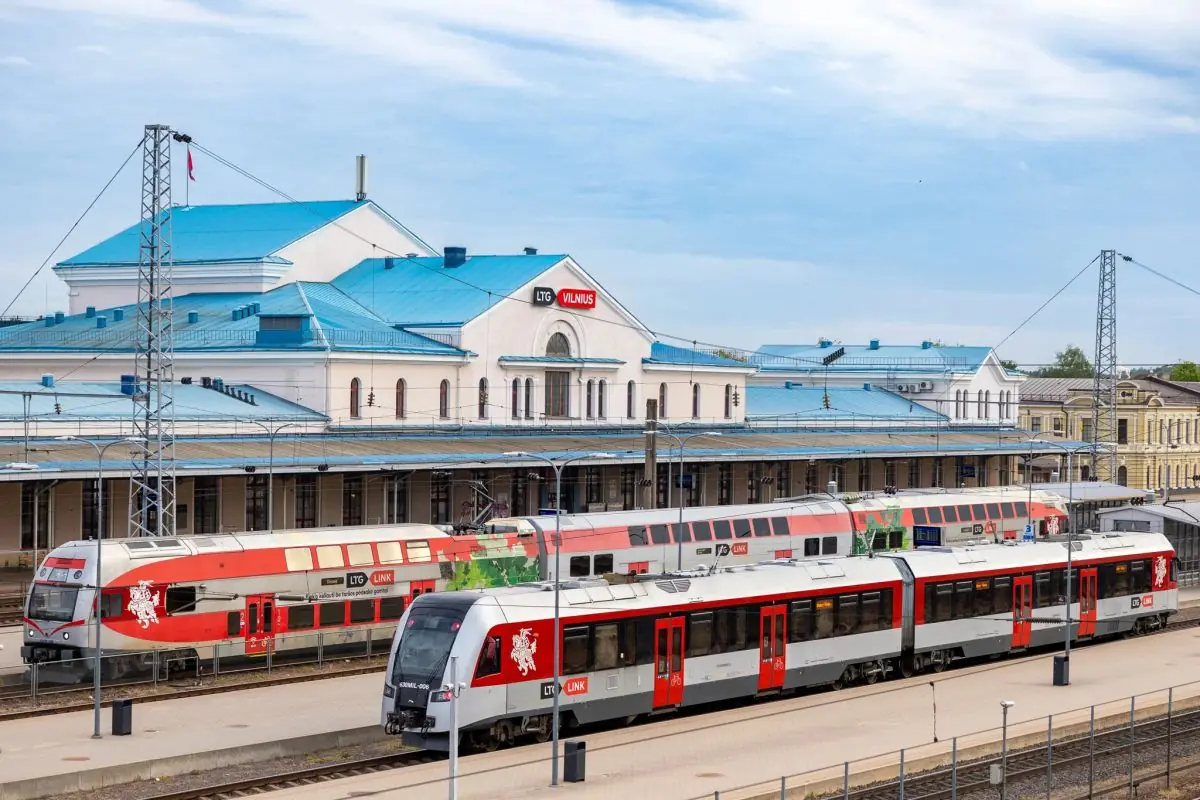
The official LTG announcement was published on July 9 and presents the work as a staged technology programme, not the imminent introduction of fully autonomous trains. LTG is assessing sensors, cameras and analytical algorithms that can determine whether boarding is complete and identify people or objects in the danger zone around train doors.
The group identifies track-obstacle monitoring, speed and operating-parameter control, and remote supervision as further automation targets. These components would have to operate together reliably before they could support more autonomous train operations.
A digital twin for a 3,500-kilometre network
At the centre of the current work is a 3D scanning system designed to capture the railway network’s geometry in real time and create a detailed digital twin. The model is intended to reveal small infrastructure changes, support condition assessment, flag potential faults and guide maintenance, repair and development decisions.
LTG expects critical measurements to become faster, more accurate and more automated. That matters on a national network extending for more than 3,500 kilometres, where even partial automation could change how inspection data is collected and used.
Don’t miss…SCR Completes 203-Km Kazipet–Balharshah Third Line
AI obstacle detection remains under validation
AI-based environmental monitoring tools are also being tested to analyse railway sections in real time. They are intended to detect fallen trees, vehicles and other hazardous objects on the track, and could automatically identify a problem and trigger a response.
The company says every component must pass controlled and real-world trials before entering day-to-day operation. Any wider deployment will depend on demonstrated reliability, safety and performance across different scenarios.
Electrification creates an immediate use case
LTG also expects 3D scanning to support the electrification of the main Vilnius–Klaipėda corridor, where monitoring the power-supply network and restoring service quickly will be important for reliable operation.
An official project update identifies a 363-kilometre route, traction substations, autotransformers and systems for stable electricity supply within the electrification programme. This gives the monitoring technology an immediate infrastructure use case alongside LTG’s longer-term automation programme.
News on railway transport, industry, and railway technologies from Railway Supply that you might have missed: