SEPTA’s Accelerate plan covers 560 new rail vehicles without a total price
The SEPTA Accelerate plan, unveiled on September 22, lists 130 low-floor trolleys, 200 Market-Frankford Line cars and 230 Silverliner VI Regional Rail cars, but the announcement gives no total cost.
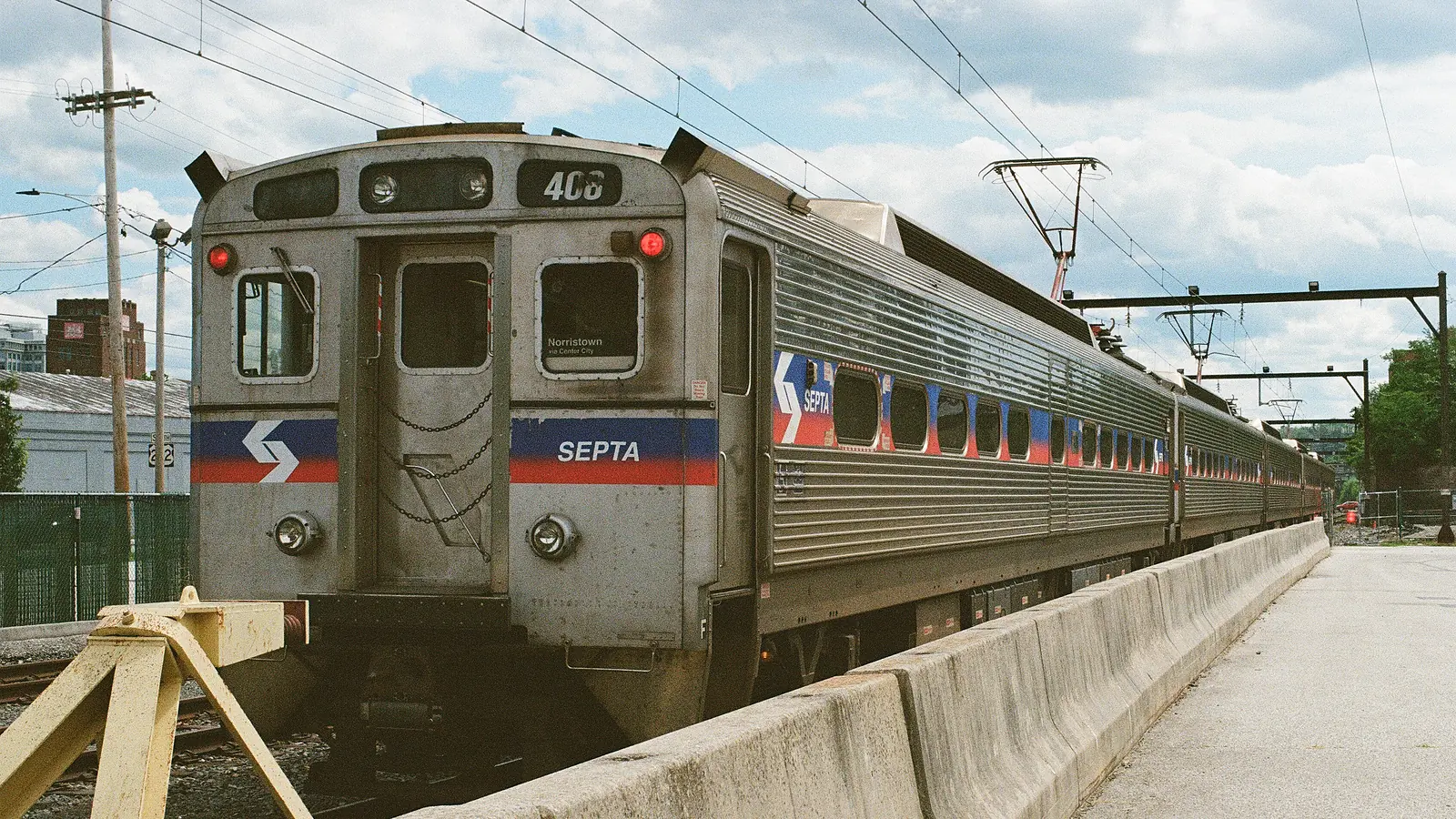
The Southeastern Pennsylvania Transportation Authority presented Accelerate as its vision for safer, more reliable and fully accessible transit across southeastern Pennsylvania, with investment spread over the next ten years. Replacement fleets for the Broad Street Line (B) and the Norristown High Speed Line (M) are to follow later, with no quantities or dates attached.
On the bus side, SEPTA plans new transit centers and wants to raise the number of frequent routes from eight to 29. Taken together, the agency expects the program to put more than two million people a quarter mile or less from frequent service, compared with 900,000 now. Nearly half of all jobs in the region would sit within the same distance, against one in four today. Every trip would pass through an accessible station, compared with 59.7% of trips at present. On Regional Rail, the target is trains at least every quarter hour on all seven days at nearly half of roughly 150 stations.
| Measure | Today | Accelerate target |
|---|---|---|
| People living a quarter mile or less from frequent transit | 900,000 | More than 2 million |
| Share of regional jobs near frequent transit (quarter mile or less) | One in four | Nearly half |
| Trips passing through an accessible station | 59.7% | 100% |
| Bus routes with a bus at least every 15 minutes, all week | 8 | 29 |
| People added near frequent buses (quarter mile or less) | — | About 800,000 |
| New frequent Regional Rail service | — | 75 miles |
| People near frequent Regional Rail (quarter mile or less) | — | More than 500,000 |
The plan sets no date by which each target is to be met. Figures are SEPTA’s own and come from the Accelerate vision page and the announcement; a dash means SEPTA gives no current figure.
Where the three rail car purchases stand
Two of the three rail car programs already have manufacturers, and the third is in an open procurement. In July 2024, SEPTA’s board chose Hitachi Rail STS USA for the Market-Frankford Line contract: 200 cars, with an option for 40 more, at a base price of $724.3 million. Deliveries are due to begin in 2029, and the full fleet should be in place by the end of 2031. Together with new signaling, the cars are meant to support trains every three minutes on the L.
Alstom will build the 130 trolleys after SEPTA selected it as manufacturer in 2023. The authority’s own schedule puts manufacturing in 2027–2030, vehicle and system testing in 2029–2030, and fleet delivery and deployment in 2030–2034. They replace a trolley fleet more than 40 years old on the T, G and D lines in Philadelphia and Delaware County. Peak service is planned every five minutes on the T and every 15 minutes on the D.
The Silverliner VI purchase is at an earlier stage. The press release says SEPTA is starting formal bidding for 230 cars, yet the authority’s procurement page already lists request for proposals 25-00300-AMJP for Silverliner VI rail cars as open. The latest addendum, number 13, is dated September 22, 2026, and proposals are due on October 30, 2026. Under the plan, the new cars take over from the 50-year-old Regional Rail fleet between 2030 and 2035. SEPTA says wider aisles and doors will make boarding 35% faster and that energy-efficient equipment will save more than $12 million a year.
How SEPTA links the plan to new funding
SEPTA ties Accelerate to new investment. Board chair Kenneth E. Lawrence Jr. said that after years of chronic underfunding the authority must show it is a worthy partner for greater investment, and argued that it already ranks among the country’s most efficient transit systems. The Accelerate page warns that keeping funding at current levels would amount to taking Pennsylvania’s biggest transit network apart step by step. Neither the release nor that page puts a price on the full program.
What SEPTA’s 12-year capital program already covers
SEPTA’s budget documents show how much of the new rolling stock is already built into its capital plans. The $920.7 million capital budget for fiscal 2027, proposed in April and approved by the board on June 25, belongs to a 12-year Capital Program that the April proposal put at $16.3 billion, with $7.7 billion set aside for new trolleys, L cars and Regional Rail cars. SEPTA’s budget page now puts the program at $16.5 billion. That program relies on borrowing $4.3 billion over 12 years and, by SEPTA’s own account, lacks the capacity to fully fund replacing the Broad Street Line cars, which are close to 50 years old.
On the operating side, the fiscal 2027 budget keeps fares and service unchanged by drawing on the second and final year of a $394 million transfer of capital funds approved by PennDOT. Savings have cut the structural deficit from $213 million to $192 million. SEPTA has said its future remains uncertain without a long-term state funding solution in the coming year.


