Leo Express rolling stock tender covers 65 trains
16.06.2026
The Leo Express rolling stock tender has opened for new electric and battery-electric multiple units under a framework agreement designed to expand the operator’s train fleet.
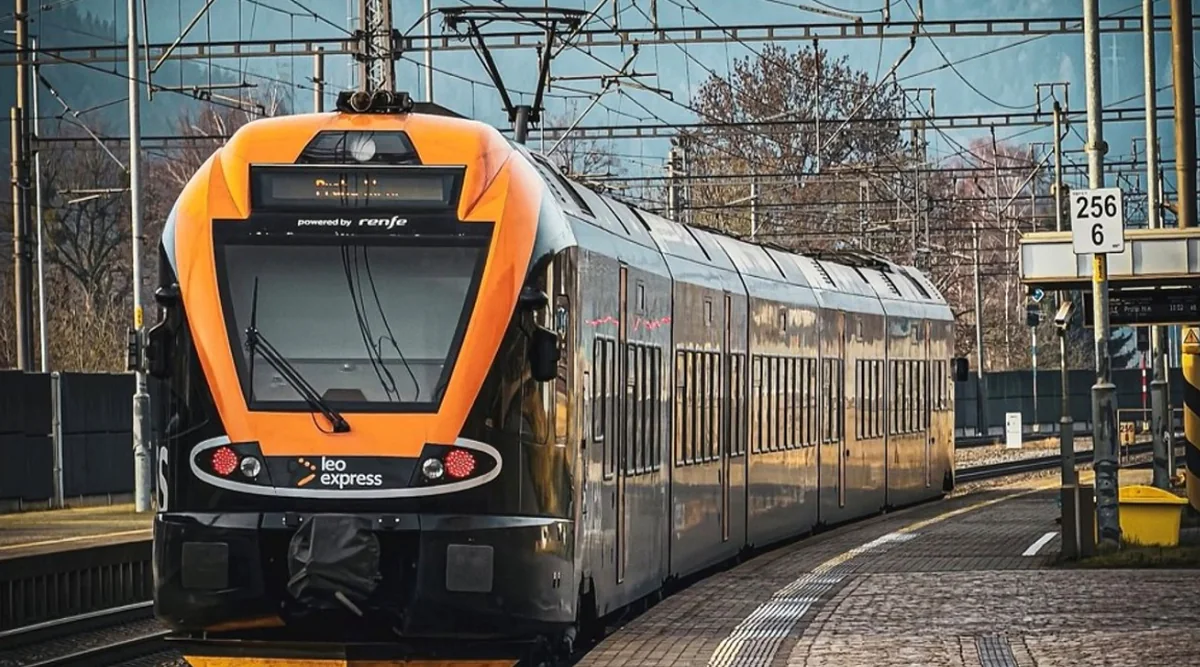
The contract is estimated at EUR 1.65 billion, or CZK 40 billion, although the final value will depend on the number of units ordered and the use of available options. Bids must be submitted by 29 June 2026.
Leo Express rolling stock tender structure
The procedure is divided into four regional lots. The firm order covers 44 BEMUs and 21 EMUs, while each lot also includes options for up to four additional units per type. In total, the options could add up to 16 more BEMUs and 12 more EMUs.
Lot 1 covers the Olomouc region and includes 11 BEMU units, with an option for four more vehicles.
Lot 2 is assigned to the Zlín region and provides for seven BEMUs, also with an option for four additional units.
Lot 3 concerns the Hradec Králové region and includes 18 BEMUs together with eight EMUs.
Lot 4 applies to the Vysočina region, where the procurement covers eight BEMUs and 13 EMUs.
New EMUs and BEMUs technical scope
The tender documentation sets separate technical requirements for the two vehicle types. The battery-electric units are expected to provide 121–151 seats and reach up to 120 km/h in battery operation and up to 160 km/h in electric mode.
The EMUs will offer 121–150 seats and are intended for electrified infrastructure, with operating speeds of up to 160 km/h. The supported power systems are 25 kV AC and 3 kV DC.
The evaluation will be based on three cost-related factors: purchase price, maintenance costs and electricity consumption. Price carries the largest weight at 70%, followed by maintenance costs at 22% and energy consumption at 8%.
For Leo Express, the procurement represents its most extensive fleet renewal programme so far. The company currently operates around 24 trains in the Czech Republic.
Fleet renewal follows passenger growth
The new tender follows a period of fast operational growth and rising demand for Leo Express services. In April, the operator introduced modernised Talgo VI trains leased from Renfe, with each train consisting of 13 carriages and offering capacity for 350 passengers.
Renfe acquired a 50% stake in Leo Express in 2021. Since then, the operator has continued to expand its international network, increase passenger volumes and strengthen its position across Central European markets.
In 2025, Leo Express transported 4.565 million passengers. This was an increase of more than 19.2% compared with the previous year and made the company the fastest-growing Czech rail operator.
On commercial routes within the Czech Republic, passenger numbers rose by more than 25%. This growth came while the wider rail market remained stagnant, according to preliminary data from the Czech Statistical Office.
The operator also reported strong reliability indicators in recent years. It recorded zero incidents caused by the company and attributed only 8.95% of delays to its own operations.
Heating and air-conditioning systems reached 100% functionality. Leo Express also reported high passenger satisfaction levels, with 90% of passengers satisfied with onboard cleanliness and almost 89% satisfied with staff and catering services.
These service standards add to the need for continued modernisation of the company’s rolling stock fleet.
Network expansion increases rolling stock needs
Growing demand has also led to a broader network and higher service frequency. In 2026, Leo Express expects annual passenger numbers to exceed six million, supported by new international and regional routes.
The planned services include direct connections between Kraków and Warsaw and expanded operations on the Prague–Bratislava route. The operator also plans new cross-border services to Germany, including Dresden, Leipzig, Erfurt and Frankfurt.
Leo Express has also recently signed a contract with the Czech Ministry of Transport for the Prague–Plzeň–Domažlice route from December 2026. The route will provide a direct rail connection between Prague and Munich.
This expansion will significantly increase demand for modern, energy-efficient rolling stock that can operate on both electrified and non-electrified lines.