
Hungary’s 30-Year InterCity Wait Reaches the Test Track
19.08.2026
HUNGARY: Hungary’s first purpose-built InterCity fleet in three decades has entered testing, with the inaugural GYSEV FLIRT InterCity sent to Romania before passenger service begins in 2027.
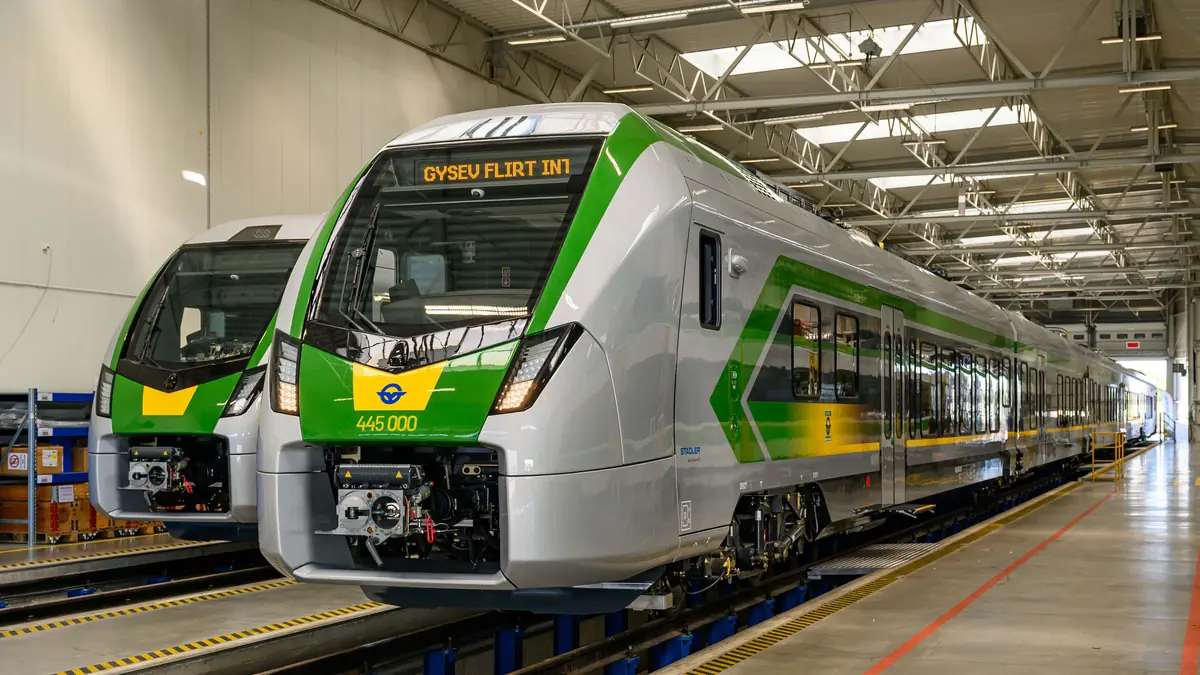
Stadler completed the first of 11 five-car electric multiple units at its Siedlce factory in Poland and presented it to GYSEV management and Hungary’s Minister of Transport and Investments, Dávid Vitézy, on July 30.
The GYSEV FLIRT InterCity programme is Hungary’s first procurement of rolling stock specifically designed for InterCity services in 30 years. Vitézy said the fleet would also introduce the country’s first fully accessible InterCity trains equipped with an end-to-end CCTV system.
The March 2024 contract originally covered nine trains with options for up to four more. GYSEV subsequently exercised options for two additional units, increasing the fleet to 11.
Don’t miss… Stadler Will Supply 9 New Intercity Electric Trains Flirt for GySEV
Why Hungary sent its newest InterCity train abroad
The testing programme covers Romania, the Czech Republic and Hungary, but these countries do not form a future passenger route. Romania’s Făurei Railway Testing Centre is an independent facility where manufacturers can conduct dynamic, braking and running-performance trials away from regular passenger services.
Additional testing is planned in the Czech Republic, while domestic trials in Hungary are expected to begin by the end of 2026. Stadler said activities at the three locations would run in parallel rather than form one sequential route.
The dual-system trains are designed for speeds of up to 160 km/h on the Sopron–Budapest and Szombathely–Budapest routes. Operation is also planned in Austria after the necessary approvals are obtained.
What the GYSEV FLIRT InterCity changes for passengers
Each train will provide 280 seats in its winter configuration, including 32 in first class. Passengers will also receive air-conditioned low-floor areas, Wi-Fi, USB-C charging, modern information displays and an accessible toilet.
The interior can be rearranged to carry as many as 18 bicycles during summer. For longer journeys, the trains will include a bistro area with food and beverage vending machines, as well as holders for tablets and smartphones.
The timetable now depends on certification
Bodyshells for the remaining trains are being manufactured at Stadler’s Szolnok plant in Hungary before final assembly in Siedlce. Production of the other 10 units is continuing alongside the international testing programme.
The first trains are expected to reach Hungary by the end of 2026 for domestic trials. GYSEV plans to introduce them into passenger service gradually from 2027, subject to testing and regulatory approval, with the full 11-unit fleet scheduled to be operational by summer 2028.
The decisive milestone will be the completion of international and domestic trials. Successful certification would clear the first units for passenger service from 2027 and end Hungary’s three-decade wait for purpose-built InterCity rolling stock.
News on railway transport, industry, and railway technologies from Railway Supply that you might have missed:
Don’t miss… Stadler FLIRT Trains Greater Poland Contract Set for 2028



