European Commission Launches €345 Billion High-Speed Rail Plan to Transform Europe by 2040
The European Commission has come up with a strategic plan that targets the development of the TEN-T high-speed rail transport network by 2040 to connect Europe with sustainable transport.
This is reported by the railway transport news portal Railway Supply.
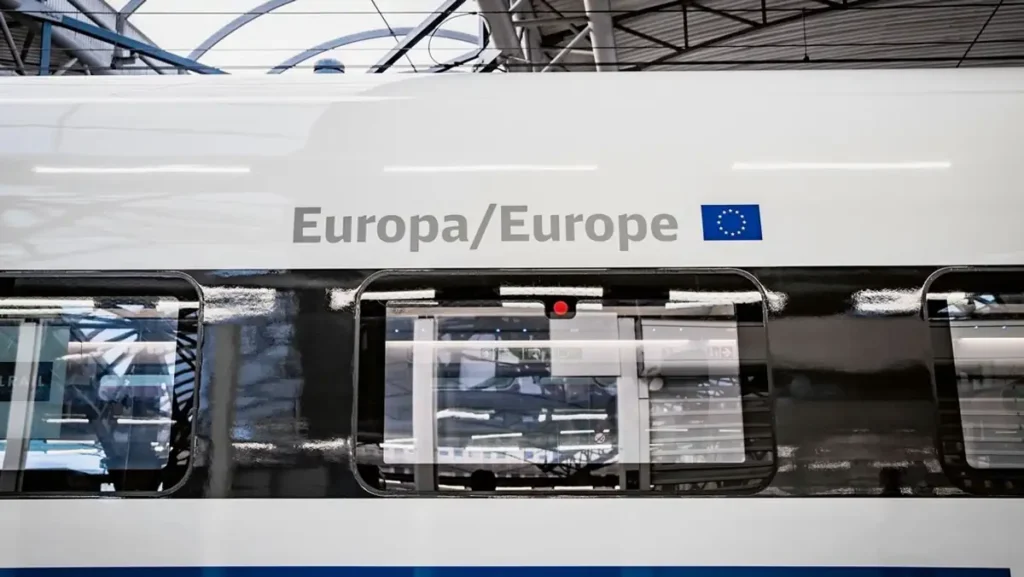
European Commission Invests in TEN-T to Speed Up Connections Between Capitals
The project aims to build and improve core corridors with investment requirements amounting to €345 billion. Furthermore, travel time between Berlin and Copenhagen will be shortened to just four hours by 2030 from the present seven hours. In 2035, travel time between Sofia and Athens will be within six hours.
Don’t miss…ERTMS trials drive Spain’s smart railway future
Moreover, the European Commission believes that passengers will be able to travel from Lisbon to Madrid within three hours and from Paris within nine by 2040. This will increase competitiveness with air travel since it offers rapid and comfortable transport with lower CO₂ emissions.
European Commission Enhances European Innovation Council
The project has been broken down into four key areas. The first area is concerned with establishing an integrated financial plan and harmonized train operations on transboundary lines. Members are anticipated to harmonize train schedules and increase train speeds to above 250 km/h by 2027.
The second area aims to liberalize the market. In 2027, the European Commission has outlined plans to set up a market pool for second-hand rolling stock within the European rail market and remove administrative obstacles to new entry in the high-speed rail market.
The third area includes matters related to innovation. As from 2026, Europe will invest in the development of next-generation trains with substantially higher speeds through the Europe’s Rail partnership. Additionally, there will be simplification in the process of certifying drivers. Furthermore, there will be an updated rollout plan with regard to the adoption of the ETCS traffic management system within the TEN-T network.
Finally, the fourth area enhances the role of the European Union Agency for Railways (ERA). The ERA will be made stronger to remove any redundant national rules and facilitate certification procedures related to innovative technologies, encouraging confidence in innovation and implementing projects faster.
News on railway transport, industry, and railway technologies from Railway Supply that you might have missed: