VTA finishes Eastridge rail tie-in at Alum Rock in 16-day train shutdown
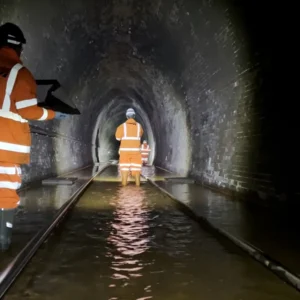
Contractors for California’s Santa Clara Valley Transportation Authority (VTA) connected the Eastridge light rail extension to the Orange Line at Alum Rock during a 17-day road closure ending September 17.
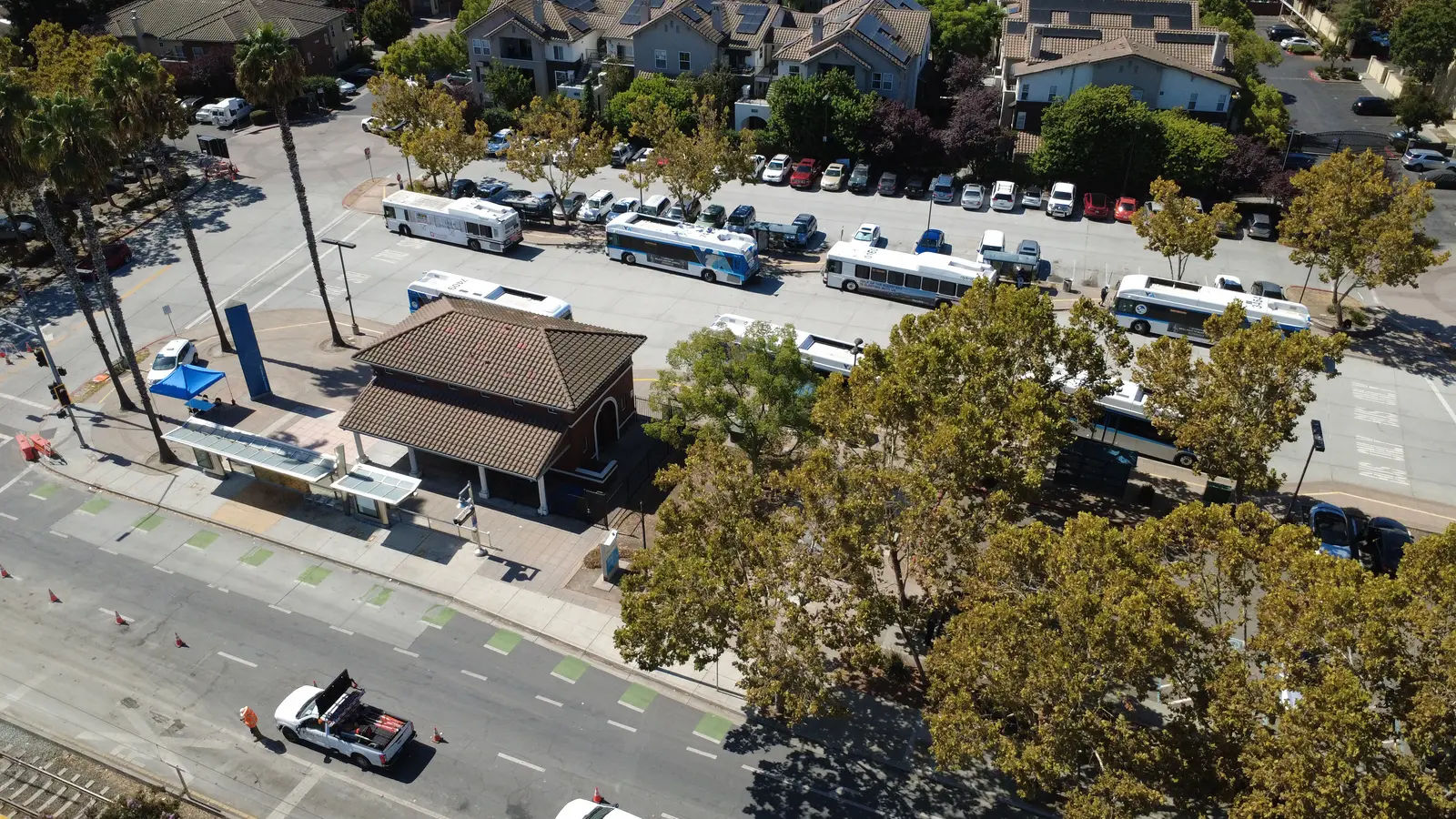
The work took place at the project’s north end, where South Capitol Avenue meets Wilbur Avenue in East San Jose. Crews joined the track and the overhead catenary system (OCS) coming out of Alum Rock station to the new line, and VTA reopened the intersection on the evening of September 17. RailWorks, which carried out the job together with its L.K. Comstock brand, announced the completion on September 22 and said the teams kept to schedule and beat their planned production targets.
What crews rebuilt at the Wilbur crossing
The job mixed trackwork and civil work with traction power, OCS, signalling and communications. According to RailWorks, crews replaced 216 track feet of road crossing panels with embedded track, laid 960 linear feet of new track on 144 concrete ties, placed 700 tons of sub-ballast and 400 tons of ballast, and made four thermite welds. On the power side they extended 44 poles, pulled 15,000 feet of wire for the parallel feeder and built 11 cast-in-drilled-hole foundations for OCS and signal equipment.
| Discipline | Item | Quantity |
|---|---|---|
| Track | Ballasted track taken out | 476 track feet |
| Road crossing panels taken out | 216 track feet | |
| Embedded track laid | 216 track feet | |
| Transition slabs | 80 track feet | |
| New track | 960 linear feet | |
| Concrete ties | 144 | |
| Sub-ballast | 700 tons | |
| Ballast | 400 tons | |
| Tire shred layer | 360 cubic yards | |
| Rail destressed | 500 track feet | |
| Thermite welds | 4 | |
| Underdrain | 500 linear feet | |
| Duct bank and vaults | Conduit | 5,680 linear feet |
| Concrete | 208 cubic yards | |
| CSD vaults | 2 | |
| Traction power and OCS | Pole extensions | 44 |
| Parallel feeder wire | 15,000 feet | |
| Cast-in-drilled-hole foundations for OCS and signal equipment | 11 | |
| Rigid galvanized steel conduit | 600 feet | |
| Impedance bonds taken out and refitted | 2 | |
| Corrosion test boxes | 4 | |
| DG units | 2 | |
| Signals and communications | Innerduct, fiber and copper cable | 12,000 feet |
| Uninterruptible power supply for communications | 1 | |
| Signal transformer | 1 | |
| Network switch | 1 | |
| Signal electrification equipment | Not stated |
The table shows everything RailWorks listed for the job: most of the volume went into track and the power and signal links that tie the extension to Alum Rock. Grouping by discipline is by Railway Supply; CSD and DG are the contractor’s own labels. Source: RailWorks.
Part of the work sat on the line that already carries passengers. Along Capitol Avenue from Mabury Road to Wilbur Avenue, VTA’s service notice lists new OCS anchor foundations, extended poles, cantilever arms and feeder cables, plus rehabilitation of the grade crossing at Wilbur. Because existing overhead equipment had to be modified, trains could not run on the eastern end of the Orange Line.
How the closure affected Orange Line riders
From September 2 to September 17, Orange Line trains did not serve Berryessa, Penitencia Creek, McKee and Alum Rock stations. Riders changed at Hostetter station to a bus bridge that stopped at Penitencia Creek and the Alum Rock Transit Center. Pedestrians and cyclists heading to the transit center were sent to cross at Florence Avenue, because the Wilbur intersection was shut to through traffic in both directions.
Road closures began on the night of September 1. RailWorks describes the job as a two-week outage, while VTA’s notices date the intersection closure from September 1. In its weekly construction update of September 14, VTA expected the operation to end around September 18, so the reopening came in line with that estimate. On September 21 the agency added that traffic signal problems at the intersection were still being monitored and fixed.
Where the Eastridge project stands
The Eastridge to BART Regional Connector, formerly called the Capitol Expressway Light Rail Project, runs 2.4 miles from Alum Rock to the Eastridge Transit Center, mostly on a viaduct in the median of Capitol Expressway. It adds an elevated station at Story Road and a ground-level terminus at Eastridge, so riders will be able to board there and change to BART at Milpitas.
VTA said on September 14 that the superstructure was at least 90% complete and that the viaduct should be completed by the end of 2026, followed by track installation and testing. The agency expects the whole project to be finished in early 2028. On September 21 it reported that crews had poured the final concrete deck at the north end, in a build that began in spring 2024.
| Date | Milestone | Status |
|---|---|---|
| Fall 2012 | Phase 1A: new sidewalks, street lights and a landscaped buffer along Capitol Expressway from Quimby Road to Capitol Avenue | Done |
| 2015 | Phase 1B: Eastridge Transit Center rebuilt | Done |
| March 7, 2024 | VTA board awards the construction contract to the MCM Railworks joint venture | Done |
| Spring 2024 | Construction of the light rail extension (Phase 2) starts | Done |
| April 30, 2026 | 65% of the work complete | Reported by VTA |
| June 5, 2026 | 67% of the work complete | Reported by VTA |
| September 1–17, 2026 | Track and OCS tie-in at Alum Rock, Wilbur Avenue intersection closed | Done |
| September 14, 2026 | At least 90% of the superstructure finished | Reported by VTA |
| End of 2026 | Viaduct complete, then track installation and testing | Planned |
| Early 2028 | Whole project complete | Planned |
The Alum Rock tie-in falls in the last stretch of a program that began in 2012; the remaining steps before completion are the viaduct, track and testing. Sources: VTA project page, VTA spring 2024 newsletter.
Cost and contract behind the Eastridge extension
The VTA board awarded the construction contract to the MCM Railworks joint venture on March 7, 2024, for $437,161,464, according to the agency’s spring 2024 project newsletter. The winning bid came in above VTA’s estimate and opened a funding gap of about $122.8 million, which the agency closed mainly with local transit funds. The contractor expected to finish a year earlier than originally planned. VTA puts the overall project cost at $653 million.