Bransty Tunnel gets £60m fix, but permits and 9–15 months of work lie ahead
Network Rail has secured funding for a £60 million Bransty Tunnel repair that would also treat Whitehaven’s orange mine water, with permits needed before nine to 15 months of work.
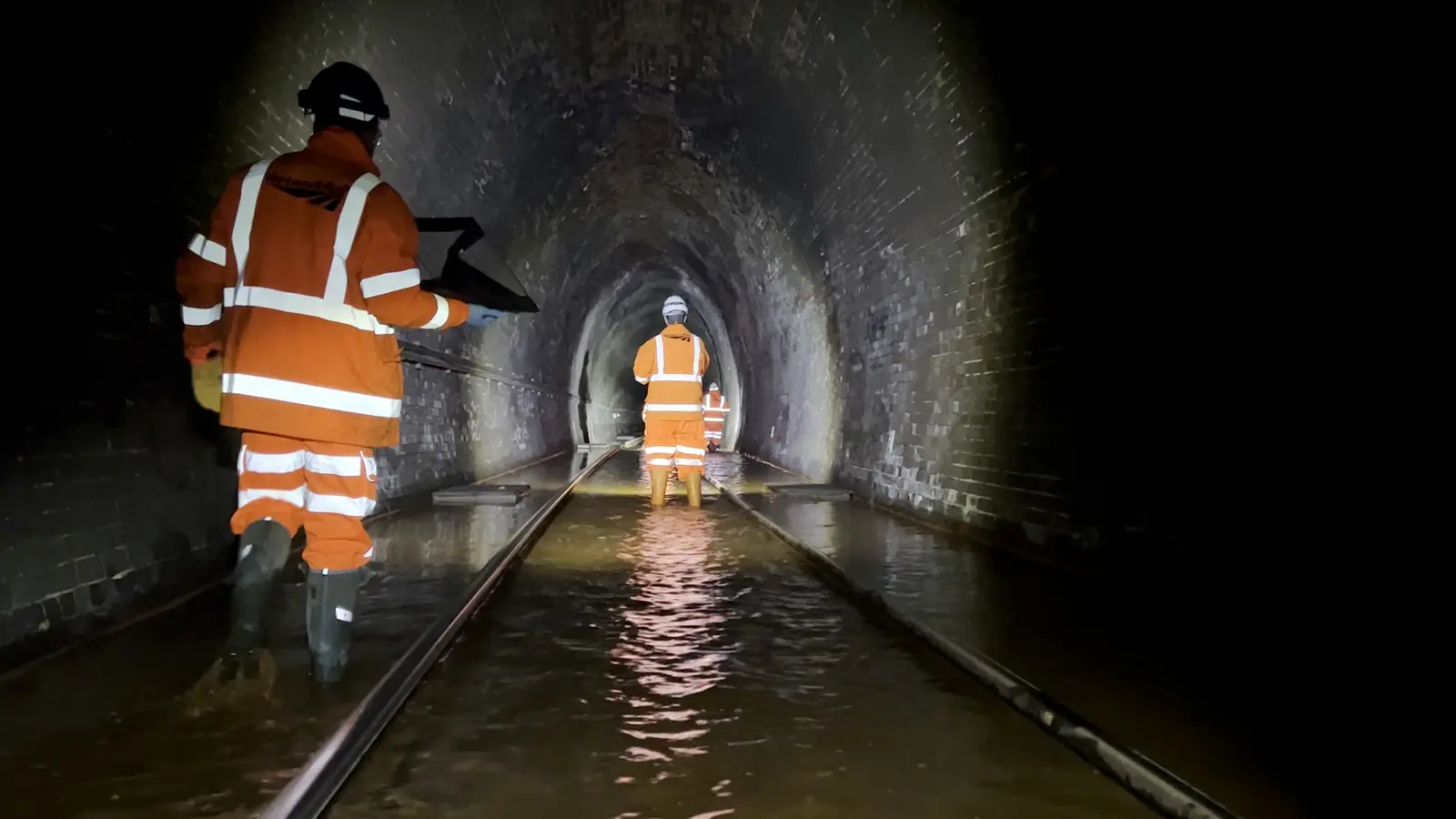
The proposed £60 million solution would tackle the ground problems beneath the tunnel and let the track and drainage be renewed. The tunnel carries the Cumbrian Coast Line for about 1km between Whitehaven and Corkickle stations.
Beyond the railway, the scheme would also stop discoloured water from historic mine workings flowing through the tunnel into Whitehaven Harbour. Network Rail plans to build a small treatment plant next to the railway and operate it itself.
Whitehaven and Workington MP Josh MacAlister, who leads the Whitehaven Harbour Task Force, announced the investment on 16 September. His office said Network Rail would fill the disused mine workings beneath the line and lay 1km of new track and ballast through the tunnel. Permanent treatment would handle the mine water, which has been reaching the harbour for about four years.
An earlier option of piping the water out to sea through a new outfall was studied and dropped. Before the closure, flooding had repeatedly shut the tunnel and trains were held to 5mph inside it, the office said. The office expects the upgrade to keep the tunnel open for the next 60 years.
While the tunnel stays shut, a rail replacement bus runs between Corkickle and Whitehaven, and Northern lists the section as closed until further notice.
Permits come before the start of work
Network Rail says the scheme still depends on approvals and permits, and it is working with the Environment Agency, the Mining Remediation Authority and the Harbour Authority. According to the MP’s office, talks with the Environment Agency on the permissions are under way and Network Rail is lining up contractors. The aim is to start before the end of 2026, although that date is not yet confirmed.
Once under way, the repairs are expected to take nine to 15 months because of their complexity, which puts the end of the work in 2027 at the earliest. MacAlister said the funding followed two years of work with local partners and ministers through the task force. He added:
“I am now pressing for the work to begin as soon as possible.”
How the 2025 track renewal became a closure of more than a year
Network Rail had planned to renew the rails, sleepers, ballast and drainage in the tunnel during a full line closure from 30 August to 22 September 2025, after a preparatory weekend closure starting on 25 July. At that stage it arranged a temporary plant to treat water extracted during the works.
Surveys that began on 25 July showed the tunnel floor needed major strengthening to carry the heavy renewal machinery, with historic mine workings complicating the job. The tunnel has stayed shut since that day. In September 2025 Network Rail expected the closure to last until spring 2026.
| Date | What happened or is planned | Source |
|---|---|---|
| 18 July 2025 | Renewal of track and drainage in the tunnel announced, with the line due to close from 30 August to 22 September 2025 | Network Rail |
| 25 July 2025 | Surveys begin and the tunnel closes to trains | Network Rail |
| 18 September 2025 | Closure expected to last until spring 2026 | Network Rail |
| 16 September 2026 | £60 million repair and mine water treatment scheme announced, pending approvals and permits | MP’s office, Network Rail |
| By the end of 2026 (target, not confirmed) | Start of the repairs | MP’s office |
| 9 to 15 months after the start | Expected completion of the repairs, in 2027 at the earliest | MP’s office; year calculated by Railway Supply |
The tunnel was due to reopen after 22 September 2025. On the current plan, the repairs alone would run until 2027 at the earliest. The year is a Railway Supply calculation from the start target and the stated duration.