Two recipients get two-thirds of Canada’s C$4.5m rail trespassing grants
Transport Canada has announced over C$4.5 million for 12 rail trespassing prevention and education projects, aimed at the hazard behind 53 of 71 deaths on federally regulated railways in 2025.
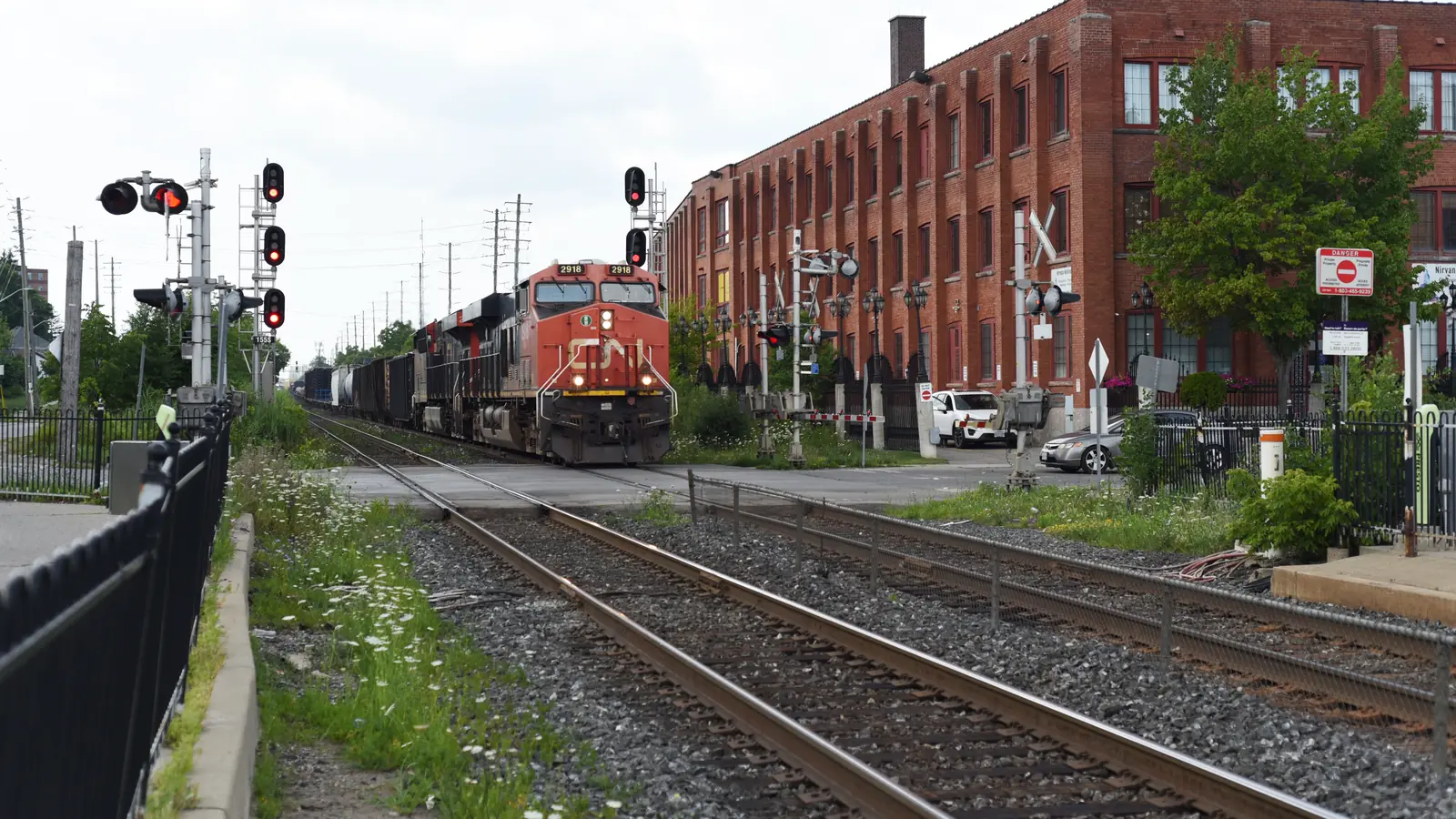
The awards, made public on September 24, 2026, come from the Education and Awareness stream of the Rail Safety Improvement Program (RSIP), which the department has run since 2016. Minister of Transport Steven MacKinnon announced the funding for work planned over 2026 to 2029. The published project list covers national campaigns as well as local efforts in Ontario, Quebec, Manitoba, Alberta and British Columbia.
Where the C$4.5 million goes
Two recipients take most of the money. Operation Lifesaver receives C$1.8 million for a national program. It covers public campaigns, outreach in schools and communities, work with Indigenous communities and talks by volunteers. It will pick locations using incident records, Transportation Safety Board data and information from railway partners. The Canadian Safety Train Express gets C$1,242,804.09 for location-based digital education in 10 communities with high trespassing rates: London, Montréal, Calgary, Chilliwack, Winnipeg, Oshawa, Belleville, Hamilton, Brampton and Edmonton.
By Railway Supply’s calculation, the two grants come to C$3,042,804.09, or about 67% of the C$4,518,004.09 listed by Transport Canada. Roughly C$1.48 million is left for the other ten projects, and five of them receive less than C$100,000 each. The smallest award, C$19,500, goes to the City of Ottawa, which will first research why people cross tracks at unauthorized points before it designs its campaign.
This is not the first RSIP grant for the Canadian Safety Train Express. Federal grants disclosure records show an earlier RSIP education agreement with the organization worth C$1,251,596, running from October 2024 to September 2027.
| Recipient | Area | Federal contribution (C$) | Main focus |
|---|---|---|---|
| Operation Lifesaver | Across Canada | 1,800,000.00 | National campaigns, school and community work |
| Canadian Safety Train Express | BC, AB, MB, ON, QC | 1,242,804.09 | Digital education in 10 communities |
| Development Assistance International | Manitoba | 318,000.00 | Newcomer youth and families, Winnipeg |
| Canadian Standards Association | Across Canada | 283,161.00 | National standard for transit and rail signs |
| Parachute | BC, AB, ON | 260,664.00 | People aged 18 to 25 |
| Canadian Association of Road Safety Professionals | Across Canada | 217,500.00 | Webinars for road safety professionals |
| Association socio-culturelle des Noirs Francophones du Sud-ouest de l’Ontario | Ontario | 156,375.00 | Bilingual outreach around Windsor |
| Vision of Hope Resource Centre | Ontario | 80,000.00 | Sessions along the Brampton corridor |
| KLN | Quebec | 70,000.00 | 12 communities between Lévis and Thetford Mines |
| AECOM Canada | Across Canada | 40,000.00 | Geofencing trial at 10 high-risk locations |
| City of Edmonton | Alberta | 30,000.00 | Student art at high-risk crossings |
| City of Ottawa | Ontario | 19,500.00 | Research before a local campaign |
| Total, 12 projects | — | 4,518,004.09 | — |
Operation Lifesaver and the Canadian Safety Train Express together hold about 67% of the total. Amounts in Canadian dollars as listed by Transport Canada. Total and share are Railway Supply calculations. BC, AB, MB, ON and QC stand for British Columbia, Alberta, Manitoba, Ontario and Quebec. Source: Transport Canada project list.
Trespassing deaths on federally regulated railways
Trespassing was the leading cause of rail deaths in both of the latest annual reports from the Transportation Safety Board of Canada (TSB). Its 2025 figures, released on July 6, 2026, counted 71 rail-related fatalities, of which 53 involved trespassing and 16 resulted from crossing accidents. For 2024, the board reported 69 deaths, including 56 linked to trespassing and 12 at crossings. The board’s statistics cover federally regulated railways and occurrences reportable under the TSB Regulations, so railways outside federal regulation are not counted.
Transport Canada made trespassing prevention the priority when it opened this intake on July 13, 2026. It asked for projects focused on places where trespassing is known to happen, on groups at higher risk and on the reasons people go onto the tracks. Applications closed on August 21. Crossing safety features in a few projects, including those in Edmonton and Quebec, but most of the list deals with trespassing.
Who the projects are aimed at
Parachute receives C$260,664 for work with people aged 18 to 25, the age group Transport Canada says is involved in trespassing incidents more often than any other. The project will train five young ambassadors from communities with trespassing problems and build a national digital campaign, with most activity in Ontario, Alberta and British Columbia.
Several grants target people who may miss standard safety messages. Development Assistance International gets C$318,000 for education aimed at newcomer youth and families in Manitoba, centred on Winnipeg. Vision of Hope Resource Centre receives C$80,000 to hold 80 sessions for 180 people who live or move along the rail corridor through Brampton. That corridor carries CN freight trains, VIA Rail services and GO Transit’s Kitchener line, and the project will produce material in seven languages. The Association socio-culturelle des Noirs Francophones du Sud-ouest de l’Ontario receives C$156,375 for bilingual workshops and a campaign around Windsor.
Other projects test new tools. AECOM Canada has C$40,000 to try geofencing and digital advertising at 10 high-risk locations. It will target people who use railway land as a shortcut or stay beside the tracks for long periods, including people without housing. The Canadian Standards Association receives C$283,161 to write a national standard for safety, wayfinding and anti-trespassing signs used in transit systems and on passenger rail, backed by a public campaign.
The remaining grants include C$217,500 for the Canadian Association of Road Safety Professionals to hold six to eight national webinars over three years. KLN receives C$70,000 to reach 12 communities on a railway corridor between Lévis and Thetford Mines that is due to be restored. The City of Edmonton gets C$30,000 for a student art contest, with winning works to be displayed at high-risk crossings.
What comes next for the RSIP
The projects run until 2029. Applications for the program’s Infrastructure, Technology and Research stream closed on September 4, 2026. That stream funds crossing closures, infrastructure upgrades, technology and research. Transport Canada opened both calls in July. Since 2016, the department says the RSIP has backed more than 1,200 projects with over C$230 million.