EURO DuFour locomotive targets lower freight costs
SBB Cargo and Stadler have presented the EURO DuFour locomotive, a new mainline freight vehicle designed to use less energy, reduce infrastructure wear and lower operating costs.
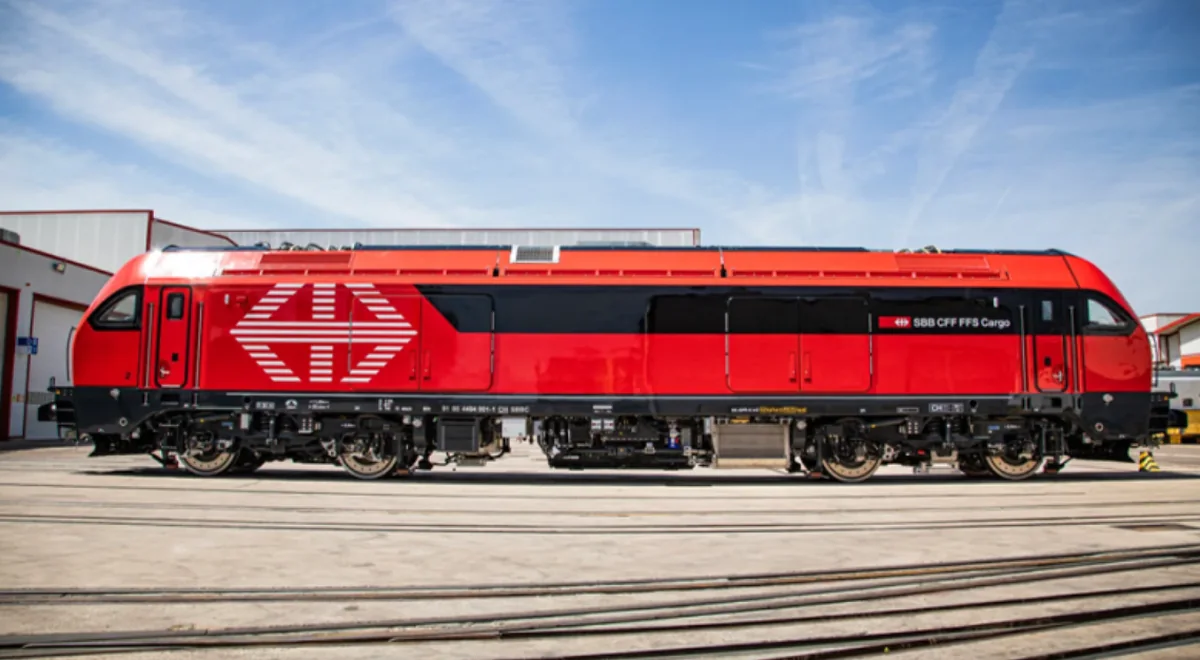
EURO DuFour locomotive for SBB Cargo Schweiz
SBB Cargo Schweiz will operate the locomotive, which has been shown in the traditional red livery associated with SBB. The color symbolizes the strengthening of rail freight transport within the group.
SBB Cargo Schweiz placed its first order with Stadler in September 2024. The contract covers 36 EURO DuFour locomotives and includes options for 93 more vehicles. Over time, the model is intended to become the only mainline locomotive type used in the SBB Cargo Schweiz fleet.
The design also carries elements already familiar from SBB rolling stock, including the black band around the windows and an emblem that recalls the Re 460 locomotive, a well-known passenger transport vehicle.
Alexander Muhm, Head of the SBB Freight Transport Division, said:
“The locomotive is equipped with state-of-the-art technology: it saves energy while being highly efficient and ready for future innovations. This acquisition represents an important step toward providing freight transport services tailored to the demands of the future,”

Technical features for Swiss rail freight
The EURO DuFour is expected to bring three main technical benefits for freight operations in Switzerland.
One of them concerns rail wear. The locomotive uses a modern bogie with an integrated guidance system, developed for the Swiss rail network, where routes include many curves. Compared with other freight locomotives available on the market, this design is expected to reduce rail wear by about 20%.
The second advantage is lower energy demand. SBB Cargo says the new locomotive will consume around 15% less energy than its current fleet, due to a modern electric traction system and an innovative parking concept.
The third feature applies to part of the first order. Of the 36 locomotives, 22 will receive battery modules for last mile operations. These versions will be able to run on lines without overhead catenary, making it possible to collect and deliver freight directly at customer sites without using shunting locomotives. This is intended to remove additional operating steps and improve the logistics process.
In Switzerland, the standard locomotives will carry the designation Re 494, while the battery-equipped units will be known as Rea 494. Stadler will manufacture the vehicles at its plant in Valencia.
Testing, delivery and fleet standardisation
Testing is scheduled to start at the Velim Test Centre in the second half of 2026. The locomotives are then due to arrive in Switzerland in 2027 for certification and operational testing. The first units are expected to enter service at the end of 2027, while delivery of the initial batch of 36 locomotives should be completed by March 2029.
The procurement forms part of SBB’s plan to make freight transport profitable by 2033. As part of this strategy, the company intends to renew and standardise its fleet fully by 2040, with the EURO DuFour becoming the main traction vehicle for freight services.
SBB estimates that standardising locomotives and railcars, together with lower maintenance costs for the new vehicles, will reduce operating costs for its freight rolling stock by about 60%. The company links this reduction to the long-term competitiveness of rail freight transport.