
Luxembourg Questions Exclusion From Brussels–Basel TGV
Luxembourg is seeking answers after the planned Brussels–Basel TGV service excluded the country from a new cross-border route scheduled to begin operating in July 2027.
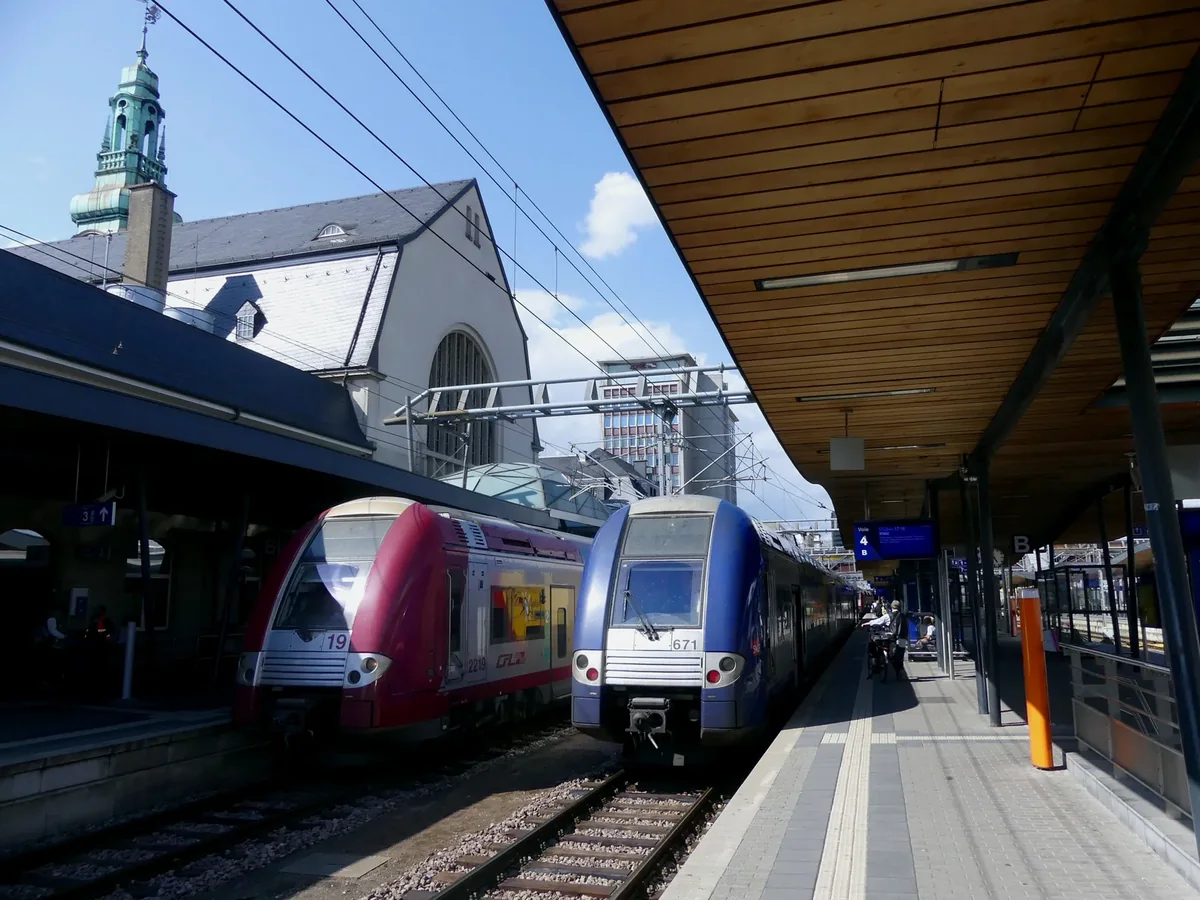
Brussels–Basel TGV will run three days a week
The pilot service will extend the existing Brussels–Strasbourg TGV INOUI connection to Basel, linking Belgium, France and Switzerland without requiring passengers to change trains.
According to the official announcement by SBB, Swiss Federal Railways will operate the service jointly with SNCF Voyageurs and Belgium’s SNCB.
One return journey is planned on Fridays, Saturdays and Sundays from early July 2027. The train will leave Brussels at around 7:00 a.m. and call at Lille-Europe, Paris Charles de Gaulle Airport, Champagne-Ardenne TGV, Meuse TGV, Lorraine TGV and Strasbourg-Ville.
Arrival at Basel SBB is expected at approximately 12:30 p.m., producing a journey time of about five and a half hours. The return service will depart Basel at around 2:00 p.m. and reach Brussels at approximately 7:00 p.m.
Tickets are expected to become available in spring 2027.
Don’t miss…AIIB Backs Bosphorus Rail Crossing with Up to $1.5bn
Luxembourg was not involved in route preparations
The decision to route the train through eastern France rather than Luxembourg has prompted questions about the Grand Duchy’s access to major international rail services.
Luxembourg MP Meris Šehović asked the government to explain the exclusion, noting that a direct Brussels–Basel train previously operated through the country.
Transport Minister Yuriko Backes said her ministry had not participated in the discussions or preparations conducted by the Belgian, French and Swiss operators.
She also indicated that adding a direct Luxembourg connection appears unlikely because the pilot will operate commercially and will not receive dedicated public subsidies.
The government nevertheless intends to monitor the service after its launch and discuss its results with the Belgian and French authorities.
Route follows the existing French TGV corridor
The chosen timetable largely follows the current Brussels–Strasbourg service before continuing to Basel. It therefore uses established French high-speed infrastructure and avoids the additional routing through Luxembourg.
The Grand Duchy says it will continue examining options for new international rail connections, including direct trains and services involving transfers at stations in neighbouring countries.
Luxembourg had also been absent from a European Commission high-speed rail map presented in November 2025 for proposed connections between major European cities by 2040.
National authorities have previously cited the country’s limited size, technical constraints and environmental considerations as obstacles to developing a dedicated high-speed line. Their strategy instead relies on stronger links to the railway networks of Belgium, France and Germany.
News on railway transport, industry, and railway technologies from Railway Supply that you might have missed: