Drone warning, stop order, fatal strike: how 340 passengers were evacuated in Odesa region
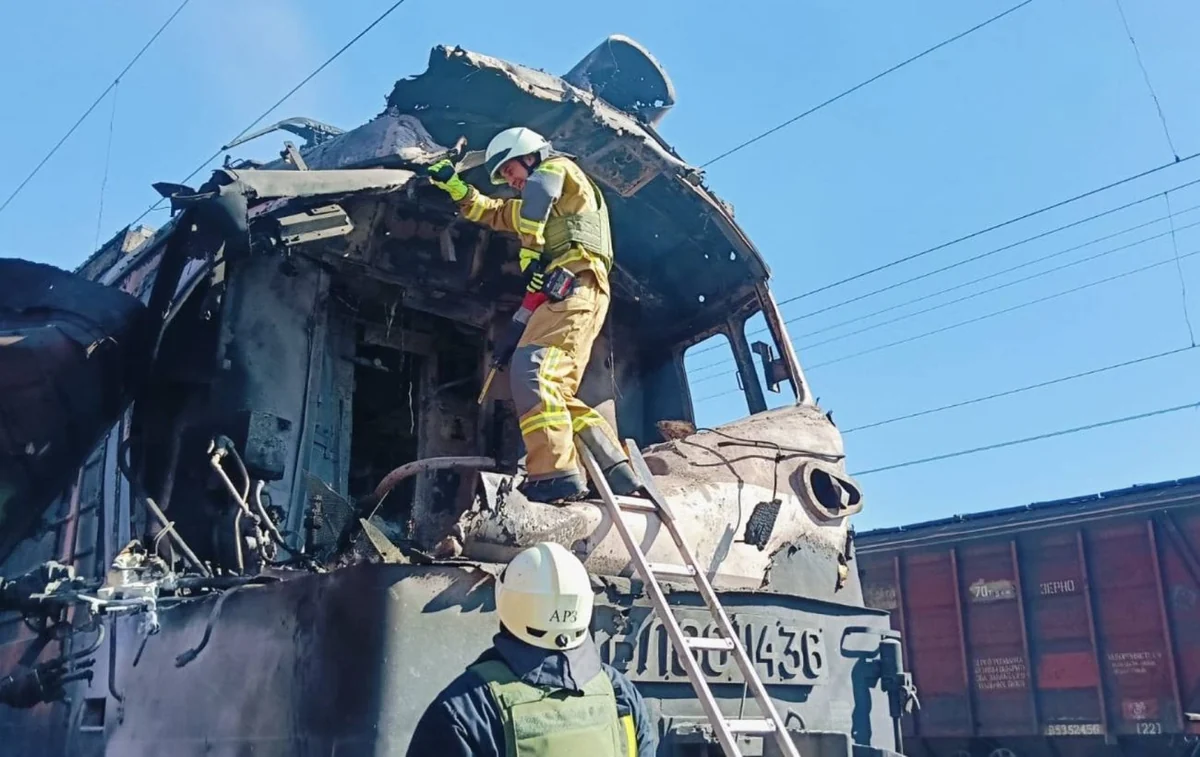
UKRAINE: Ukrzaliznytsia detected a drone threat and ordered a passenger train in the Odesa region to stop for evacuation, but a jet-powered Shahed changed course before the locomotive crew could fully halt the train and get clear; the driver and his assistant were killed, while all 340 passengers — including 67 children — survived without injury.
The sequence before the impact is the key operational detail. According to Ukrzaliznytsia chairman Oleksandr Pertsovskyi, the railway’s monitoring team detected the threat in advance and sent a stop command while the train was entering a station where passengers were to be evacuated. The drone then made a sharp change of direction, leaving the locomotive crew only a few minutes to react. Publicly available accounts do not identify the station or provide exact timestamps for each step, so a more precise minute-by-minute reconstruction is not yet supported.
This was not an isolated use of evacuation stops. In an official update published earlier in August, Ukrzaliznytsia said Russia had attacked the railway 41 times in five days, damaging 11 locomotives, while passengers had to be evacuated from trains 350 times. The operator said the crews of those 11 damaged locomotives had been warned in time and survived.
From monitoring alert to road evacuation
The first public Ukrzaliznytsia statement said the locomotive crew kept the train moving despite the threat so that the 340 passengers could leave the coaches safely. The drone struck the locomotive before the driver and assistant could complete the stop and evacuate themselves. The railway said both men were killed and that the circumstances were still being established.
Odesa regional authorities later confirmed that the 340 passengers included 67 children and that none of the passengers was injured. Ukrzaliznytsia initially said 21 buses had been mobilised for the evacuation operation; the regional administration subsequently said 12 buses carried the evacuated passengers onward to a safe location in Odesa, with ambulances positioned along the route.
The response involved the Odesa regional and city administrations, the Berezivka district military administration, police, emergency services and railway staff. That matters to the operating story because the evacuation did not end when passengers left the train: for these passengers, rail travel was replaced by a coordinated road transfer after the locomotive was hit.
Don’t miss…18 Taken to Hospital After Lewes Train Derailment as Investigation Begins
Ukrzaliznytsia is already operating around repeated evacuation stops
The public statements reviewed show a recurring operating pattern during heavy attacks, but they do not set out a detailed rulebook for every decision. During a recent mass combined attack, Ukrzaliznytsia said train movements and station operations were suspended, while station staff and passengers were evacuated. The company said it continued to work in a special operating mode during such attacks.
The same pattern appears in individual incidents. In another recent Sumy-region incident, Ukrzaliznytsia said a monitoring group spotted a drone threat in time and train and locomotive crews moved passengers to a safe distance before drones hit the locomotive of a Sumy–Kyiv service. No one was injured, although one coach was damaged.
Those examples establish that threat monitoring, stop or movement restrictions, passenger evacuation and alternative transport are now documented parts of Ukrzaliznytsia’s response to aerial attacks. They do not, however, establish a fixed public threshold for whether a moving train must stop immediately or continue to a station that offers a safer place to unload passengers.
A second locomotive attack the same day had a different outcome
Later on 13 August, another drone hit a diesel locomotive in the Odesa region while it was carrying out shunting work to allow trains to pass. Pertsovskyi said that crew had been warned in advance and no one was injured.
The contrast is important but limited. The later crew had been warned in advance and no one was injured, but that does not establish that the passenger-train crew had the same warning window or options. In the fatal strike, Pertsovskyi said the jet-powered drone changed course sharply and left the locomotive crew only minutes before impact.
What the official record still does not establish
The exact station used for the planned evacuation has not been identified in the public sources reviewed, and no official source located for this article gives a complete timestamped sequence from first detection to impact. The public record also does not set out the precise decision criteria used to choose between an immediate stop, movement to a station, or another evacuation point.
That means the incident cannot yet be presented as proof that the railway’s safety procedure either worked or failed. What is established is narrower: the threat was detected before the strike, a stop and evacuation process was already under way, the drone’s movement reduced the time available to the locomotive crew, and all 340 passengers were ultimately evacuated without injury while the driver and his assistant were killed.
News on railway transport, industry, and railway technologies from Railway Supply that you might have missed: