
EU rail passenger-km rose 5.8% in 2024, down from 11.3% a year earlier
EU rail passenger transport rose 5.8% in passenger-kilometres in 2024, reaching its highest level since Eurostat’s series began in 2004, though growth was about half 2023’s 11.3%.
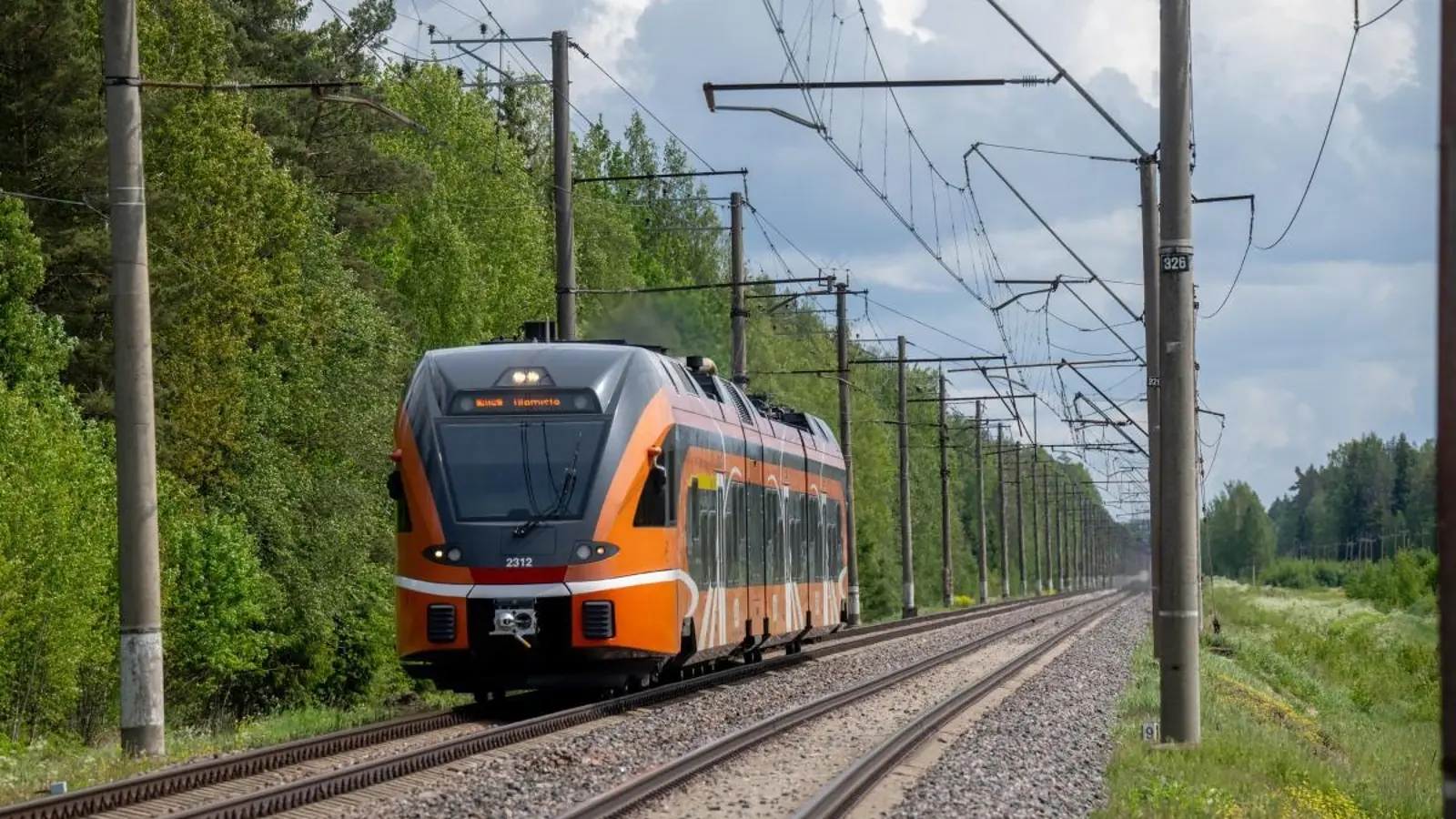
Growth slowed through 2024
Eurostat’s detailed rail passenger statistics put the 2024 total at 443 billion passenger-kilometres, up from 419 billion in 2023, the same figures as in its October 2025 release. Every quarter still beat the same quarter of 2023, but the gains narrowed over the year: 9.6% in the first quarter, 7.2% in the second, 2.6% in the third and 4.8% in the fourth.
A later Eurostat release in May 2026 put the 2024 total slightly higher, at 444.5 billion passenger-kilometres, without restating the growth rate. Unless stated otherwise, the comparisons below use the detailed statistics.
From the 2020 collapse to a new peak
Before the pandemic, EU rail passenger traffic peaked at 400 billion passenger-kilometres in 2019. Travel restrictions and reduced services cut it by 46.6% to 214 billion in 2020. Traffic recovered by 16.3% in 2021 and by 51.4% in 2022, and the 2024 total stood 10.7% above the 2019 level.
Hungary posted the fastest growth
Hungary recorded the largest rise in passenger-kilometres among EU countries in 2024, up 44.2%, which Eurostat attributes mainly to a simpler fare structure that added discounts and free travel for certain groups. The number of rail passengers in Hungary grew by 60.0%. Both comparisons use Hungarian figures for 2023 that are based on quarterly data.
Latvia (+13.9%) and Ireland (+10.0%) followed Hungary for growth in passenger numbers. Romania (−4.9%) and Bulgaria (−3.1%) were the only EU countries where the number of rail passengers fell.
Germany and France carry almost half the traffic
Germany generated 107.6 billion passenger-kilometres in 2024 and France 107.3 billion, together about 48.5% of the EU total. The May 2026 release put Germany at 109.1 billion. Germany also carried by far the most passengers, 2.9 billion, ahead of France with 1.3 billion, Italy with 0.8 billion and Spain with 0.7 billion.
Most rail travel stays within national borders
According to Eurostat’s key figures on rail passenger transport, 8.3 billion passengers on national journeys travelled 420 billion kilometres in 2024, while 150 million passengers on international journeys covered 23.0 billion kilometres. By distance, domestic travel made up about 95% of the total. By passenger numbers, the share was close to 98%.
The international figures count only the part of each journey within the reporting country’s network. National transport accounted for more than 90% of passenger-kilometres in every reporting EU country except Luxembourg (63.5%) and Czechia (82.1%).
| Area and journey type | Kilometres per inhabitant |
|---|---|
| EU average, national journeys | 958 |
| EU average, international journeys | 53 |
| Hungary, national journeys | 1,513 |
| Austria, national journeys | 1,493 |
| France, national journeys | 1,442 |
| Greece, national journeys | 70 |
The average EU resident covered 958 kilometres on domestic rail journeys in 2024 and 53 kilometres abroad. Hungary, Austria and France had the longest average domestic distances. International distances count only the section inside each reporting country, and the EU average excludes Belgium. Source: Eurostat key figures on rail passenger transport.
Revised data change the per-capita ranking
The October 2025 release ranked Luxembourg, Denmark and Germany highest for rail passengers per inhabitant. Data extracted in May 2026 give a different order: Luxembourg with 46.2 passengers per inhabitant, Austria with 35.6, Denmark with 35.2 and Germany with 34.8. Greece (1.4) and Lithuania (1.8) had the lowest rates.
| Country | Rail passengers per inhabitant |
|---|---|
| Luxembourg | 46.2 |
| Austria | 35.6 |
| Denmark | 35.2 |
| Germany | 34.8 |
| Hungary | 31.9 |
| Sweden | 23.9 |
| Netherlands | 20.9 |
| Portugal | 20.5 |
| France | 19.2 |
| Czechia | 17.5 |
| Lithuania | 1.8 |
| Greece | 1.4 |
Luxembourg and Austria lead the EU for rail use per inhabitant, while Greece and Lithuania trail far behind. The table lists every EU country with at least 16 passengers per inhabitant and the two lowest. Figures cover main rail undertakings and exclude metro, tram and light rail. Source: Eurostat, data extracted in May 2026.
What the figures cover and what comes next
The statistics cover main rail undertakings, defined as those carrying at least 100 million passenger-kilometres a year, and exclude metro, tram and light rail. Belgium is left out of the EU total because its data are confidential. Eurostat plans the next update of its rail passenger statistics article for October 2026.