Union Pacific Targets April 30 to Resubmit Transcontinental Merger Application
24.04.2026
Union Pacific Norfolk Southern merger plans remain on track. The railroads expect to file an amended application with federal regulators on April 30. Union Pacific CEO Jim Vena gave the timing during the company’s earnings call today. This is reported by the railway transport news portal Railway Supply.

Vena said the railroads expect the revised merger application to address the board’s issues. The Surface Transportation Board rejected their first application as incomplete in January.
The board had asked both railroads for more detail on post-merger market share. Also, it requested the full merger agreement. It sought a fuller explanation of Union Pacific’s plan. That plan would reduce Union Pacific’s stake in the Terminal Railroad Association of St. Louis.
Those are the issues Vena said the updated application is intended to answer.
According to Vena, the work completed on the updated application reinforced his view. He said the proposed transcontinental combination would benefit the country, shippers, employees, customers, and investors.
Revised UP-NS merger application remains on schedule
Vena also pushed back on concessions for competing railroads. He said the transaction is described as an end-to-end merger. On that basis, he saw little reason for such demands. “It’s pretty hard to come up with concessions that make sense,” he says.
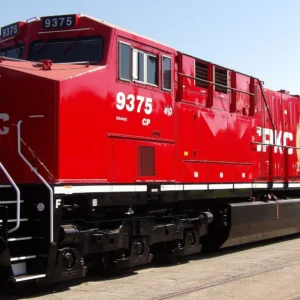
For example, CPKC CEO Keith Creel cited Gulf Coast petrochemical customers. He has said CPKC would seek access to customers served by Union Pacific.
Don’t miss…Stratford to get GO Transit service on July 6
Vena said Union Pacific is speaking with customers and competitors. Still, he opposed concessions that would simply give rivals access to UP’s network. “Are we talking to people? Yes. We are. We’re talking to customers. We’re talking to competitors across the spectrum to see if we could come up with something reasonable,” Vena says. “But we’re not prepared to really give concessions to the level that basically just opens up our railroad for no reason at all other than they want to gain something through this process. That’s not the way America works.”
In Vena’s view, some rival requests are not tied to competition concerns. “Some of the stuff that they’ve asked for is not fundamentally about competition. It’s about trying to gain for their own railroads,” Vena says.
Market share and railroad concessions remain disputed
Trains reported the warning from BNSF, Canadian National, and CPKC. They argued that a merged UP-NS system would have unprecedented size. They also argued it would have unprecedented market share in the industry.
Vena countered with a gross ton-miles measure. By that measure, a combined transcontinental Union Pacific would account for 39% of rail traffic. He said that matches the current BNSF system.
“And in no market are we going to be overly concentrated, because it’s an end-to-end merger,” Vena said in an interview.
Vena also rejected objections about the combined network’s overall size. He said past rail mergers have often led to additional combinations. Berkshire Hathaway, which owns BNSF, has said it will not acquire CSX. Many analysts still view a BNSF-CSX combination as likely if regulators approve the UP-NS merger.
Wider transportation market
At the same time, Vena said railroads should consider the wider transportation market. He said they should not focus only on their share of rail traffic. Railroads move just 27% of total U.S. transportation tonnage, he noted. Trucks remain the dominant competitor.
“We need to stop looking at only what we’re doing with this little slice of the pie and look at the trucks and look at automation that’s coming down the road,” he says. “That is going to put more pressure on us to be able to compete against the single biggest competitor we have.”
Vena argued that a combined UP-NS system would compete better against trucks. He pointed to the removal of interchanges on cross-country routes. Also, he cited freight moving to and from the watershed area. The area lies within 250 miles of the Mississippi River. It functions as the dividing line between the Eastern and Western rail networks.
Technology and operations integration draw attention
Meanwhile, Eric Gehringer addressed concerns about possible service disruptions from a Union Pacific Norfolk Southern merger. Gehringer is Union Pacific’s executive vice president of operations. The concerns mirror problems seen after large railroad mergers in the 1990s.
“You hear some people go back and reference challenges from mergers 30 years ago … a lot has changed in 30 years,” Gehringer said on the earnings call. “But let’s hit the most important three items when you look back in time and then think about how we already are planning to do it differently.”
Technology integration pace
Technology integration has caused problems in earlier rail mergers. Gehringer said the issue was not the systems themselves. He focused on how quickly they were switched over.
“It wasn’t the technology itself that caused the problem, it was the pace at which the integration occurred,” Gehringer says. “In other words, there wasn’t intentional thought and change management around what is the pace you cut that over. Well, we’ve got a huge advantage, right? We, Union Pacific, have already demonstrated a very strong ability to change over systems including our full transportation system called NetControl just a little less than two years ago very successfully, not a blip. No customer was impacted.”
Operating practices and railroad condition
In addition, Gehringer cited another lesson from past mergers. Railroads can run into trouble when they combine operating practices too quickly. Union Pacific and Norfolk Southern, he said, would move more deliberately.
“We’re not in the business of going slow,” he says. “We’re in the business of understanding exactly what we have to do on day one, day 90, day 180. And I’ll tell you on day one, you’re not going to see a lot of difference. We will operate these two railroads largely independently, at least for the first few months. And then we’ll thoughtfully, because of all of the planning that we’re doing, implement one action. Once that action is implemented, we’ll make sure that it worked effectively, and then we’ll move to the next.”
Separately, Gehringer said this proposed transaction differs from some earlier railroad mergers. One example was Union Pacific’s 1996 purchase of Southern Pacific, which he described as threadbare. In this case, he said both railroads are performing well. He said they also use strong technology and have well-maintained physical plants.
“We’re not buying some railroad that’s been in disarray for a decade,” Gehringer says. “We’re buying a really good railroad, combining it with another really good railroad.”
News on railway transport, industry, and railway technologies from Railway Supply that you might have missed: