NYC Subway Platform Barriers Covered 158 of 472 Stations
20.08.2026
USA: A 72-year-old man pushed onto the tracks at Rockefeller Center on Aug. 19 climbed back to the platform using a ladder without touching the third rail or being struck by a train.
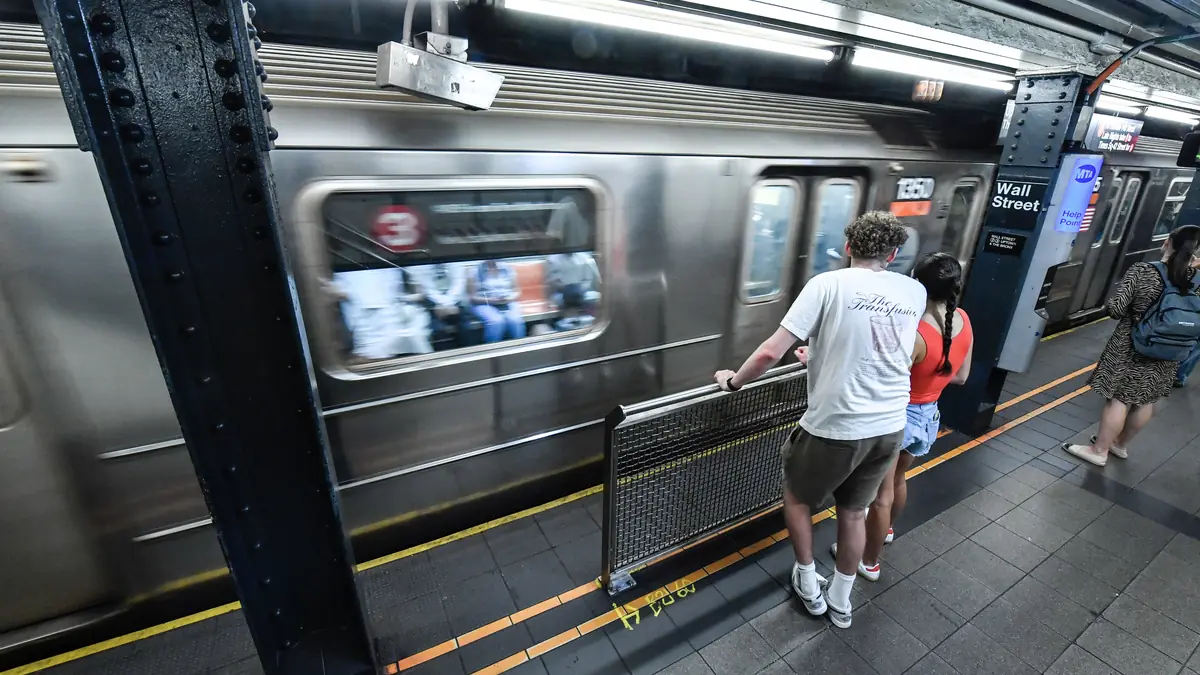
The man was standing on the northbound platform at 47–50 Sts–Rockefeller Center shortly before 4 a.m. when he was pushed from behind, according to the NYPD. He was taken to a hospital in stable condition. A 40-year-old man was arrested and charged with assault and reckless endangerment.
Don’t miss… Safety Upgrades Bring Platform Barriers to New York Subway
The ladder provided an escape after the fall
Police reported that the victim did not touch the third rail, was not struck by a train and used a ladder to reach the platform. The available accounts do not establish how long he was on the track bed or whether train service had already been halted.
The MTA treats every track intrusion as an emergency. Its normal response is to halt train service and switch off track power before first responders enter. A ladder can provide a route back to the platform after a fall, but it is not a preventive safety system comparable to a platform barrier.
Barriers covered a third of the system by the end of June
The MTA completed its first installation of fixed waist-high platform barriers in January 2024. It had installed barriers at 115 stations by the end of 2025. The 2026 program covers 85 additional stations; 43 of those installations were complete by the end of June, bringing the confirmed total to 158 stations and leaving 42 in the year’s program.
| Stage | Stations |
|---|---|
| Barriers in place at end of 2025 | 115 |
| Added January–June 2026 | 43 |
| Confirmed total at end of June 2026 | 158 |
| Planned installations during 2026, including 43 completed by June | 85 |
| Stations in the subway system | 472 |
The barriers are guardrails placed in front of the yellow platform edge strip, with gaps at the points where train doors open. They are not a sealed edge, and the MTA has described the program as addressing both track intrusions and riders’ sense of safety.
Full platform doors remain a separate, older question
The alternative — full-height platform screen doors synchronized with train doors, standard on newer metros in Asia and Europe — was examined in an MTA study published in 2020.
The study identified 128 of 472 stations as potentially capable of accommodating platform doors, about 27% of the system, at a study-era estimate of approximately $7 billion. At the time, however, only 41 of those stations were compatible with the existing mix of subway cars; the remaining 87 depended on greater standardization of train dimensions and door positions.
The MTA announced a three-station pilot in 2022 for the 7 at Times Square, the L at Third Avenue and the E at Sutphin Boulevard. The authority’s July 2026 policy brief does not report an operating installation at any of the three stations or provide a commissioning date.
The figures describe different programs and should not be added together. As of June 30, 158 stations had fixed barriers, while the older feasibility study identified 128 stations that might eventually accommodate platform doors. The subway system has 472 stations in total.
News on railway transport, industry, and railway technologies from Railway Supply that you might have missed:
Don’t miss… New York Subway Safety Efforts Expand With Barriers and Lighting