SWR Overhauls Class 158/159 Fleet as Replacement Plan Waits on National Strategy
14.08.2026
UNITED KINGDOM: South Western Railway is overhauling its ageing Class 158/159 diesels while a five-year lease covering 39 units runs to 2030, engine and wheelset failures cut availability, and the replacement plan remains tied to a forthcoming national strategy.
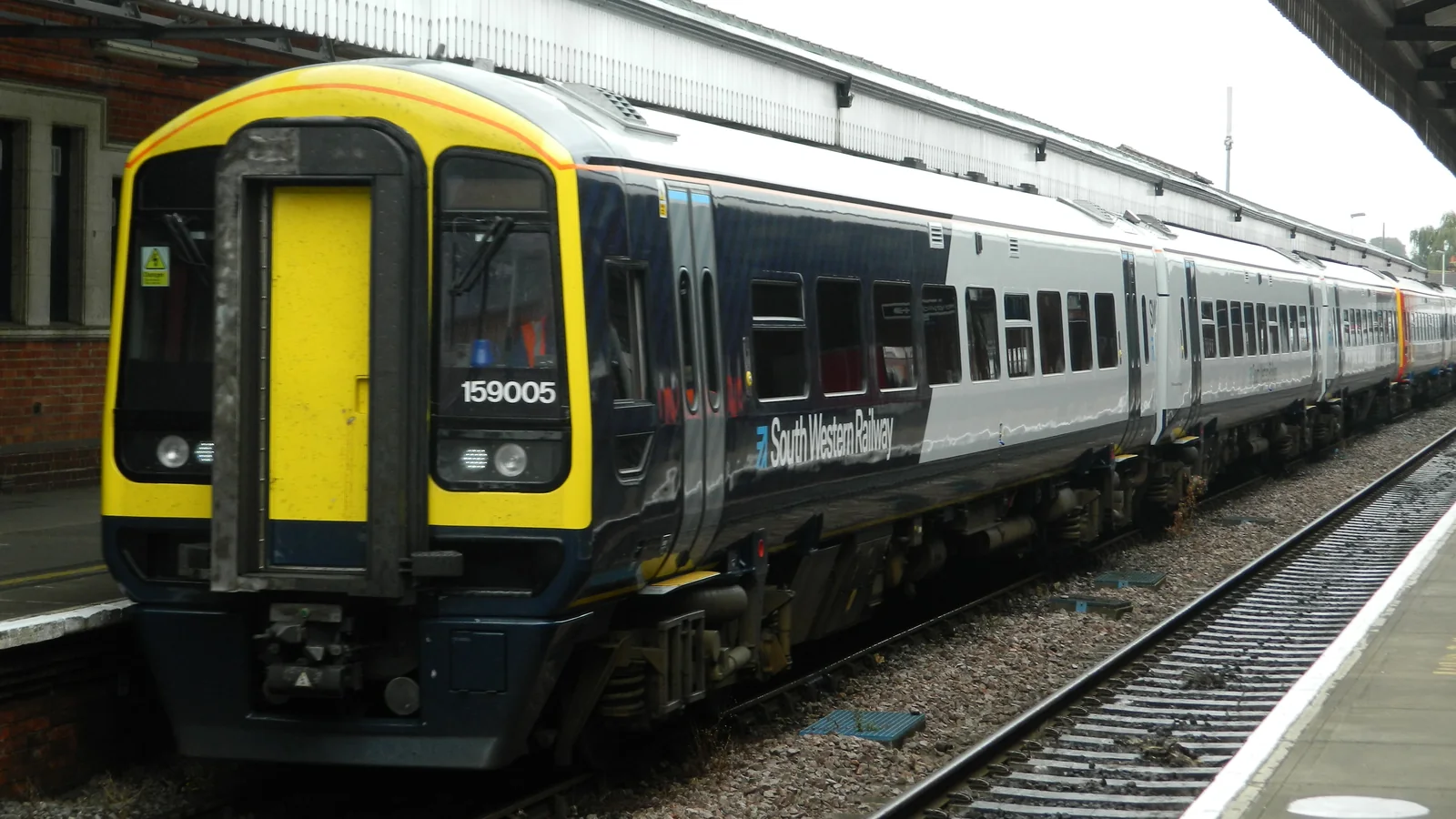
The immediate pressure is visible in fleet availability. On one day in June, 14 Salisbury-based diesel trains were unavailable, including 11 unplanned failures, against SWR’s planning assumption of up to eight units out of service. Shortages have led to three-car trains operating in place of six-car formations and overcrowding. Separately, drought-related infrastructure restrictions have reduced Yeovil–Exeter services since August 10, adding another constraint to the West of England Line.
A longer view shows why SWR cannot simply replace the affected trains at short notice. In May 2025, the operator directly awarded Porterbrook a five-year lease for 10 two-car Class 158s and 29 three-car Class 159s, running from May 2025 to May 2030. In its procurement justification, SWR said no other fleet could meet the required operational and capacity needs for the necessary contract period; alternatives were either unsuitable, lacked route clearance or acceptance, or were insufficient in number.
The overhaul is multi-year, but key failure points sit outside its C6 scope
The Department for Transport described the work in May 2026 as a full overhaul of SWR’s Class 158 and 159 diesel fleet intended to improve reliability and the passenger experience. SWR’s own August update says the programme includes at-seat power, improved onboard information, refreshed interiors, work on doors, toilets and air-conditioning units, and lighter roof colours to reduce heat absorption.
SWR says it will take several years for the full fleet to pass through the programme. To preserve enough trains for service, some units will receive only part of the work initially and return later for further improvements.
That distinction matters because the current reliability problem is concentrated elsewhere. The canonical report states that the C6 programme does not include refurbishment of engines or wheelsets. It also reported that unit 159103, the first train to enter the refresh in December 2025, had been away for eight months and had not yet returned at the time of publication. No verified source located for this article establishes whether that duration is typical for later units.
Don’t miss…£800,000 Brotherton Bridge Waybeam Renewal to Use Fibre-Reinforced Components
Parts supply has become a long-term fleet-support issue
SWR’s current West of England Line update says engine-part and wheelset defects are occurring earlier than normally expected, while global supply-chain delays are restricting replacement wheelsets. The operator also says the age of the fleet leaves only a limited number of suppliers for some key components.
The problem predates the latest spike in unavailability. SWR and Network Rail’s 2025/26 Joint Performance Strategy recorded an ongoing national shortage of engine components affecting the Class 158/159 fleet and linked the shortage to cancellations and short formations. The same strategy said SWR would continue negotiations with the engine manufacturer to improve parts availability.
SWR has also been testing the market for a longer-term supply arrangement. A May 2026 pipeline notice for a Class 158/159 spares agreement remained at planning stage and followed February market engagement covering engines, transmissions, wheelsets, spares, parts, accessories and consumables. The notice set out a planned value of £70 million excluding VAT and a proposed term from September 2026 to September 2029, with an extension option to 2031.
Those figures describe a planned procurement, not an awarded contract or guaranteed spend. But they show that parts support for the ageing diesel fleet is being considered over a multi-year horizon while the overhaul is under way.
Replacement is still a rolling-stock and infrastructure decision
SWR says it is developing longer-term plans to replace the Class 158/159 fleet, but those plans must align with the national rolling-stock strategy being developed for Great British Railways. The Department for Transport’s June 2026 policy timetable targets summer 2026 for a Rolling Stock and Infrastructure Strategy from Network Rail and DfT Operator Limited. Its stated purpose is to align rolling-stock, infrastructure and traction decisions over time.
That is particularly relevant on the West of England Line because the replacement question is not only about choosing a train. SWR’s 2025/26 performance strategy identified electric multiple units with battery capability over sections of discontinuous electrification as a potential option. The canonical source also records earlier consideration of third-rail extension from Basingstoke to Salisbury, battery operation farther west and adapting Class 450 electric trains.
None of the verified material establishes that one of those options has been selected. For now, SWR’s documented position is a layered one: a five-year lease covers 39 Class 158/159 units through 2030, a several-year overhaul is extending the fleet’s usefulness, parts supply remains an active engineering and procurement problem, and the eventual replacement must fit a national decision framework that has not yet produced a published fleet choice for the route.
News on railway transport, industry, and railway technologies from Railway Supply that you might have missed: