Warren County Backs Scranton–New York Rail; PennDOT Says 2028 Service Is Not Feasible
14.08.2026
UNITED STATES: Warren County has formally backed restoring passenger rail through Blairstown, but PennDOT says the Scranton–New York corridor has no confirmed opening timeline and that service in 2028 is not feasible under the current federal development path.
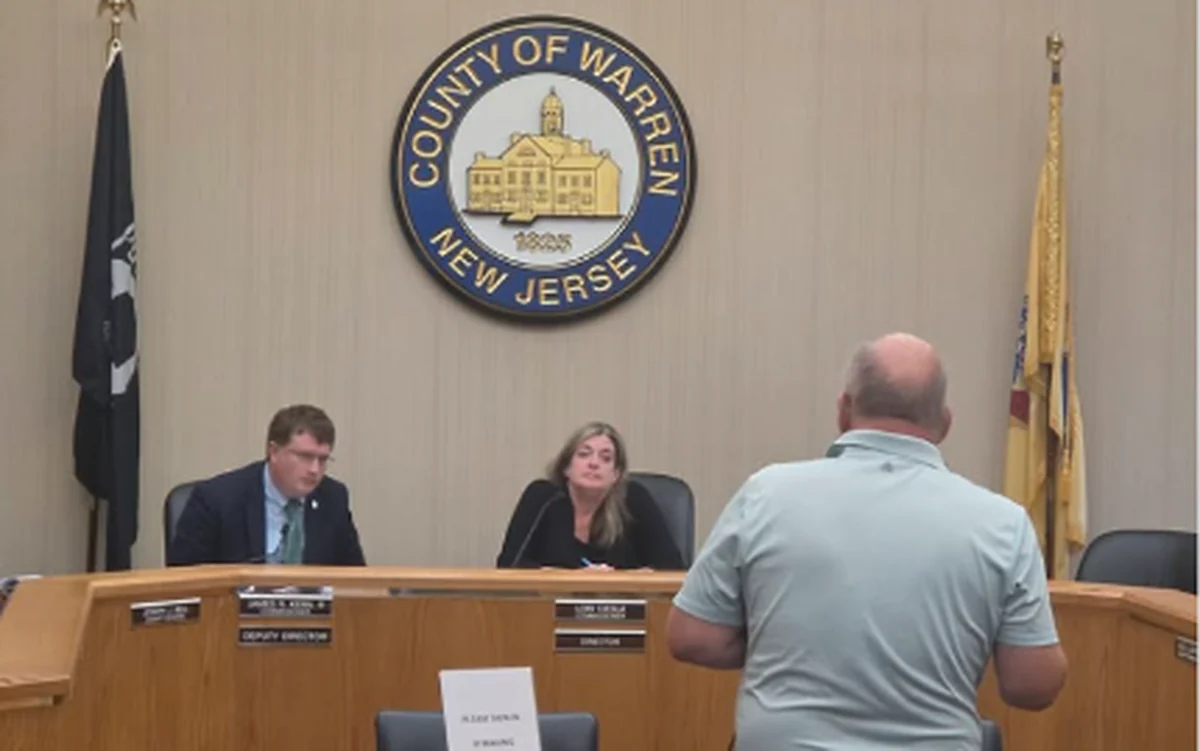
The Warren County Board of County Commissioners passed its resolution on August 12, supporting restoration of passenger service on the Lackawanna Cut-Off and asking New Jersey to provide resources to coordinate with Amtrak and other entities for further analysis. The action gives the proposal formal county-level support, but it does not approve construction or change the corridor’s federal development stage.
The corridor remains in Step 2 of the Federal Railroad Administration’s Corridor Identification and Development Program. An FRA obligation report updated March 31, 2026 lists PennDOT as the corridor sponsor and a $4.91 million Step 2 obligation dated December 13, 2024, with no Step 3 obligation shown. In an April 7 project Q&A, PennDOT said an opening timeline is not yet known and that 2028 operation is not feasible under the current approach.
What Step 2 still has to decide
Step 2 is project planning, not construction. The FRA’s Service Development Plan framework covers route and service alternatives, operations, station planning, ridership and revenue, conceptual engineering, capital and operating costs, environmental analysis, financial planning, governance and a phased implementation plan.
For the Scranton–New York corridor, PennDOT’s project page says the Service Development Plan will identify and conceptualize capital projects, develop cost estimates and address environmental, financial and implementation planning. The FRA framework requires a final Service Development Plan to receive FRA approval before the agency assesses whether a corridor is ready to advance to Step 3, where preliminary engineering and NEPA environmental review occur.
A December 2025 PennDOT working schedule shown to the project’s agency stakeholder committee extends Step 2 tasks through 2029, with draft and final reports scheduled in 2029. That schedule describes planning work, not a passenger-service opening date.
Don’t miss…Three HS2 Viaducts Reach Structural Completion in Solihull
The route mostly exists, but the Cut-Off gap remains
PennDOT describes the proposed corridor as approximately 140 miles, with 60 miles in Pennsylvania and 80 miles in New Jersey. Most of the route uses active or existing rail infrastructure, but the former Lackawanna Cut-Off contains the central missing-track section.
| Route segment | Approx. length | Current rail status | What remains relevant to the study |
|---|---|---|---|
| Scranton–Slateford | 60 miles | PNRRA-owned line with local freight and excursion operations | Passenger operations, infrastructure requirements and upgrades are being evaluated. |
| Slateford–Port Morris | 28 miles | Former Lackawanna Cut-Off; the right-of-way remains intact, but track was removed. NJ Transit is reconstructing the eastern 7 miles from Port Morris to Andover. | PennDOT identifies a roughly 20-mile missing-track section in New Jersey, while structures and other restoration needs still require study. |
| Port Morris–Kearny | About 43 miles | Existing NJ Transit commuter rail | Step 2 is evaluating route options between Denville and Newark, including the Morristown and Montclair-Boonton lines. |
| Kearny–New York Penn Station | 8 miles | Existing Amtrak Northeast Corridor | The proposed intercity service would have to integrate with existing Amtrak and NJ Transit operations. |
The NJ Transit work to Andover is therefore not the same as completing the Scranton–New York intercity corridor. It restores the eastern end of the Cut-Off for commuter service, while the broader Step 2 study must define the infrastructure package needed to reconnect Pennsylvania with the active New Jersey rail network.
New Jersey is already a project partner
The county resolution asks New Jersey for resources and coordination, but New Jersey agencies are already part of the federal study. PennDOT identifies NJDOT as a railroad owner and state partner, and NJ Transit as a railroad owner and commuter operator on the corridor.
The county’s public announcement does not specify a dollar amount or identify a new state funding commitment. The resolution should therefore be read as a request for additional state support and coordination, not as evidence that New Jersey has approved new construction funding for the Scranton service.
Blairstown is proposed, not final
Blairstown remains part of the station concept carried into the current study, but it is not yet a final operating commitment. PennDOT’s April Q&A says the project is starting from the station list in Amtrak’s 2023 study — including Blairstown — and will use market analysis, operating analysis, ridership forecasts, costs and community input to determine the final station locations.
The same qualification applies to the proposed three daily round trips. PennDOT says that frequency is being evaluated in Step 2 as the team develops the operating plan, ridership estimates and revenue analysis; it is not yet a final timetable.
Warren County’s August announcement repeats Amtrak estimates of 380,000 riders in the first year and 470,000 after three years, with up to $84 million in annual economic activity and $20 million in user benefits. Those remain estimates. PennDOT said in April that total project cost estimates have not yet been developed and that funding sources beyond the Corridor ID planning program have not been established.
For Warren County, the August resolution is a concrete local-government action in favor of the project. The next test of project maturity is the Service Development Plan and FRA’s decision on whether the corridor is ready for Step 3. Until then, Blairstown and the three-round-trip concept remain elements under study, while PennDOT says a 2028 service start is not feasible under the current federal development approach.
News on railway transport, industry, and railway technologies from Railway Supply that you might have missed: