South Korea Merges KTX and SRT, Cuts High-Speed Fares From September
15.08.2026
SOUTH KOREA: The competition authority has cleared KORAIL to take over SR’s high-speed rail business and the government’s 58.95% stake in SR, ending the two-operator rivalry launched in 2016 and moving KTX and SRT toward unified operation from 1 September — with fares set to fall, not rise, for passengers caught between two ticketing systems for a decade.
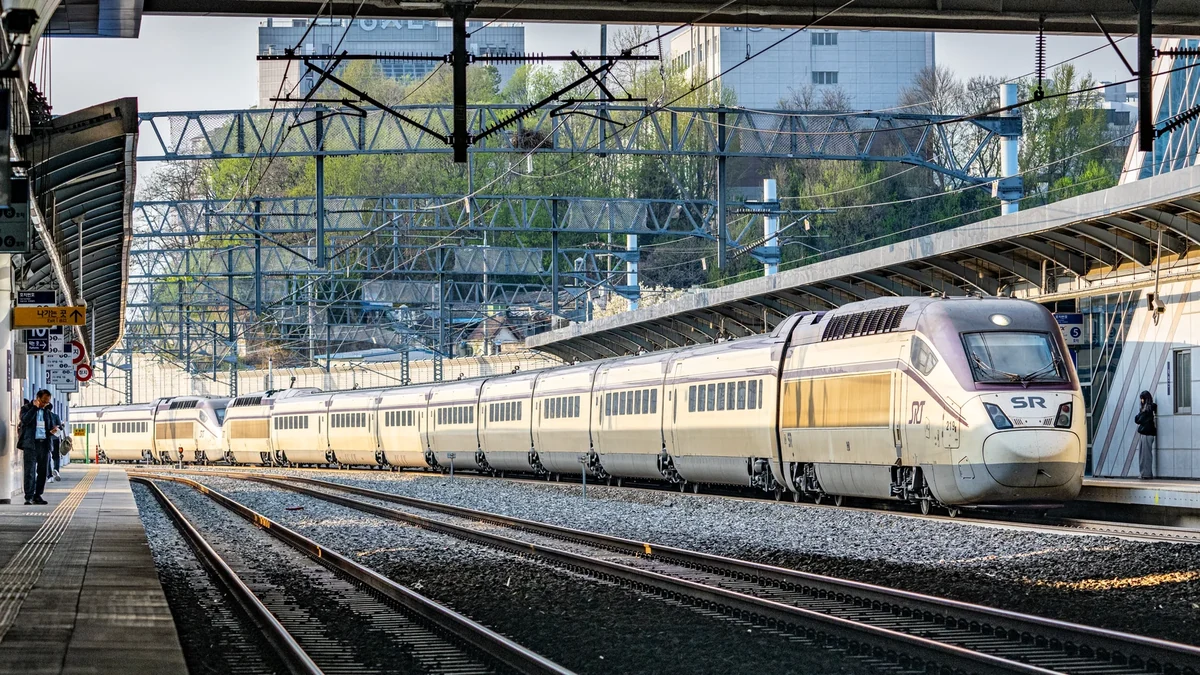
When the Suseo high-speed railway opened in 2016, the government described it as the first introduction of competition on South Korea’s mainline railway network. SR entered with SRT fares around 10% below KTX and a differentiated service offer, while KORAIL responded with changes to discounts and operations.
A decade later, that fare gap is being closed in the opposite direction: existing KTX fares are to fall to the SRT level, while the two operators’ fleets, terminals, ticketing and loyalty systems move into a common structure.
The 2016 competition model is being replaced, not formally declared a failure
In its 2016 opening announcement, the government said SRT would put KORAIL and SR into direct high-speed rail competition and expected lower fares and service competition to benefit passengers. By December 2025, the emphasis had shifted: the Ministry of Land, Infrastructure and Transport’s integration roadmap put passenger convenience and safety first, saying the process should avoid a simple absorption while improving the railway industry’s efficiency and competitiveness.
South Korea is replacing the dual-operator structure, but the policy change does not by itself establish that every objective of the 2016 model failed — what has changed is the government’s judgment about which structure now delivers the larger benefit.
Don’t miss…Sydney’s Western Harbour Tunnel Enters Final 1.5km Drive With Both TBMs Running
What the competition authority actually approved
According to the joint FTC–MOLIT briefing, KORAIL is acquiring SR’s high-speed rail business and the government’s 58.95% stake in SR. Although both companies are government-controlled and the deal could normally have qualified for simplified review, the Fair Trade Commission carried out a full review given the importance of high-speed rail to the national economy.
The regulator assessed competition route by route, identifying 150 overlapping markets where KORAIL and SR both operate, and concluded the risk of harmful unilateral effects was low because fares, service terms, train frequencies and route plans are already subject to substantial state regulation. Final competition approval is not the last corporate step — MOLIT still has to complete follow-up procedures including authorization of the business transfer, with corporate integration targeted for September.
A February pilot tested the idea before the merger was approved
From 25 February, KTX trains began a daily return trial between Suseo and Busan while SRT trains ran a daily return service between Seoul Station and Busan, testing whether trains could operate across the terminal and operator boundaries that had defined the two-system model. In an SR survey of 392 users of the cross-operated trains, 88.3% said they were satisfied; seat availability was the area most frequently flagged for improvement, cited by 49.7% of respondents.
From 15 May, KTX and SRT trainsets were connected for coupled-train trial operation, with communication, braking and emergency-control systems tested in live conditions. These trials support the operational feasibility of closer integration, but they should not be read as proof of the long-term financial performance of a single operator.
Where the extra seats are meant to come from
The government expects integration to create additional capacity without waiting for an entirely new fleet or new line. More KTX and SRT sets can run as coupled trains; different destinations can be served by combined trains that split at an intermediate station such as Dongdaegu; and trains will no longer have to return to the terminal associated with their former operator now that KORAIL and SR are no longer separate companies.
The FTC’s three-year plan set a floor of more than 17,000 additional weekend seats and at least 25 additional weekend services. MOLIT’s 3 August service plan was more specific: around 15,000 extra seats on weekdays, 17,000 on weekends and 26 additional weekend services. Officials acknowledged the Pyeongtaek–Osong section is saturated, so near-term gains rely heavily on fleet deployment, train coupling and more flexible terminal use; a separate 46.9 km Pyeongtaek–Osong capacity expansion is targeted for completion in 2028.
Fares fall by an average of 10% — but the discount isn’t a binding merger condition
From integrated operation, existing KTX fares are to be reduced by an average of 10% to the SRT level. The 5% KTX mileage rate will extend to current SRT routes, while discount schemes and season-ticket arrangements are to be integrated in the direction most favourable to passengers.
KORAIL+ launched on 3 August as the unified booking platform, and tickets for trains operating from 1 September went on sale on 5 August. Members who used SR alone or both operators must complete a membership conversion process, while KORAIL-only members are transferred automatically.
FTC and MOLIT have signed an agreement to monitor fares, seat supply and service delivery for three years. However, the legal status of that commitment matters: during the official briefing, the FTC said the merger was not approved subject to corrective measures, so the three-year business plan is not backed by a merger-remedy enforcement fine. That does not mean the benefits are scheduled to disappear afterward — in a 7 August clarification, MOLIT said no decision has been made to restore higher fares or reduce mileage once the three-year period ends.
What changes on 1 September — and what does not
The clearest state change comes on 1 September, when integrated KTX–SRT operation begins with unified booking, lower KTX fares and a larger common pool of train capacity. Corporate integration remains a separate process, to be completed during September after the remaining transfer approvals and other follow-up steps.
For the railway industry, the significance is therefore operational as much as corporate: South Korea is removing the company boundary that dictated which high-speed trains could use which Seoul terminal, how rolling stock was combined, and where passengers had to book. The model created in 2016 to put two state-controlled operators into competition is being replaced by one intended to run the same network, fleets and passenger systems as a single integrated operation.
News on railway transport, industry, and railway technologies from Railway Supply that you might have missed: