San Jose BART Tunnel Machine Is Complete in Germany
Herrenknecht has completed factory acceptance of the nearly 54-foot San Jose BART tunnel machine in Germany, although VTA has not announced when it will ship to California.
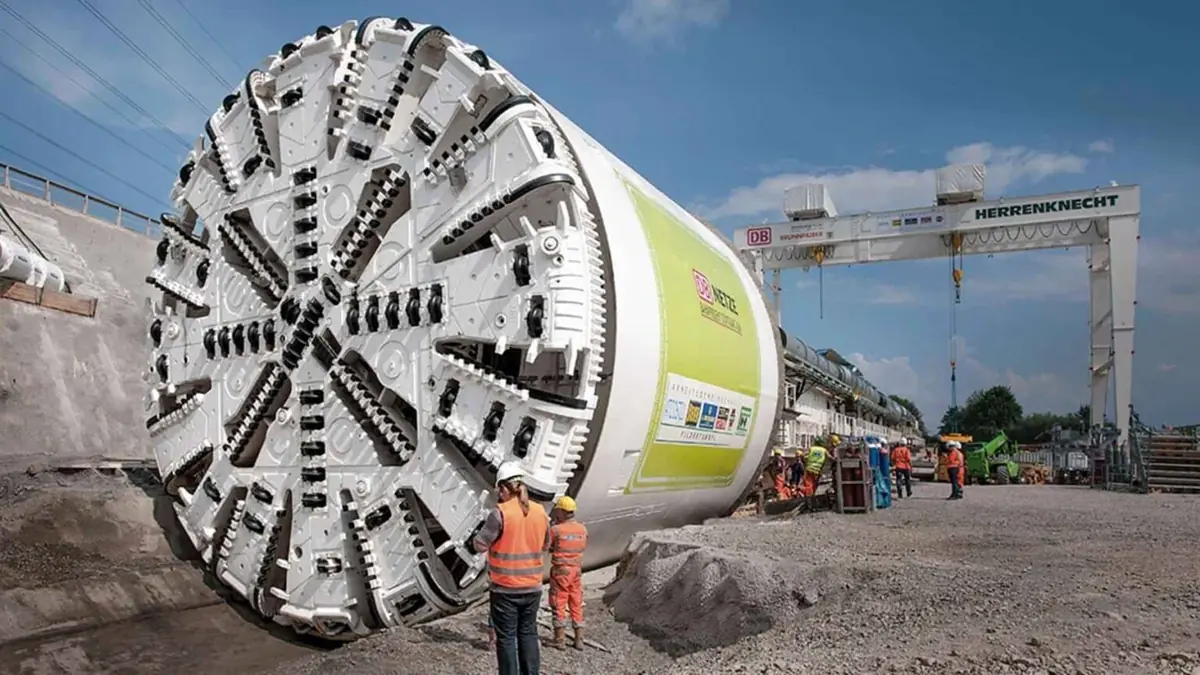
The earth-pressure-balance machine was assembled and tested at Herrenknecht’s Schwanau plant for the five-mile tunnel in VTA’s BART Silicon Valley Phase II Extension. The manufacturer’s factory assembly report says the main drive alone weighs more than 300 metric tons, while the cutting-wheel center adds around 150 metric tons.
VTA purchased the custom tunnel boring machine for $76 million. It will be dismantled, transported from Kehl in sections and reassembled at the West Portal launch structure in Santa Clara. VTA previously estimated that on-site assembly would require about six months, but it has not published a departure date.
One bore will carry tracks and station platforms
The machine is designed for the South Bay’s high water table and its mixture of sand, gravel, silt and clay. Its pressurized excavation chamber will stabilize the ground while a screw conveyor removes excavated material.
Instead of building separate tunnels for each direction, VTA plans one large tube containing two independent BART trackways. The platforms for Downtown San Jose and Diridon stations will also be constructed inside the tunnel, reducing the need for extensive cut-and-cover work along Santa Clara Street.
VTA describes the design as the first single-bore subway tunnel of its kind in the United States. The authority previously estimated that the machine could advance by an average of 30–40 feet per day and take three to four years to complete the bore. Those projections remain subject to the project’s updated schedule.
Don’t miss…BNSF Says CN Access Deal Undercuts UP–NS Merger Case
Contract reset keeps the excavation date open
VTA said in June 2025 that it intended to seek another tunnel contractor after receiving repeated Kiewit Shea Traylor proposals exceeding twice the project budget. The authority has since changed course.
According to VTA’s current project update, its board approved transferring the KST contract to a target-price, incentive-based structure with open-book accounting. It also authorized $400 million for early works, while any additional funding will require separate board approval.
VTA says the five-mile tunnel design is complete, while a broader 60% design package is being submitted to San Jose, Santa Clara and other stakeholders. The authority is simultaneously re-baselining the project to establish updated cost and schedule figures. No revised tunneling start date has been announced.
Machine arrives amid $12.7 billion scrutiny
The TBM’s factory acceptance comes as VTA faces questions about the extension’s finances and oversight. A June 17 Santa Clara County Civil Grand Jury report concluded that the VTA board had failed to provide effective management, oversight and financial control.
The project is currently estimated at about $12.7 billion, with passenger service targeted for 2037. The federally appointed oversight consultant has modeled a 2039 opening.
VTA says construction activities are on time and on budget. It also maintains that $375 million questioned by the grand jury comes from Regional Measure 3, that the project has a cash-flow model and that the full $1.5 billion in state funding has been committed, with approximately $240 million allocated so far.
Factory acceptance therefore completes a critical piece of equipment, but it does not establish when the machine will leave Germany or begin excavating beneath San Jose.
News on railway transport, industry, and railway technologies from Railway Supply that you might have missed: