Rostock runs 12 of its 30 Stadler TINA trams as the rest arrive in stages
Twelve of the 30 Rostock TINA trams ordered from Stadler are now in passenger service, about nine months after the first one entered regular operation on lines 1 and 5.
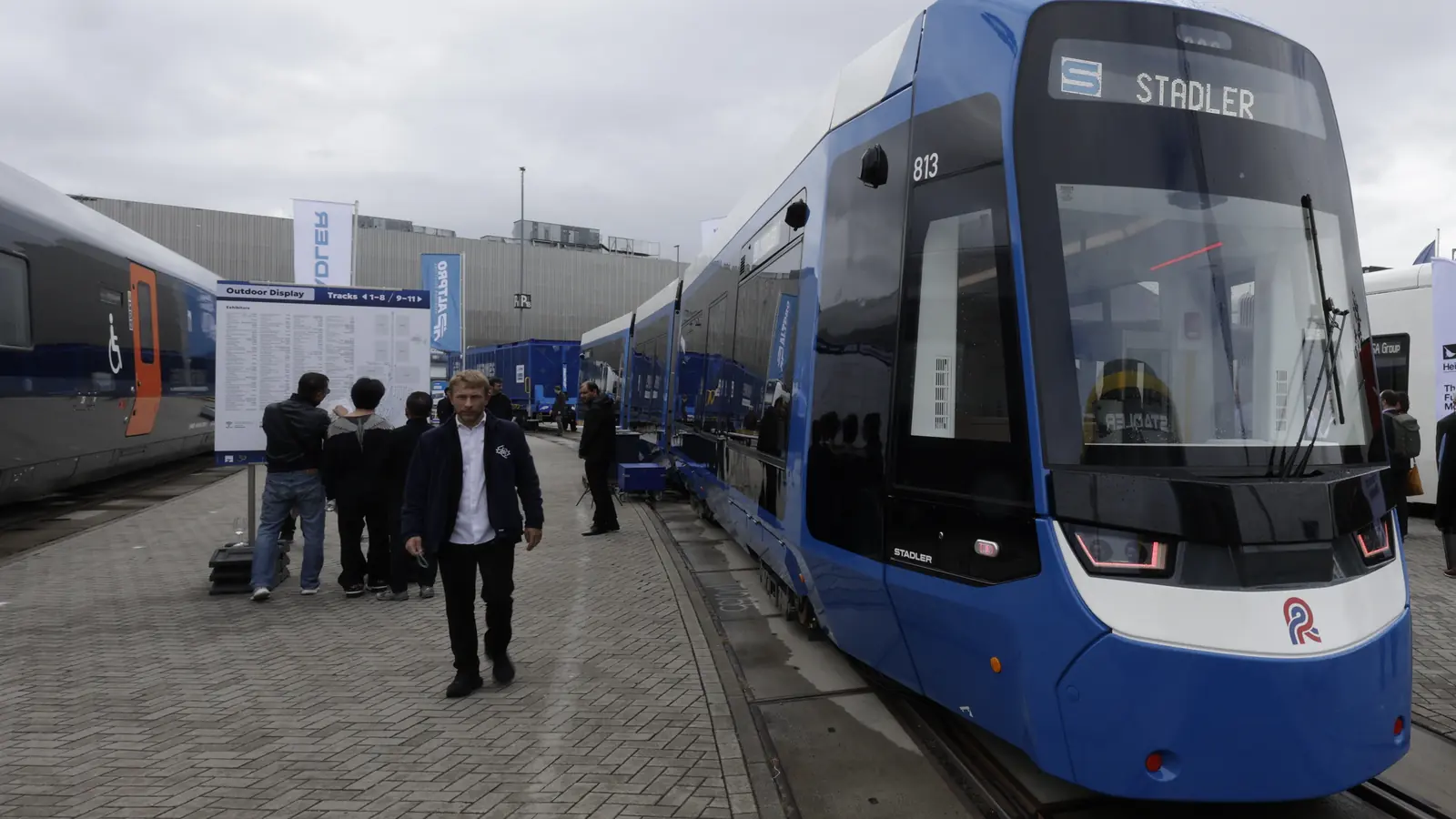
Stadler put one of the three-section vehicles built for Rostocker Straßenbahn AG (RSAG) on show at InnoTrans in Berlin on 24 September. Its media release for the trade fair says the remaining 18 trams will arrive in stages but gives no completion date.
From the first passenger run to a 30-tram fleet
The first TINA carried passengers in Rostock on 12 December 2025. It went into service on the two main lines, 1 and 5, while two further vehicles served for driver training. At that point three of the new trams had reached the city, and RSAG expected the rest to follow between January 2026 and mid-2027.
The order has also grown. Stadler won the Europe-wide tender in June 2022 with an order for 29 low-floor trams, and RSAG announced a 30th vehicle in December 2025. The state of Mecklenburg-Western Pomerania added €2.3 million to its grant to pay for it.
| Date | Step | Fleet and funding figures |
|---|---|---|
| December 2020 | Rostock city council approves the purchase | City to put €30 million of equity into RSAG by 2029 |
| June 2022 | Stadler wins the Europe-wide tender | 29 trams on order |
| 19 February 2025 | First TINA reaches Rostock | Order value about €103 million for 29 trams, state grant €9.45 million |
| 12 December 2025 | First passenger service, on lines 1 and 5 | Three trams in the city, a 30th tram announced, total investment about €107 million, state grant raised to €11.75 million |
| 24 September 2026 | Tram shown at InnoTrans in Berlin | 12 of 30 trams in service |
| Mid-2027 | Last deliveries, as planned by RSAG in December 2025 | 30 trams |
The fleet grew from 29 to 30 trams in 2025, and the published cost rose from about €103 million to about €107 million. The two amounts measure different things: the first is the order value for 29 trams, the second the total investment for all 30.
Mid-2027 is a planned date, not a completed delivery.
Sources: City of Rostock, 19 February 2025, City of Rostock, 12 December 2025, RSAG, December 2025, Stadler data sheet, Stadler, 24 September 2026.
Unrenovated 1990s trams to be retired
The new fleet is gradually taking over from RSAG’s unrenovated 6N1 trams, built between 1994 and 1996, which are being retired after around 30 years in service. RSAG runs six tram lines in the city.
Rostock’s city council approved the purchase in December 2020, and RSAG describes it as the largest investment in the company’s history. The operator puts the cost of all 30 vehicles at about €107 million. The state government is contributing €11.75 million, and the city is providing €30 million in equity by 2029 to secure the financing.
Inside the three-section TINA
TINA stands for Total Integrated Low-Floor Drive. Stadler mounts the traction, braking and running-gear equipment under the floor, so the passenger area has no steps and no raised platforms over the drives. Four bogies designed for the vehicle are meant to limit wear on wheels and rails.
Stadler’s data sheet for the Rostock vehicles lists single-ended trams 32.25 metres long and 2.65 metres wide, with room for 216 passengers, 75 of them seated. They run on 1,435 mm standard-gauge track at 750 V DC, with a top speed of 70 km/h.
Inside there are four multi-purpose areas for pushchairs, bicycles and wheelchairs, along with air conditioning, Wi-Fi and USB charging. Drivers get assistance systems that include collision protection. Ansgar Brockmeyer, Executive Vice President Sales & Marketing at Stadler, ties the cabin layout to that underfloor design:
“The spacious interior is not simply a design feature – it is the result of our unique vehicle architecture.”
TINA wheel tests in Darmstadt and Basel
On other TINA networks, Stadler is still working on changes to reduce vibration. HEAG mobilo reported on 25 August 2026 that softer wheel tyres tested in Darmstadt in June cut measured vibration by three to ten percent at some sites but gave no clear result at others. Two further solutions are being tested in Basel, where Stadler and BLT had prepared trials of rubber-suspension wheels earlier in the year. Neither the September release from Stadler nor RSAG’s December 2025 announcement refers to vibration problems in Rostock.