NextGen Acela Maintenance Capacity May Lag Fleet Rollout
11.07.2026
NextGen Acela maintenance capacity may trail Amtrak’s fleet rollout, with Alstom’s Newark support facility scheduled to open in summer 2028 after all 28 trainsets are scheduled to enter service through 2027.
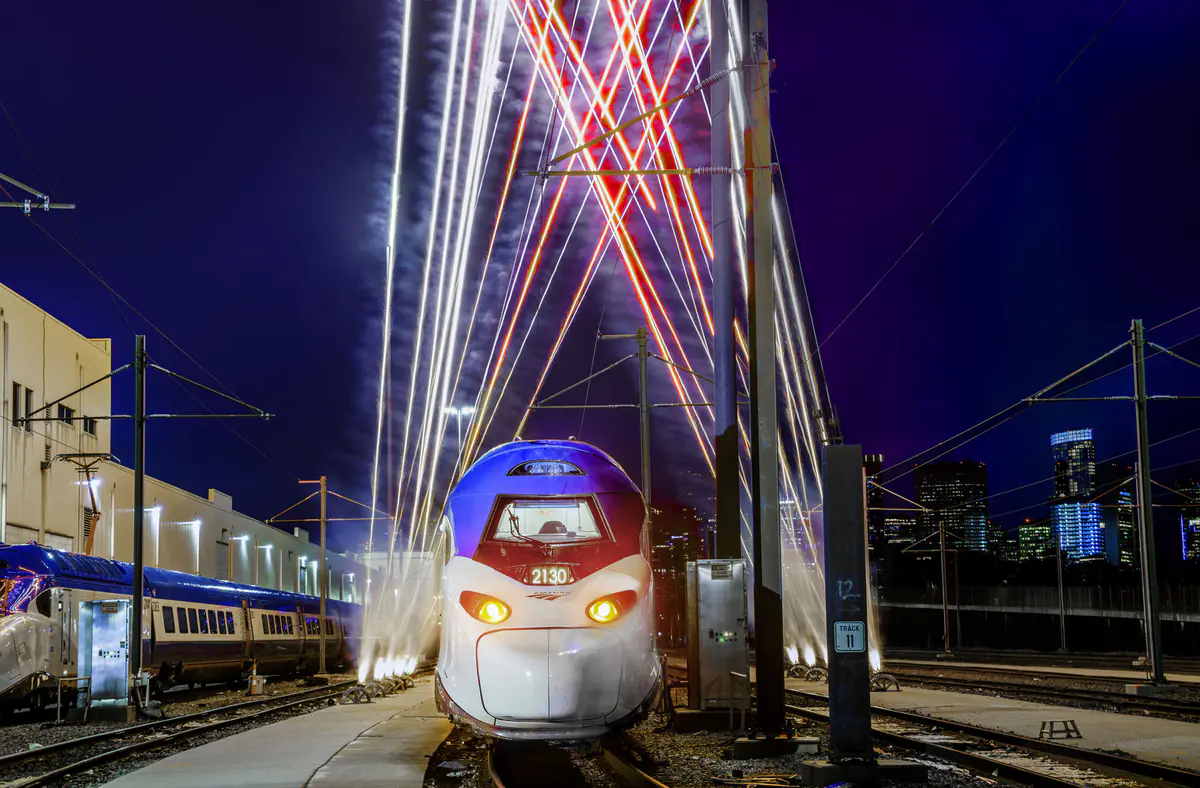
That timing matters because the Amtrak Office of Inspector General concluded that the first 24 trains could operate without extra maintenance-facility capacity under the programme schedule it examined. Amtrak has already placed 13 NextGen Acela trainsets into service and increased its weekday schedule from 26 to 32 trips.
Alstom Plans a $55 Million Newark Acela Facility
Alstom has acquired a 20-acre site in Newark and intends to spend more than $55 million on its acquisition and redevelopment. The $55 million Newark investment covers the wider property purchase and improvement programme, not just the purchase price of the site.
Plans for the Alstom Newark Acela facility include an enclosed workshop capable of servicing two complete NextGen Acela trainsets at the same time. A separate outdoor track will be used for storage, but it will not provide a third indoor maintenance position.
The existing warehouse will be converted into offices and a parts distribution centre. A rail spur will connect the development directly to Northeast Corridor tracks, allowing trainsets to enter and leave by rail without relying on road-based component movements for core maintenance activity.
Around 100 people are expected to work at the facility once operations begin. Alstom plans to transfer 50 employees from its existing distribution operation in New Castle and recruit a further 50 workers.
Don’t miss…New Amtrak Cascades trains prepare for 2026 service
NextGen Acela Maintenance Capacity Limits
The relationship between the Newark timetable and Amtrak’s maintenance planning remains a central issue.
In December 2025, the Amtrak Office of Inspector General reported that existing plans would allow the operator to run the first 24 of its 28 NextGen Acela trainsets without expanding maintenance-facility capacity. Its conclusion was based on the programme schedule reviewed by the watchdog.
Once the fleet moves beyond train 24, Amtrak could face limitations on placing all the remaining equipment into full operation unless facility modifications have been completed. Four trainsets were potentially affected, representing approximately 14.3 per cent of the full NextGen Acela order.
The Inspector General linked this exposure to the timing mismatch between fleet deployment and maintenance-infrastructure delivery. Its review found that some supporting facilities were scheduled for completion only after the trains they were intended to serve had arrived.
The report did not conclude that four trainsets would remain permanently out of service. It instead established a capacity threshold using the scheduling and facility information available during the review. Before reaching that point, Amtrak could adjust deployment dates, adapt existing sites or introduce temporary arrangements.
None of the official documents examined for the article states that Alstom’s Newark development was created specifically to resolve the capacity issue affecting trains 25 to 28. Even so, its two indoor service tracks, direct rail access and parts-distribution function make the site operationally relevant to NextGen Acela maintenance capacity.
Don’t miss…Australind train service returns on Perth–Bunbury route
Fleet Introduction Precedes the Summer 2028 Opening
An official Amtrak fleet update issued on 6 July 2026 confirmed that 13 NextGen Acela trainsets were operating. That represents approximately 46.4 per cent of the full 28-train order.
Those trains now cover 32 scheduled weekday trips. Before launching the replacement fleet, Amtrak operated 26 weekday Acela services. The new schedule therefore adds six trips, an increase of roughly 23.1 per cent.
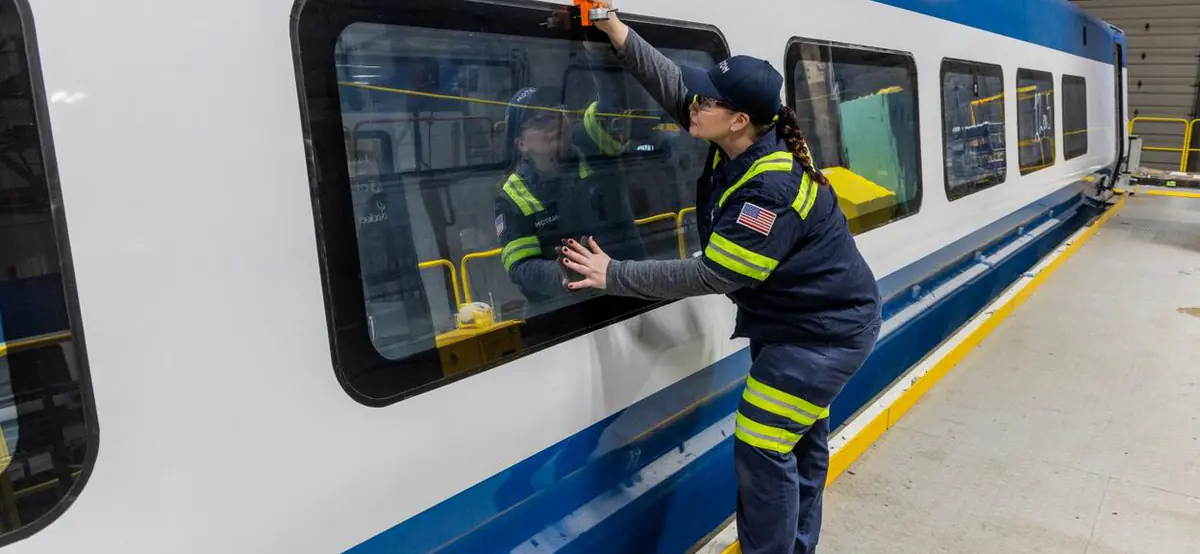
Amtrak’s current corporate profile says the remaining trains are scheduled to enter passenger service through 2027. Each NextGen train also provides 27 per cent more seats per departure than the first-generation equipment.
The complete fleet is therefore expected to enter service before the planned summer 2028 facility opening in Newark. This creates a possible gap between train deployment and the availability of the new Alstom support capacity.
Northeast Corridor Operations Depend on Maintenance Readiness
NextGen Acela serves the Northeast Corridor between Washington, New York and Boston, connecting important government, business, education and convention markets while also carrying leisure passengers.
The renewed fleet is expected to provide additional seating and more frequent departures. Delivery alone, however, does not determine how many trains can remain reliably available for daily passenger operation.
Availability also depends on inspections, repairs, replacement components, trained personnel, parts inventories, maintenance time and the rotation of equipment into and out of service.
For corporate travel managers, meeting planners and tour operators, that distinction is important. A train may have been delivered and accepted, but using it reliably in the timetable still requires sufficient servicing resources.
The Newark distribution centre may reduce the time needed to move essential components to maintenance teams. Its direct connection with the Northeast Corridor could also allow trainsets to reach the facility by rail, helping teams resolve technical faults more quickly and easing workloads elsewhere in the maintenance network.
Still, two enclosed positions do not automatically put two more trains into continuous commercial service. Their contribution will depend on staffing, repair times, component availability, the work being carried out and the allocation of maintenance responsibilities between Amtrak and Alstom facilities.
Acela Fleet Availability and Ticket Revenue
Maintaining Acela fleet availability has particular commercial relevance.
During the 2025 financial year, the service generated almost $570 million in ticket revenue from nearly 3.2 million passenger trips. Amtrak’s audited networkwide results recorded 34.4 million trips and $2.705 billion in ticket revenue.
Based on those rounded official totals, Acela accounted for approximately 9.3 per cent of all Amtrak journeys but around 21.1 per cent of total ticket income.
Estimated revenue averaged about $178 per Acela trip, compared with approximately $79 across Amtrak as a whole. Ticket revenue per Acela journey was therefore roughly 2.3 times the network average.
The audited figures also show different trends in ridership and income. Acela passenger numbers declined by 3 per cent in FY2025, while ticket revenue increased by 7 per cent, indicating a higher revenue yield despite the lower travel volume.
A constraint on NextGen Acela maintenance capacity that removes seats from the timetable could therefore affect more revenue per unavailable seat than comparable disruption on many lower-yield services.
Newark Forms Part of a $2.2 Billion Commercial Structure
The Newark development is part of a broader long-term relationship between Amtrak and Alstom.
Their agreements cover 28 NextGen Acela trainsets, spare parts, supply services and continuing technical support. At 30 September 2025, the agreements had a combined value of approximately $2.2 billion, of which $1.2 billion had already been incurred.
The programme is also supported by a $2.45 billion federal Railroad Rehabilitation and Improvement Financing agreement. This financing covers the 28 trains, associated spare parts and improvements to existing facilities and properties.
Newark is therefore one element of a wider support structure combining rolling-stock procurement, workshop capacity, inventories, technical services and infrastructure.
Amtrak is separately constructing a $463 million maintenance facility at Penn Coach Yard in Philadelphia. That site will serve both NextGen Acela and the forthcoming Airo equipment. Newark will join this wider network of support locations rather than replace Amtrak’s principal maintenance infrastructure.
The 24-Train Maintenance Threshold
For the travel market, the number of trains available during periods of high demand will matter more than the delivery total alone. Weekday peaks, conventions, public holidays and large events along the Northeast Corridor all require sufficient operational equipment.
The 13 trainsets already in service cover 32 weekday trips. As the fleet grows towards 24 units, maintenance scheduling will become more complex. If Amtrak reaches the Inspector General’s 24-train maintenance threshold without confirmed additional capacity, it may have to rely more heavily on existing facilities, manage utilisation more tightly or operate with longer workshop intervals.
Bringing Alstom personnel, replacement parts and rail-connected servicing infrastructure together in Newark could eventually strengthen fleet resilience. Yet the planned summer 2028 opening means the main period for managing the identified capacity exposure could come earlier.
Whether Amtrak has secured interim capacity since the Inspector General conducted its assessment remains unresolved. Faster modifications at existing facilities, a revised maintenance programme or a controlled train-acceptance schedule could reduce the exposure.
Until a more recent official assessment is available, the 24-train figure remains the clearest publicly documented indication of the possible maintenance constraint.
This is not a prediction of extensive cancellations. It shows that maintenance preparation, train deployment and scheduled service growth must progress together if the new fleet’s full passenger capacity is to become available.
Practical Points for Travel Agents and Tour Operators
- Follow official Amtrak equipment and timetable announcements rather than assuming every Acela service will use a NextGen trainset.
- Do not promise a particular train type in premium rail packages unless the equipment assignment has contractual confirmation.
- Allow extra transfer time for combined air and rail journeys through Boston, New York, Philadelphia, Baltimore and Washington.
- Use flexible or refundable conditions for corporate groups, MICE passengers and customers connecting with fixed international flights.
- Monitor fleet introductions as Amtrak approaches the 24-train maintenance threshold recorded by the Inspector General.
- Treat summer 2028 as the scheduled opening period for Newark, not a guaranteed completion date, because approvals, construction and commissioning may influence infrastructure delivery.
- Present the Newark facility as a project intended to support long-term reliability, rather than confirmation of an immediate increase in scheduled services.
Amtrak’s Acela support network extends beyond Newark and Philadelphia. The operator says its projects at Southampton Yard in Boston, Sunnyside Yard in New York and Ivy City Yard in Washington will support Acela alongside other fleets. Full completion is expected in 2029 for Boston and in 2030 for New York and Washington.
The Inspector General identified six Level 1 facilities in Amtrak’s initial upgrade programme, four of which support NextGen Acela. These sites handle periodic inspections and major mechanical work, so several core facility upgrades are scheduled for completion after all 28 trainsets are scheduled to enter service through 2027.
Outlook for US High-Speed Rail Operations
Alstom’s Newark investment will add a corridor-connected maintenance and parts facility to the support network serving the United States’ leading premium intercity rail operation. Its two indoor service positions, distribution function and rail access may improve technical response, fleet recovery and long-term train availability.
The difference between the two schedules remains the principal concern. Amtrak intends to place all 28 trainsets into service through 2027, but the Newark site is not due to open until summer 2028. The official review found that extra NextGen Acela maintenance capacity could become necessary once the fleet grows beyond 24 units.
If interim arrangements and the Newark development are delivered effectively, passengers could gain additional seating, more departures and greater timetable choice across the Northeast Corridor. If support infrastructure does not keep pace with the fleet rollout, some of the new equipment could be temporarily underused.
The next key indicator will be an updated official plan explaining how Amtrak expects to maintain trainsets 25 through 28 before Newark opens and after the facility begins operating.
News on railway transport, industry, and railway technologies from Railway Supply that you might have missed: