Amtrak Acela delivery delays limit loss gains
23.05.2026
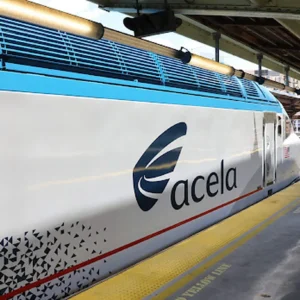
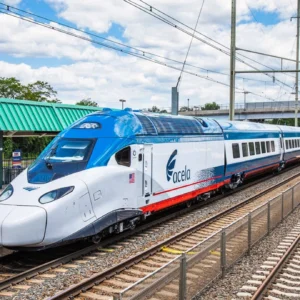
Amtrak Acela delivery delays limited the railroad’s progress in cutting operating losses. Stronger cost control still improved results across the Northeast Corridor, long-distance trains, and state-supported services. This is reported by the railway transport news portal Railway Supply.

As reported by Trains, total ridership rose 5.7% from a year earlier. The period ran from Oct. 1, 2025, through April 30, 2026. Amtrak officials gave the figures during the railroad’s online public board meeting on Thursday. Passenger volume reached 20.6 million through April. Still, delays in receiving the new Acela trainsets meant Amtrak carried 55,000 fewer passengers than expected.
Together, those figures connect the delayed fleet rollout with both Amtrak ridership expectations and the loss-reduction results discussed at the meeting.
Corneau tied the shortfall to the pace of NextGen Acela deployment, equipment reliability, and track outage issues. He said those areas will need improvement.
Amtrak Acela delivery delays and ridership
Corneau reported that Amtrak’s operating losses improved by $140.8 million from the prior year. The result was also $78.4 million better than management’s forecast.
Nearly half of the improvement came from long-distance services. Those services remain limited by capacity constraints. That service line accounted for about $62 million of the loss reduction. Higher fares were part of the reason.
Northeast Corridor and state-supported routes also improved. Both fell short of management’s plan.
Also, Corneau said Amtrak expects its diesel fuel hedging program to provide a $35 million positive effect. At the same time, he said employee benefit costs are increasing.
NextGen Acela deployment issues
Steven Bradbury asked about Amtrak’s discussions with Alstom. Bradbury is Deputy Secretary of Transportation and the Trump administration’s representative on the board. His question concerned problems affecting the NextGen Acela rollout.
Gery Williams said he is in regular contact with Alstom officials. Williams is Amtrak’s executive vice president of service delivery and operations.
“I meet with mechanical experts and Alstom experts every other week to go over items, and the North American CEO for Alstom is on every one of those calls,”
Williams said the main problem remains the trainsets’ platform doors.
“The main issue continues to be the [platform] doors — a lot of work has been done and we’re seeing statistical improvement,”
A restroom-door problem locks doors when sensors incorrectly detect insufficient water levels. Williams added that the issue “for the most part is fixed,”
Board member David Capozzi addressed the passenger information systems. He said they are not operating “as people with hearing disabilities were expecting.”
Williams said Amtrak is still working through those issues.
“The bottom line is we’re making more progress but we know we have more work to do,”
Equipment reliability and on-time performance
Through April, Amtrak’s overall consist-fulfillment figure was 92%. The historical average is 91%. The metric tracks the share of trains that depart with all equipment originally assigned.
According to one of the slides presented, the figure was negatively impacted “by lower than planned Venture coach availability, accepted risk on several long distance fleets from reduced protect equipment, and many Amfleet cars out of service due to wreck and other repairs,”
Line-of-road equipment failures are still weighing on customer on-time performance. Amtrak described fiscal 2026 year-to-date results as “significantly better” than the previous year. Still, the figures remain weak.
Long-distance trains recorded the largest percentage improvement. Their on-time performance rose to 64% from 57%. Meanwhile, Northeast Corridor trains improved slightly to 78%. State-supported services increased to 81%.
The Northeast Corridor result remains lackluster. Amtrak controls dispatching on most of the route, and freight trains do not interfere there. Timekeeping is more difficult for trains that start or finish away from the Northeast Corridor.
Chief Commercial Officer Eliot Hamlisch said customer satisfaction was “at or above past performance” despite the punctuality numbers.
Board member Ron Batory asked about long-distance on-time performance. The question followed the improvement despite severe winter weather.
Williams pointed specifically to Norfolk Southern.
“our NS partners have been making a lot of effort to run our trains to the best of their capability and we’ve seen those results over time.”
Williams said Union Pacific and CSX remain at the lower end of the list, “but they’ve all shown improvement.”
Airo trainsets and unresolved service questions
Outgoing Amtrak President Roger Harris closed the public part of the board session by citing several milestones. Harris will leave the company on July 31.
He said the Line 2 East River Tunnel “ribbon cutting” is expected “in six weeks.” In addition, Airo trainsets are expected to enter service on the Cascades “later this year.” They are expected on the Northeast Corridor “in 2027.”
The annual post-Thanksgiving meeting is held both online and in person. Thursday’s mid-year session did not include an opportunity for the public to ask questions.
Separately, several issues were not addressed during the board meeting. They included:
• when corrosion-sidelined Horizon coaches might return to service;
• how many out-of-service Superliners and Viewliner sleeping cars have returned to active service so far this year;
• when shunt antennas could be installed on Charger locomotives assigned to Illinois’ Chicago-Carbondale Illini and Saluki services to release 14 Superliners for use on capacity-constrained long-distance trains;
• the financial effect of equipment failures on Amtrak’s results.
News on railway transport, industry, and railway technologies from Railway Supply that you might have missed: