Lithuania Receives 12 of 15 New Stadler FLIRT Trains
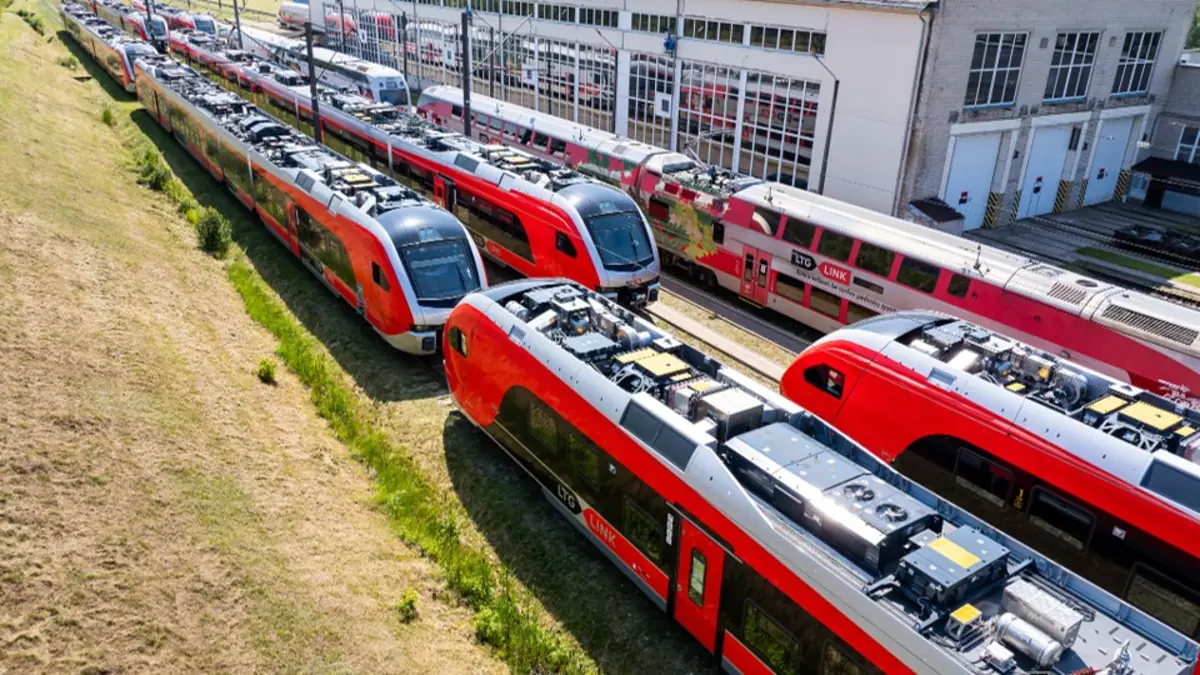
LITHUANIA: Twelve of the 15 new Stadler FLIRT trains ordered by LTG Link have arrived, with testing and certification under way before passenger operations are scheduled to begin this autumn.
Testing and approval remain the final steps
Seven electric units and five battery-powered multiple units have now been delivered, according to the LTG Group’s official update. The full order covers nine electric trains and six battery units, leaving three vehicles still to arrive.
Testing starts at Stadler’s factory in Poland, where teams inspect systems including ventilation and emergency equipment. In Lithuania, the programme continues with static and dynamic trials covering acceleration, braking, performance at different speeds and behaviour under operating conditions.
The tests completed so far have produced positive results, LTG Link said. Trials with two- and three-unit formations, including mixed electric and battery configurations, are due to begin shortly. All 15 trains must complete testing and certification before entering regular service.
The Lithuanian Transport Safety Administration will assess the results and issue the operating authorisation. Until that approval is granted, the delivered vehicles remain in the testing phase rather than passenger operation.
Don’t miss…India Border Rail Upgrades Could Get ₹45,000 Crore
Electric and battery trains will serve different routes
The nine electric FLIRTs are intended for the Vilnius–Klaipėda–Vilnius route. Each train will have 200 seats, additional bicycle space and a bistro selling hot food and drinks. LTG Link plans to couple units in pairs or triples when demand requires more capacity.
Battery-powered trains will work the Kaunas–Šiauliai–Kaunas and Vilnius–Varėna (Marcinkonys)–Vilnius routes, including sections without overhead electrification. They will provide 128 seats, coffee and snack vending machines and facilities for passengers with reduced mobility. Maximum speed is 160 km/h under overhead power and 120 km/h in battery mode.
Stadler’s original contract announcement specifies five-car, 93-metre electric units and battery trains more than 65 metres long, formed of three passenger cars and a dedicated Power Pack car. The battery fleet is intended to replace diesel trains on non-electrified sections.
News on railway transport, industry, and railway technologies from Railway Supply that you might have missed: