Auckland rail beats its 2019 weekly record in City Rail Link’s first week
Auckland’s trains logged 528,007 boardings in the City Rail Link’s first week, 13–19 September, beating the network’s previous weekly high of 504,380 set in March 2019.
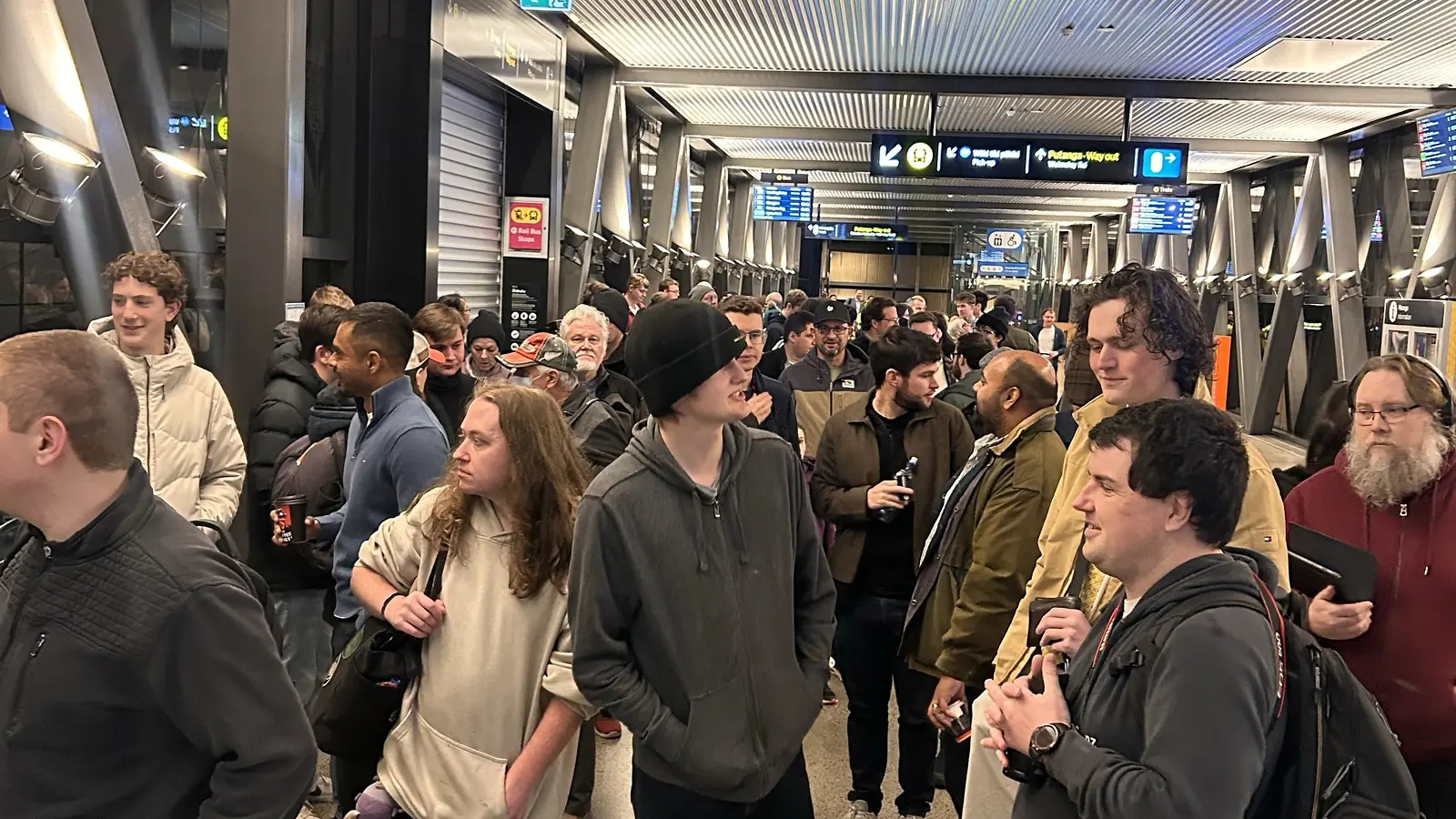
The count covers Sunday 13 September to Saturday 19 September 2026. The earlier record was set on 3–9 March 2019, and the new total beats it by 23,627. A ranking released with the figures on 21 September by Transport Minister Chris Bishop and Auckland Mayor Wayne Brown lists the five busiest weeks before this one. All five fell in March 2019, December 2019 or the first week of March 2020.
In the last week before the new tunnels carried passengers, the network recorded 325,203 boardings. Bishop put the week-on-week rise at around 62 per cent.
| Rank | Week | Train boardings |
|---|---|---|
| 1 | 13–19 September 2026 | 528,007 |
| 2 | 3–9 March 2019 | 504,380 |
| 3 | 10–16 March 2019 | 491,992 |
| 4 | 17–23 March 2019 | 480,943 |
| 5 | 8–14 December 2019 | 479,251 |
| 6 | 1–7 March 2020 | 473,210 |
The City Rail Link’s first week is the only week in the top six from after March 2020, and it leads the second-placed week by 23,627 boardings (editorial calculation: 528,007 minus 504,380).
Source: New Zealand Government release, 21 September 2026.
The City Rail Link (CRL) is a 3.45km twin-tunnel line under the city centre, with new stations at Te Waihorotiu and Karanga-a-Hape and a rebuilt station at Maungawhau, the former Mt Eden stop. It opened to passengers on 13 September and, for the first time, lets trains run through the centre rather than ending at Waitematā.
A day-by-day build-up
The first service on opening day left Ōtāhuhu at 4.57am, and Sunday ended with 56,757 boardings. Monday, the first weekday under the new timetable, brought 78,503. Tuesday and Wednesday each passed 84,000, with 84,275 and 84,118 respectively.
Thursday was the busiest day of the week at 85,289 boardings. Numbers then eased to 77,002 on Friday and 62,063 on Saturday.
Punctuality and reliability through the week
From Monday to Friday, punctuality stayed between 95.4% and 99.3%. Reliability rose from 94.8% on Monday to 99.3% on Thursday and stood at 97.8% on Friday.
Opening day was the weak point. An early-morning fire at Waitematā Station disrupted the additional services planned for the special Day 1 timetable, and Sunday’s punctuality came in at 94.4% with reliability at 81.6%. The regular Sunday timetable ran normally once trains were allowed to move again.
| Day | Train boardings | Punctuality | Reliability |
|---|---|---|---|
| Sunday 13 September | 56,757 | 94.4%* | 81.6%* |
| Monday 14 September | 78,503 | 96.4% | 94.8% |
| Tuesday 15 September | 84,275 | 97.3% | 97.2% |
| Wednesday 16 September | 84,118 | 95.4% | 97.4% |
| Thursday 17 September | 85,289 | 99.3% | 99.3% |
| Friday 18 September | 77,002 | 97.7% | 97.8% |
| Saturday 19 September | 62,063 | 98.5% | 98.9% |
| Week total | 528,007 | – | – |
Thursday brought the most boardings of the week, and from Monday onwards neither on-time measure fell below 94.8%.
*Opening-day results reflect the early-morning fire at Waitematā Station, which disrupted extra services on the Day 1 timetable. Boardings are based on Auckland Transport’s HOP card and payment card data. Source: New Zealand Government release, 21 September 2026.
How the week was counted
The totals come from Auckland Transport’s HOP card and payment card data. They differ, the government noted, from the estimated boarding numbers Auckland Transport published during opening week.
Auckland Transport counts a boarding every time someone gets on a train, so the figures measure trips rather than individual travellers. Its published daily reports also include transfers from one train line to another. Transfers are now part of some journeys. With the tunnels open, the Eastern and Western Lines run as a single East West Line, the Southern Line has become the South City Line and the Onehunga Line is now the Onehunga West Line. At peak times, passengers from western stations heading for Grafton or Newmarket switch to a South City Line train at Karanga-a-Hape. For the on-time figures, a service is punctual if it uses the intended mode of transport, leaves its first stop no more than one minute early or five minutes late and reaches the last stop no more than five minutes late.
What comes next
Bishop said:
“A strong performance in the first week was important for building confidence in the CRL as a reliable, genuine public transport alternative for Aucklanders who might otherwise choose to travel by car.”
Brown called the week a strong start and said the focus now is on keeping the momentum. He also pointed to Auckland Transport’s move, from the following week, to an organisation dealing only with public transport services, and said:
“The challenge now is to keep building on this success and continue growing passenger numbers.”


