CN and CPKC tariff hit reshapes 2025 rail outlook
01.02.2026
Canada’s two biggest rail operators say the CN and CPKC tariff hit in 2025 was substantial, but it didn’t prevent either company from posting modest revenue growth as U.S. trade policy and on-and-off tariffs kept shifting, as reported by the Calgary Herald.

In total, the tariff-related impact worked out to about $550 million last year. Canadian National said tariffs, trade uncertainty and volatility reduced its full-year 2025 revenues by over $350 million, Janet Drysdale — CN’s executive vice-president and chief commercial officer — told analysts on Friday.
Don’t miss…MTA capital improvements 2025 reach record $15.8B
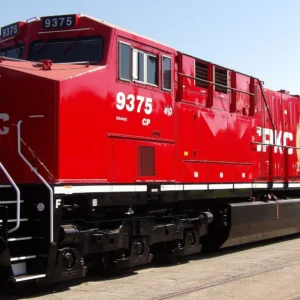
Canadian Pacific Kansas City described a comparable headwind. On a Wednesday earnings call, chief executive Keith Creel said the company has already absorbed “a pretty significant hit” tied to uncertainty and other trade pressures, estimating the revenue impact at about $200 million and noting it could be higher.
Why the CN and CPKC tariff hit matters at the border?
Both railways have extensive operations on each side of the Canada–United States border, an area that has become a focal point for trade disputes since U.S. President Donald Trump took office early last year. Through 2025, on-again, off-again tariffs added to the unpredictability — a backdrop also discussed by Railway Supply — though goods covered by the Canada-United States-Mexico Agreement (CUSMA) remained largely shielded from the levies.
The next uncertainty point is already on the calendar: the agreement is up for renewal in July. Creel said he has believed from the beginning that Trump intends to adjust the balance of trade across North America, and that the president will make decisions during renegotiation that, in his view, benefit the United States.
CN chief executive Tracy Robinson told analysts it is difficult to predict where the tariff situation will land in the coming year, or what it will mean for trade moving across the border. She added that the outcome of the CUSMA review could influence trade and freight demand in ways that are hard to estimate today. CN’s base-case expectation, she said, is that volumes will be “flattish” with 2025.
CPKC’s network and the Canada–U.S.–Mexico trade link
Creel also argued that even if the deal is “rebalanced” in talks, it remains critical that goods continue flowing among Canada, the U.S. and Mexico. He acknowledged the companies have been navigating choppy conditions and may face more turbulence, but said the three countries will keep trading — and that CPKC’s network uniquely helps enable that.
CPKC gained the latter half of its acronym after Canadian Pacific’s 2021 acquisition of U.S.-based Kansas City Southern for US$31 billion, a merger that formed the only single rail line connecting Canada, the U.S. and Mexico.
Q4 2025 revenue results for CN and CPKC
Even with the tariff drag, both operators reported year-over-year gains. Montreal-based CN posted revenues of more than $4.4 billion for the fourth quarter of 2025, a two per cent increase from a year earlier. For the full year, CN’s revenues totalled $17.3 billion, also up two per cent versus 2024.
CPKC, headquartered in Calgary, recorded $3.9 billion in revenue in the final quarter of 2025, a one per cent rise from the prior year; the company summarized those fourth-quarter results in its Q4 2025 earnings update. Across all of 2025, the company said revenues grew four per cent to $15.1 billion.
News on railway transport, industry, and railway technologies from Railway Supply that you might have missed: