California High-Speed Rail Project Prepares for Track Work
10.07.2026
The California high-speed rail project is entering a new stage as authorities advance infrastructure contracts and the 2026 Business Plan sets its direction after years of delays and funding debates.
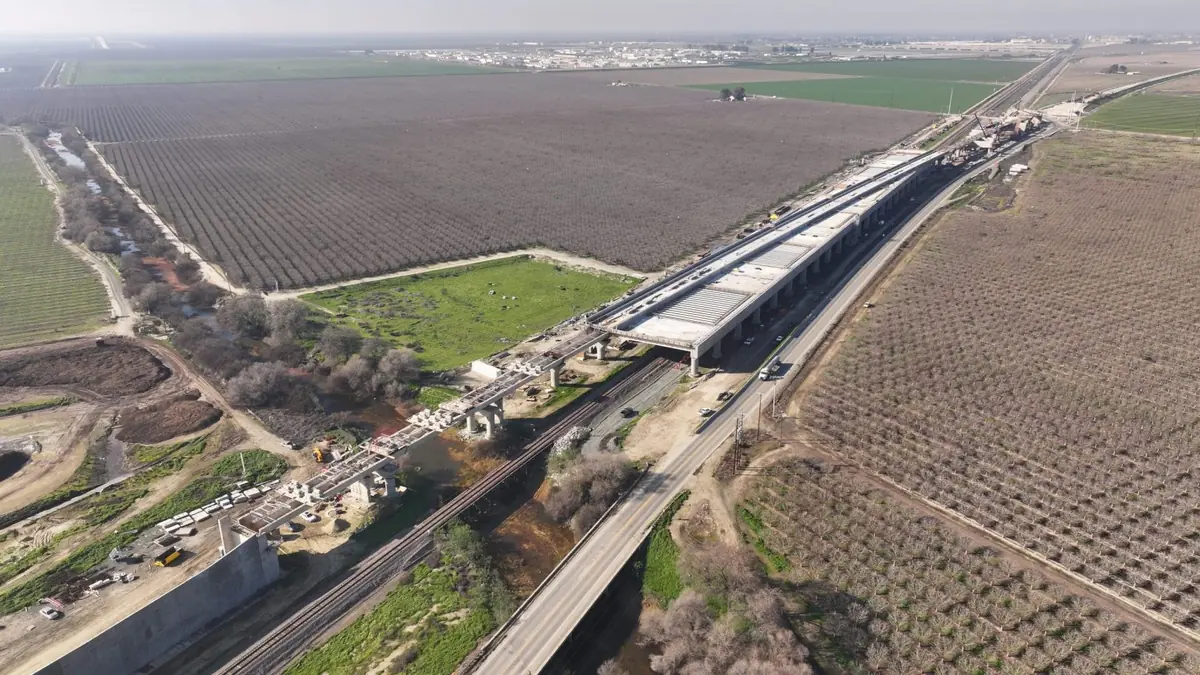
Under Phase 1, the planned network will cover 795 km between San Francisco, the Los Angeles metropolitan area, and Anaheim. Trains are intended to complete the journey in under three hours. Phase 2 would add connections to Sacramento and San Diego, creating one of the largest high-speed rail networks planned in North America.
The railway is presented as the first U.S. system designed for genuine high-speed operation to standards already used in Europe and Asia. The investment is also considered strategic for reducing carbon emissions, increasing regional mobility, and supporting economic development within the state.
Don’t miss…New Amtrak Cascades trains prepare for 2026 service
Central Valley construction progress
Work is furthest advanced in the Central Valley, where construction spans 191 km and dozens of sites remain active.
More than 128 km of guideway and 61 major structures have been completed, while another 30 structures are under construction in Madera, Fresno, Kings, and Tulare counties. The authority has also secured 99% of the property required for this section, reducing one of the main risks that previously affected the project’s development.
Preparations extend beyond the active Central Valley sites. Environmental procedures have been completed for almost 745 km of the approximately 795 km Phase 1 route, enabling those sections to proceed toward design and construction.
Design and preparatory work is continuing on the Merced–Bakersfield extension. This section is intended to connect the future high-speed railway more effectively with regional services and prepare the network for its first commercial operations.
The California high-speed rail project is also moving beyond its earlier concentration on civil structures. Approval has been given to the team responsible for designing and delivering the railway-specific elements, including track, electrification, signaling, and telecommunications.
Railway systems contract moves forward
In June, the California High-Speed Rail Authority approved the selection of a consortium led by U.S. companies Kiewit, Stacy Witbeck, and Herzog. Its work will cover the track, catenary, communications, and train-control infrastructure.
These systems will convert 119 miles (191.5 km) of completed Central Valley guideway into an electrified railway designed for speeds of up to 354 km/h. It is the first U.S. contract of this type for a true high-speed line and represents the shift from primarily civil construction to infrastructure required for railway operation.
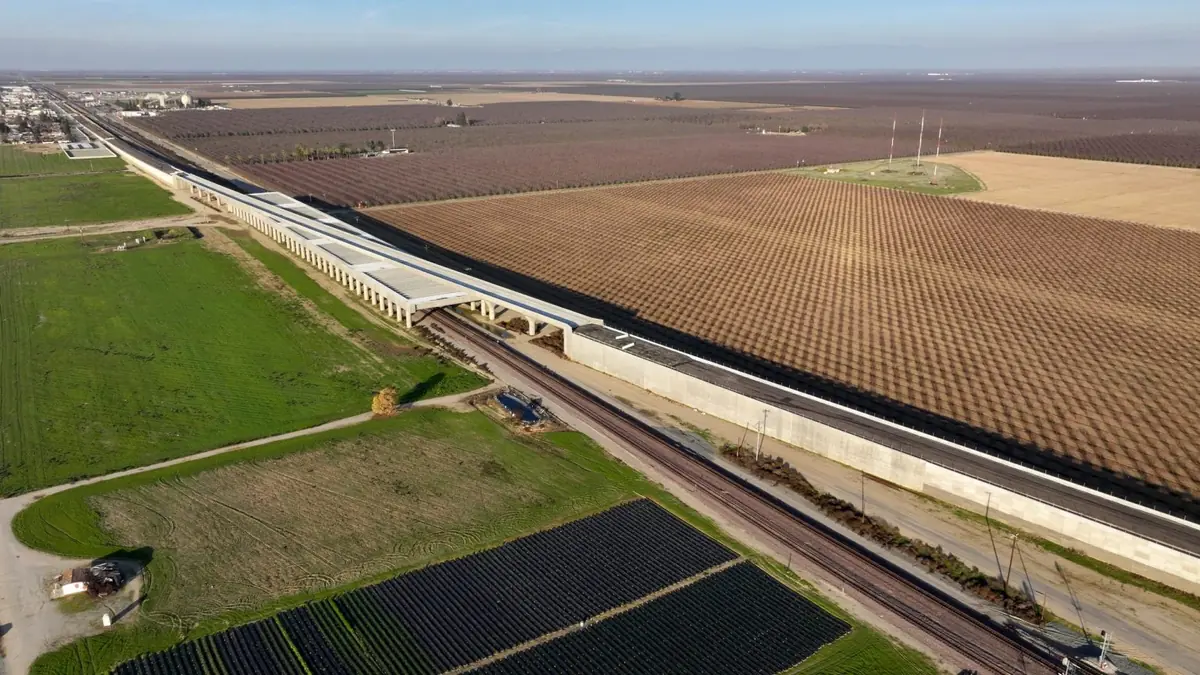
A separate procurement has been opened for civil works and an extension between Merced and Madera. The segment is expected to support connections between the high-speed route and existing regional rail services in the northern Central Valley.
The Merced–Madera contract has an estimated value of USD 2.4 billion. Two teams are expected to be shortlisted by the end of 2026, with major construction anticipated from late 2027 through 2030.
Private funding strategy
Public funding is no longer the only financing route under consideration. A market consultation launched late last year was intended to identify private investors that could participate in developing and operating the future infrastructure.
In June, the California High-Speed Rail Authority entered into a co-development agreement with Momentum Alliance Partners. The international consortium brings together expertise in high-speed rail, investment, and major infrastructure.
Its members include Plenary Americas, CDPQ Infra, Keolis, SNCF Voyageurs, Jacobs, Sener, Systra, Setec, Arup, and Steer. Their proposed role is to support the financing and delivery of later network extensions through public-private partnerships and long-term commercial arrangements.
The agreement reflects California’s effort to combine public resources with private capital and international industry experience as the programme moves into its next phases.
California high-speed rail project costs
The 2026 Business Plan gives the following estimated investment figures:
- Merced–Bakersfield, planned as the first operational Central Valley section: USD 35.7 billion.
- San Francisco–Bakersfield: USD 61.23 billion.
- San Francisco–Palmdale: USD 96.87 billion.
- San Francisco–Los Angeles/Anaheim under Phase 1: USD 126.08 billion.
The 275 km corridor between Merced and Bakersfield is currently under design and construction.
The project has also generated substantial employment and economic activity. Nearly 19,200 well-paying jobs have been created since construction started, most of them filled by Central Valley residents. The estimated contribution to California’s economy is close to USD 25 billion, and as many as 1,700 people work on construction sites each day.
Funding and delivery challenges
The 2026 Business Plan presents the California high-speed rail project not only as transport infrastructure but also as a source of employment, economic development, and modernization of California’s transportation system.
The project nevertheless remains one of the most difficult infrastructure programmes underway in the United States. Since voters approved it in a referendum, implementation has been affected by legal disputes over property acquisition, demanding environmental processes, repeated revisions to technical solutions, and substantial cost increases. These problems have led to revisions of the original timetable and fuelled debate over the investment’s financial sustainability.
The authority argues that the programme is now in a different position from previous years. Most required land has been obtained, civil construction is well advanced, and attention is turning increasingly toward track and operating systems. Maintaining progress will also depend on securing additional financing and attracting private-sector involvement.
The project’s success is therefore being measured by more than completed structures and kilometres of infrastructure. It also depends on the authorities’ ability to turn one of the world’s most ambitious rail initiatives into a functional and economically sustainable system.
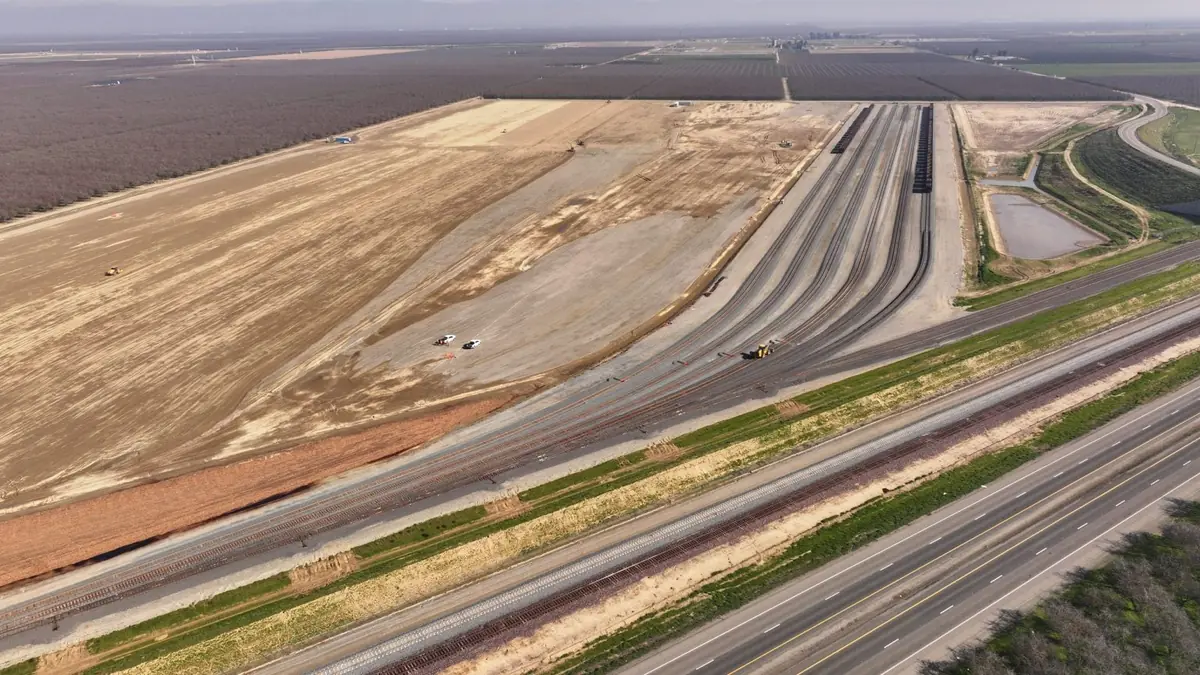
Track and systems installation on the completed 119-mile Central Valley guideway is scheduled to begin in 2026. The 2026 Business Plan identifies Merced–Bakersfield as the first operating segment and uses 2033 as the first full year of service, with annual high-speed rail ridership estimated at 1.5 million to 1.9 million. Funding for the segment includes a fixed allocation of USD 1 billion per year through 2045.
If the present timetable is maintained, California could become the first state in the country to open a high-speed rail network comparable with systems operating in Europe and Asia.
News on railway transport, industry, and railway technologies from Railway Supply that you might have missed: