Alto high-speed rail programme moves toward 2029 construction
13.05.2026
The Alto high-speed rail programme has moved beyond its earlier concept stage. It is now being organised around a defined delivery process. During the USHSR Conference, speakers said the programme is in early development after federal approval. Construction is set to begin as early as 2029. This is reported by the railway transport news portal Railway Supply.

The current phase sits between the federal decision to proceed and the later construction stage. Route, cost and technical choices are still being refined.
The planned corridor would connect Toronto, Ottawa, Montreal, and Quebec City. It would cover about 1,000 kilometres. Transport Canada describes Alto as the high-speed rail service for the Toronto–Québec City corridor. In addition, it would serve around 18 million people. They are in the country’s most economically active region. Trains are designed for speeds of up to 300 km/h. The system is expected to cut journey times by about half. Toronto–Montreal trips would fall to under three hours. Toronto–Ottawa journeys would take less than two.
At the USHSR Conference, Karla Avis-Birch of Arup presented the update. Maria Luisa Dominguez from ALTO also presented it. Clémentine Sallée presented it while representing CDPQ Infra and Cadence, as reported by Railway News. Their presentation focused on the shift from planning into execution through a structured delivery partnership.
Alto high-speed rail programme delivery structure
Alto, a Crown corporation, is responsible for leading the programme. It is supported by Cadence, a private-sector consortium. Support also comes from infrastructure and mobility specialists, such as CDPQ Infra. Engineering advisers such as Arup are also involved. The delivery structure is based on a “co-development” approach. Under this model, design work, risk analysis, and market engagement move forward together. They are not handled in separate stages.
Don’t miss…Etihad Rail safety campaign prepares UAE passengers
At the same time, several alignment options can be developed in parallel. That gives the government a basis for selecting the preferred solution. The choice would depend on cost, performance, and constructability.
Maria Luisa Domínguez (ALTO – Canada) said:
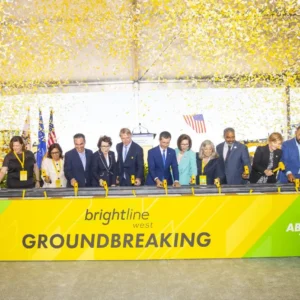
Before making the decision of building the first high-speed line, a lot of discussions and technical and economic studies happen. That’s normal. But on February 19, 2025, everything changed when the Government of Canada announced it was moving forward with Alto, Canada’s first high-speed line between Toronto, Ottawa, Montreal and Quebec City, covering more or less a thousand kilometres of track. It is going to be one of the largest infrastructure initiatives in the recent history of the country.
Public consultation and route planning
Public engagement is one of the programme areas that has progressed furthest so far. The consultation process was described as Canada’s largest ever for a transport project. More than 10,000 Canadians joined in-person and online sessions. They produced about 19,000 pieces of feedback. Initial findings point to around 69% public support. Still, concerns remain over land use, station locations, and effects on property.
The route is still being assessed within a wide 10-kilometre study zone. That area is expected to narrow over time. The operational footprint would be about 60 metres as alignment decisions are refined. The first section planned for construction is expected to be the Ottawa–Montreal corridor. It has been selected because of its shorter distance. Also, it has value as a “learning segment”. Delivery methods could be refined before they are applied across the wider network.
Cost and risk work
The programme is currently estimated at up to 90 billion CAD. The delivery period spans 18 years. Projections also indicate that it could support up to 50,000 construction jobs. It could also support 5,000 long-term operational positions. Still, the speakers noted that these figures are being refined. Technical work and alignment studies continue.
A recurring point was cost certainty. The speakers also stressed the need to avoid fixing final numbers too early. Alto is using market sounding, geotechnical investigations, and iterative design. These steps are intended to reduce delivery risks before procurement decisions are completed.
Clementine Sallée (CDPQ Infra / Cadence) said:
One of our main goals is to translate project outcomes into a manageable and reliable system, meaning safety, passenger experience, affordability and value for money. We are not transferring risk at this stage — we are de-risking the execution phase. This is about identifying and evaluating risks early, testing them with the market, and ensuring that when we allocate them later, we do so with the best possible information.
Governance, segmentation and remaining decisions
Programme governance has been arranged around regular decision-making at several levels. These include weekly technical working groups and monthly leadership boards. Decisions are made collaboratively through a unified governance structure. It is intended to reduce bottlenecks while maintaining accountability between Alto and its delivery partners. Domínguez said this mix of internal and external governance is important. It helps resolve contradictions between provinces. It also supports effective decision-making.
Segmented delivery approach
Sallée also deliberately described Alto as a programme, not as a single project. This framing allows the corridor to be divided into separate segments and packages. In addition, it supports staggered procurement, ongoing supply-chain mobilisation, and phased delivery. The route crosses multiple provinces. It also requires coordination with federal, provincial, and Indigenous stakeholders. The segmentation approach is intended to help manage that complexity.
Several central questions remain unresolved. They include final alignment, station locations, land acquisition strategies, and total cost. Project leaders said the current phase is designed to work through these issues. That work is intended before construction starts. At present, the focus is on aligning technical design with public consultation results. Market capacity and long-term operational performance are part of that alignment.
Alto remains in transition from political approval toward engineering definition. It is also moving from early-stage planning into structured execution.
News on railway transport, industry, and railway technologies from Railway Supply that you might have missed: