India’s first hydrogen train route and fares set
07.07.2026
India’s first hydrogen train is due to be introduced by Indian Railways on July 17, with the hydrogen-powered service planned for the Jind-Sonipat route in Haryana.
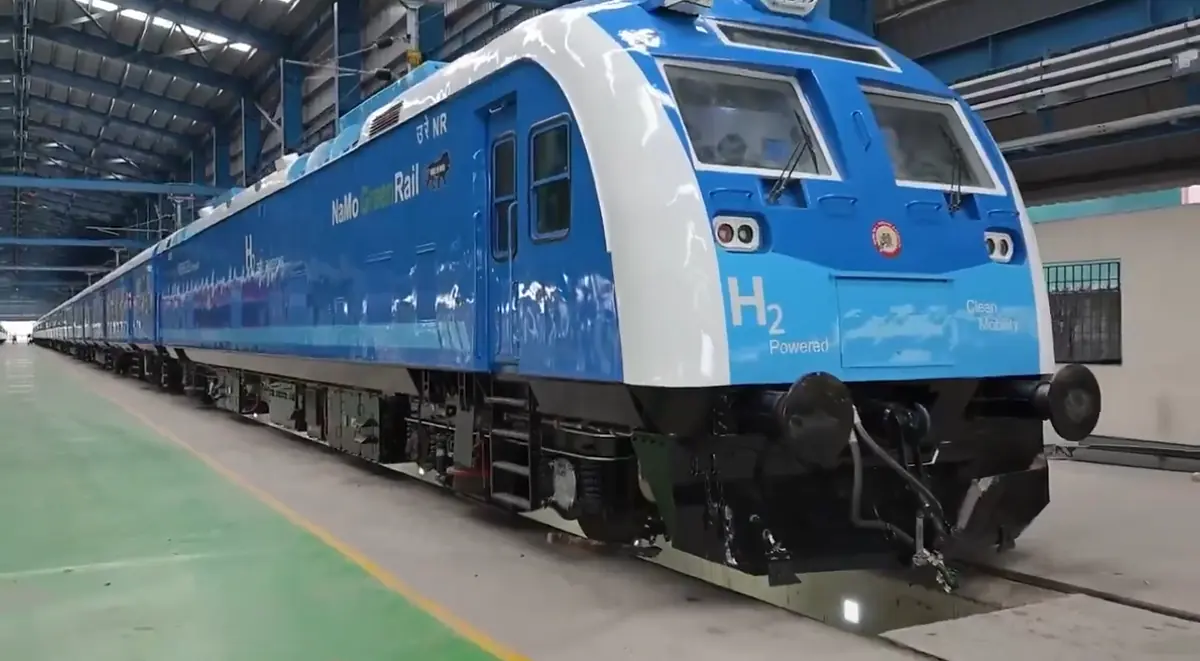
Prime Minister Narendra Modi is scheduled to flag off the train on July 17. The launch is presented as part of India’s wider push for cleaner transport, as the train’s propulsion system is designed to operate with virtually no pollution. It also falls within the country’s Green Transport Mission and Make in India initiative.
India’s first hydrogen train route and fare
The train will run between Jind and Sonipat, covering a route of nearly 90 km. Indian Railways has set ticket prices at an affordable level, with fares ranging from Rs 5 to Rs 25.
The new service is expected to cover the Jind-Sonipat journey in about one hour, compared with around two hours for the existing Diesel Multiple Unit service on the same route. The hydrogen train will also have capacity for around 2,500 passengers, combining lower-emission operation with faster and low-cost travel.
Don’t miss…All 13 Ahmedabad portal beam installations are complete
Hydrogen fuel cell technology and safety systems
The train will be fitted with a 1,200-kilowatt hydrogen fuel cell propulsion system. Rather than using diesel fuel, the system generates electricity through a chemical reaction between hydrogen and oxygen. That process produces steam and heat, while avoiding smoke and carbon emissions.
After one hydrogen refuelling, the train is expected to travel approximately 250 km. Indian Railways has also included several safety measures for the new train, including around 27 hydrogen cylinders, hydrogen leakage detectors, fire detectors and modern control systems. These systems will be checked regularly.
RDSO design and Integral Coach Factory production
The hydrogen train was designed by the Lucknow-based Research Designs and Standards Organisation and built at the Integral Coach Factory in Chennai. The project has an estimated cost of around Rs 89 crore.
If the pilot project performs successfully, similar hydrogen-powered trains could later be introduced on other routes. Such trains could help reduce dependence on diesel, lower fuel costs and support environmental protection efforts.
What changes for passengers?
For passengers, the Jind-Sonipat service is not only a new train launch but also the first practical test of hydrogen rail operations on this route. Official railway information identifies the section as a pilot route and says the 10-car trainset is approved to run at up to 75 kmph. The same official context also points to a hydrogen storage and refuelling facility at Jind, PESO licensing for compressed hydrogen handling, and trained technical staff accompanying the train during the initial phase.
The July 17 launch is set to open a new phase for Indian Railways as it begins operating hydrogen-powered passenger rail technology in the country.
News on railway transport, industry, and railway technologies from Railway Supply that you might have missed: