Trans-Caspian Transport Corridor gains a $372m push
Trans-Caspian Transport Corridor upgrades in Georgia will receive USD 372 million from the World Bank Group, as the country seeks a stronger role in trade between Europe and Asia.
The financing was approved by the World Bank Group’s Board of Executive Directors and forms part of a broader transport programme built around Georgia’s position in regional freight flows. In its official announcement, the World Bank said the Trans-Caspian Transport Corridor – Georgia Accessibility and Transport Enhancement Project, or TC-GATE, will finance rail freight improvements, road works and reforms across the national transport sector.
The project is meant to improve connectivity, widen access to markets and lower logistics costs for businesses, farmers and local communities. More than 900,000 people are expected to benefit directly. The World Bank also expects the initiative to support jobs in logistics, transport, agribusiness and related sectors.
Why the Trans-Caspian Transport Corridor matters for Georgia?
Rolande Pryce, the World Bank’s Regional Director for the South Caucasus, said the investment would help Georgia use its full potential as a regional transit hub between Europe and Asia. He tied the programme to growing demand along the corridor and said stronger rail and road links would support connectivity, employment and economic growth.
The TC-GATE Project is valued at more than USD 750 million. The World Bank will provide USD 372 million, while the remaining funding will come through co-financing from the Asian Infrastructure Investment Bank and the Asian Development Bank. This funding structure shows broader international support for development of the Middle Corridor.
Railway Supply has also previously covered World Bank projections pointing to higher freight volumes along the Middle Corridor. In that context, the Georgian project fits into the broader push to strengthen the corridor’s role in trade between Asia and Europe.
Georgian Finance Minister Lasha Khutsishvili said the project would reinforce Georgia’s role as a reliable gateway for trade flows between Europe and Asia. He also said Georgia and its international partners were committed to building a modern transport network that can serve the wider region for decades.
Rail freight and Georgian Railway modernisation
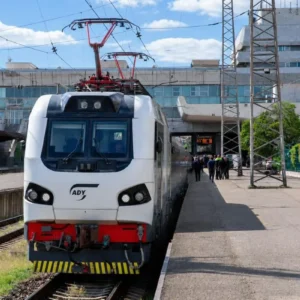
Rail freight capacity is one of the main parts of the programme. The funding will support the purchase of new energy-efficient electric locomotives to replace ageing rolling stock. According to the World Bank, these upgrades should improve operational efficiency, governance and the financial sustainability of Georgian Railway.
The railway component is expected to lift locomotive availability to 95 percent and make services more reliable. It is also projected to raise railway revenues by 20 percent and reduce net emissions by more than 2.3 million tons. Together, these changes are intended to make Georgia transport infrastructure more efficient and more resilient within the Middle Corridor.
Kakheti roads and digital transport management
The project also covers major road improvements in Kakheti. Planned works include two new four-lane sections between Badiauri, Chalaubani and Bakurtsikhe, along with a new road between Gurjaani and Telavi. The World Bank said these upgrades should cut travel time between Telavi and the Black Sea port of Poti by about 43 minutes.
The road component is also expected to improve safety and climate resilience. Alongside construction, the programme will support digital road asset management and introduce Intelligent Transport Systems through a National Highway Control Center. These measures are aimed at the long-term sustainability of Georgia’s road network.
The World Bank said the initiative will also promote economic opportunities for women entrepreneurs in Kakheti. It will explore wider private-sector participation in road management and maintenance, while supporting Georgia’s position in the Trans-Caspian Transport Corridor and the broader Middle Corridor.