Thailand Moves First High-Speed Rail Phase to 2030
Thailand has moved the completion target for the first phase of its China-linked high-speed railway to 2030, limiting the new deadline to the Bangkok–Nakhon Ratchasima section.
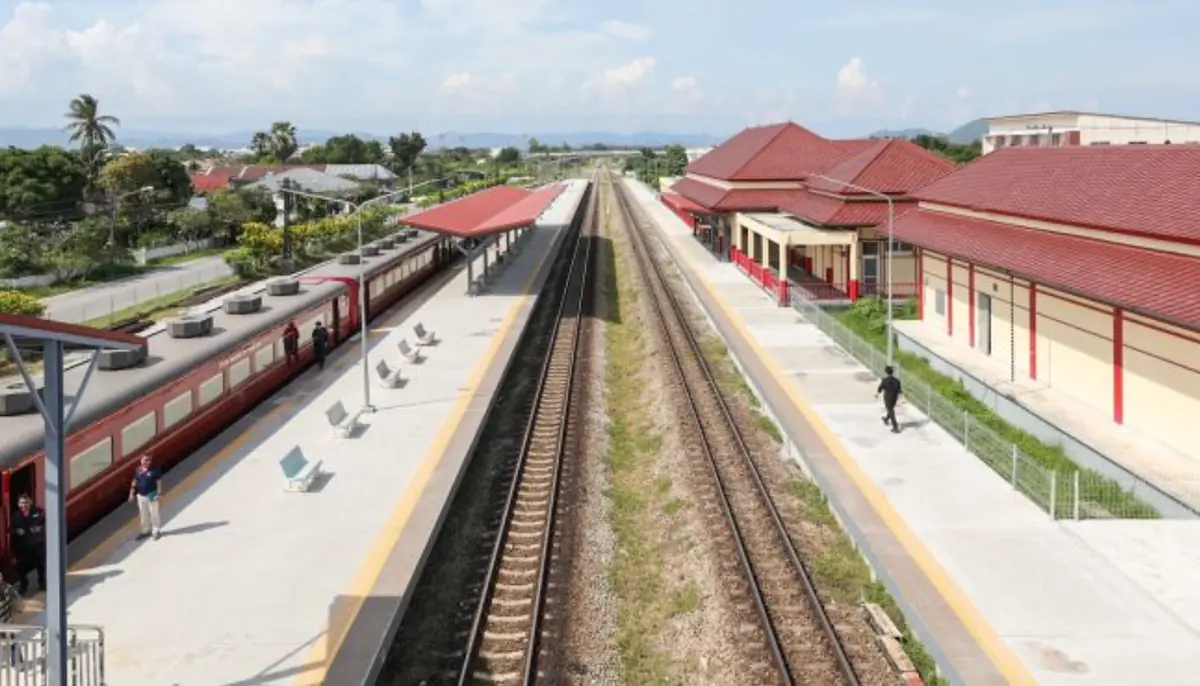
The 2030 deadline now covers only Phase 1
Thailand’s Government Public Relations Department confirmed the target after Prime Minister Anutin Charnvirakul’s official visit to China from July 16 to 20, 2026. The government also said it was preparing the second phase towards Nong Khai.
Earlier schedules had placed the Phase 1 opening in 2028, while separate estimates applied 2030 or 2032 to the complete Bangkok–Nong Khai route. The latest announcement moves the first section’s target to 2030 without setting the same deadline for the entire connection to Laos.
Don’t miss…New Amtrak Hiawatha railcars will increase seating
The project covers 250.77 km and six stations
The official Thai–Chinese high-speed railway project portal defines Phase 1 as a 250.77 km route with 188.68 km of elevated structures, 54.09 km at ground level and eight kilometres of tunnels.
Its six stations will serve Krung Thep Aphiwat, Don Mueang, Ayutthaya, Saraburi, Pak Chong and Nakhon Ratchasima. Trains are designed to operate at speeds of up to 250 km/h.
The project has a budget of 179,412.21 million baht and comprises 15 contracts: 14 for civil construction and one covering railway systems and rolling stock. Official data showed overall implementation at 54.56% on May 25, 2026.
Nong Khai remains a separate project stage
The planned second phase would extend the line from Nakhon Ratchasima to Nong Khai on the Mekong River. Further cross-border infrastructure would then be required to connect the Thai route with the railway through Laos to Kunming in south-western China.
The existing Laos–China railway has a maximum speed of approximately 160 km/h. Consequently, the proposed 3,900 km corridor towards Singapore would combine separate national projects built to different standards rather than form one uninterrupted high-speed railway.
Construction delays and safety concerns
Work on the Bangkok–Nakhon Ratchasima section began in 2017 but has faced prolonged negotiations over financing and technical arrangements, land acquisition difficulties and slow progress on several construction contracts.
The project also came under scrutiny after a construction crane collapsed onto a passenger train in Nakhon Ratchasima province on January 14, 2026. At least 31 people were killed and 64 were injured.
Even if Phase 1 is completed in 2030, direct trains between Bangkok and China will still depend on the Nong Khai extension and a completed cross-border connection with the Laotian network.
News on railway transport, industry, and railway technologies from Railway Supply that you might have missed:


