Terfener Tunnel Passing Station to Let Trains Overtake
11.07.2026
The Terfener Tunnel passing station will allow passenger trains to overtake freight services inside the tunnel as ÖBB upgrades the Kundl–Baumkirchen line to increase capacity across the Lower Inn Valley.
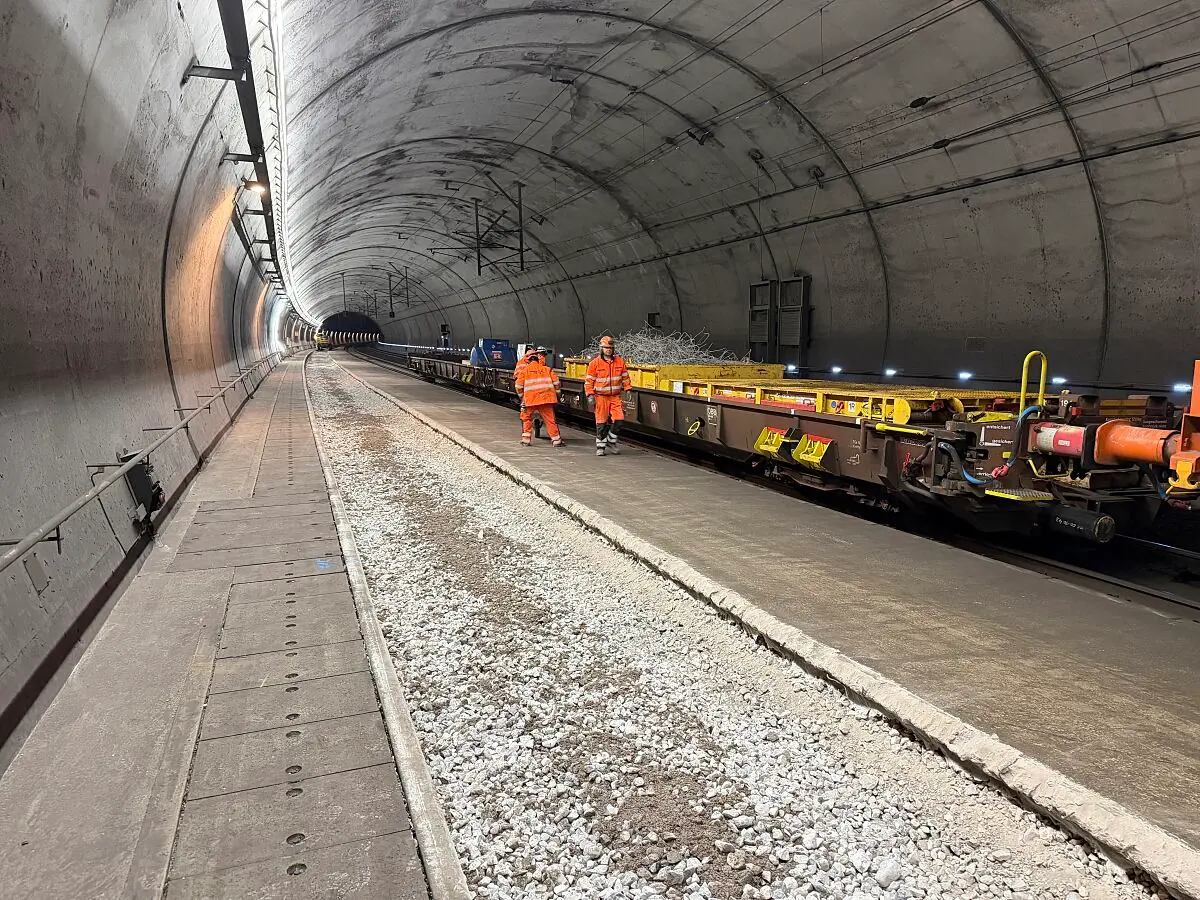
The newer Lower Inn Valley railway line entered service in 2012 and now forms the backbone of the area’s modern rail infrastructure. Freight trains use its tunnels around the clock, while long-distance passenger services can operate at speeds of up to 220 km/h.
The objective is not to raise the maximum permitted speed, but to accommodate more services at shorter intervals and reduce operational conflicts between slower freight trains and faster passenger services.
Terfener Tunnel passing station will use prepared tracks
The passing point will be commissioned in the Terfener Tunnel near Vomp. Provision for this facility was incorporated when the Lower Inn Valley line was originally built.
The relevant tunnel section already contains two additional tracks extending for about 2 km. ÖBB will install eight switches and equip the existing infrastructure with modern railway systems so it can be used in regular operations.
Under the planned arrangement, a freight service will enter one of the side tracks and wait while a faster passenger train overtakes it. Once the route is clear, the freight train will continue its journey.
The Terfener Tunnel passing station will therefore bring into service a capacity reserve prepared during the line’s construction but never previously used as an operational passing station.
ETCS modernization will shorten train intervals
Safety and traffic-control equipment in the Münsterer and Terfener tunnels will also be upgraded.
The European Train Control System is already operating on the section, providing digital supervision of train movements and supporting more efficient railway operations.
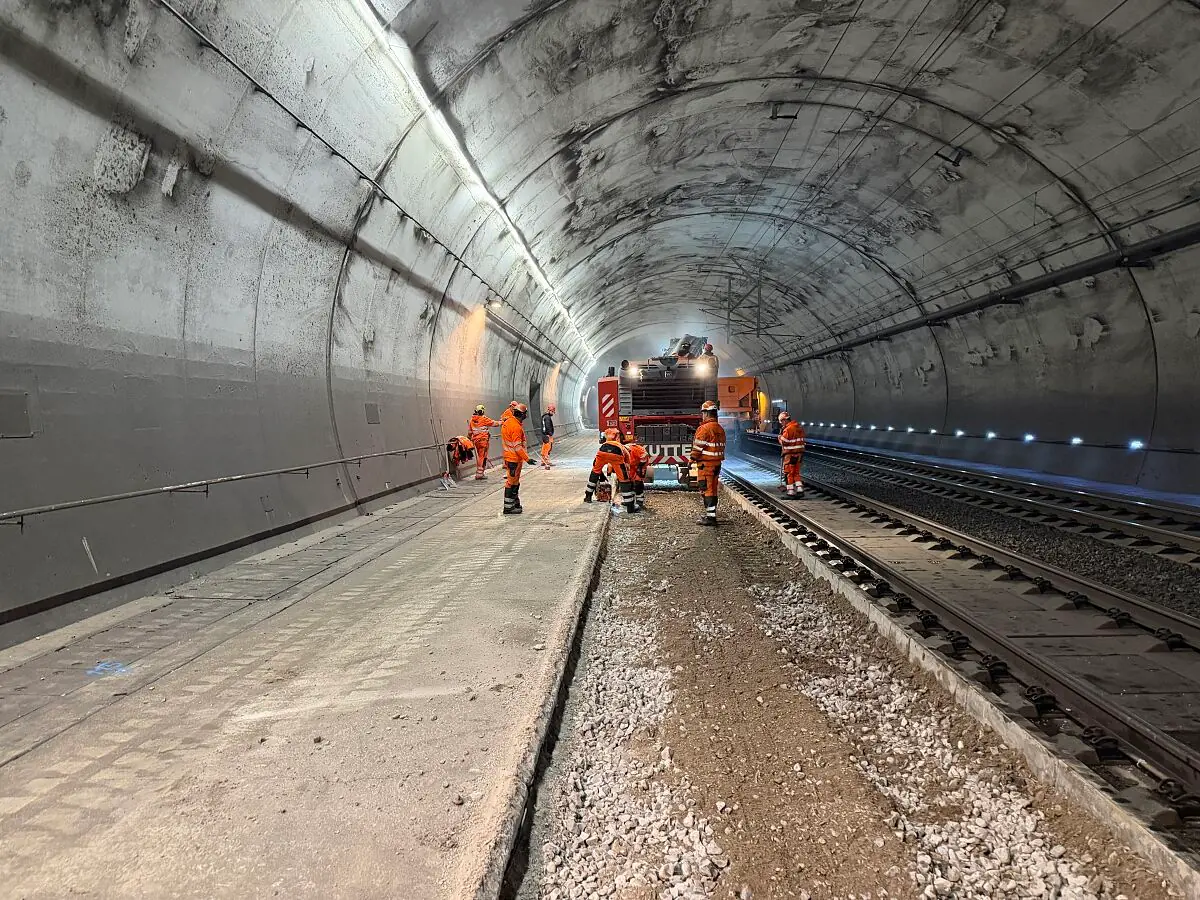
During the next stage, ÖBB will remove the supplementary light signals associated with the system and shorten the traffic blocks. This will allow successive trains to travel through the tunnels at reduced intervals, increasing capacity on the existing infrastructure.
ÖBB says the installation of advanced railway technology will make the new Lower Inn Valley line one of Europe’s most modern railway lines.
Don’t miss…Watco Dispatch Center contract ratified by employees
Modernization scheduled until September 14
The programme is scheduled to run from July 10 to September 14, 2026.
The initial phase will run until July 25 and focus on the eastern part of the route, with work taking place in the Münsterer Tunnel between Radfeld and Jenbach.
A three-day closure of the entire new line will follow. Construction will then move west to the Terfener Tunnel on July 28 and continue there until the programme is completed in mid-September.
According to ÖBB, unrestricted rail services will resume by the beginning of the school year.
Passenger and regional service changes
Both regional and long-distance passengers will face timetable changes while the work is underway.
Long-distance services will use the older surface route during the project. Trains arriving in Innsbruck from the east will be delayed by several minutes, while selected services will leave Innsbruck earlier than usual.
ÖBB says the time buffers built into the timetable mean passengers continuing towards Upper Tyrol, Vorarlberg or Switzerland should not be significantly affected.
Further changes will apply between August 22 and the end of the works in September. Interregio services will not operate between Wörgl and Innsbruck during that period, while Railjet trains will make additional stops at Jenbach as compensation.
Regional passengers will also need to allow additional travel time. Journeys on REX2 and S3 services through the Tiroler Unterland will take around two minutes longer.
From July 25, one S3 service per hour will terminate and reverse at Fritzens-Wattens. Stops east of the station will temporarily not be served by these trains. CJX journeys will be extended by approximately 12 minutes.
ÖBB advises passengers to consult the SCOTTY application or the online journey planner before travelling. Both resources provide arrival and departure information for all public transport operators.
The construction package includes eight switches installed in slab track, work on roughly 2,000 m of railway track, 25,000 m of new cabling and 800 m of overhead contact wire.
The Kundl–Baumkirchen section forms part of the northern approach to the Brenner Base Tunnel. ÖBB describes it as around 40 km of new railway, with approximately 34 km running through tunnels. At Baumkirchen, the section will connect directly with the future base tunnel. ÖBB also says the new line has relieved the existing route and enabled further development of S-Bahn services in the Lower Inn Valley.
News on railway transport, industry, and railway technologies from Railway Supply that you might have missed:



