DART services to Wicklow planned hourly from 2029
28.08.2026
DART services to Wicklow are moving into the infrastructure procurement stage, with Iarnród Éireann opening a Design & Build tender for new charging facilities at Wicklow Station.
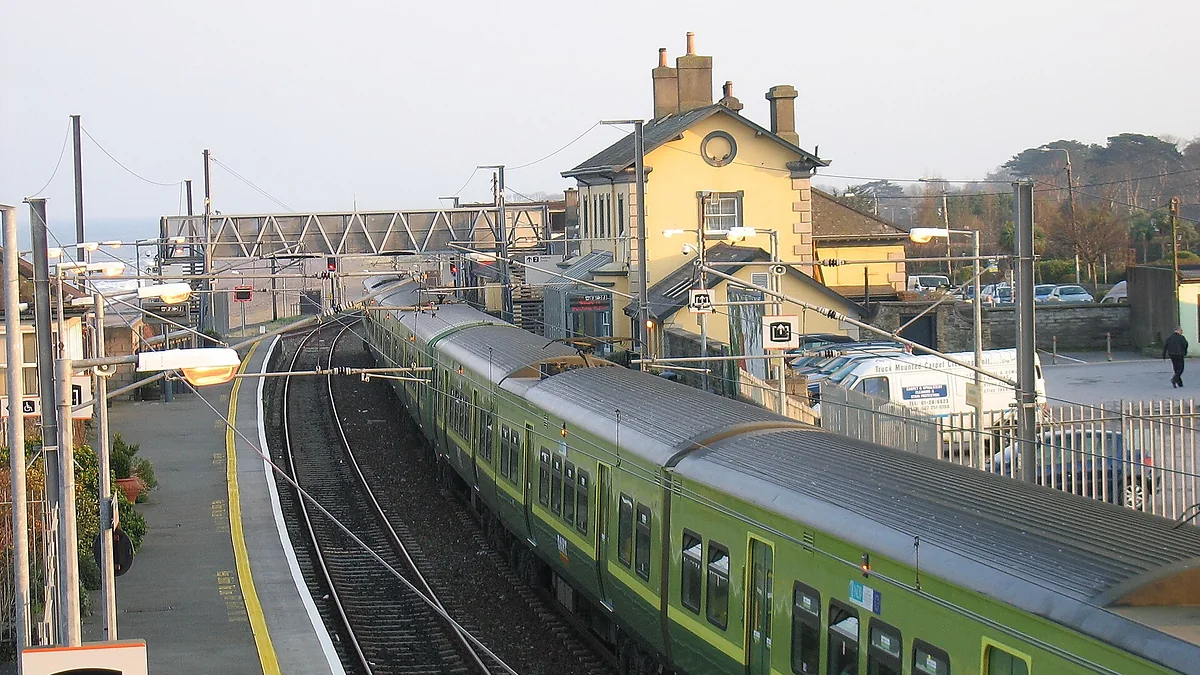
The contract covers the design and construction of facilities needed to recharge the new Battery Electric DART+ fleet at Wicklow. The work is part of the Wicklow Rail Capacity Enhancement Project, funded by the Department of Transport through the National Transport Authority.
Under the planned operating model, Wicklow would receive one DART service every hour in each direction between Dublin and Wicklow. The project also provides for new accessible DART carriages and additional service capacity through battery-operated trains.
Don’t miss…Amtrak October Service Restrictions Change Virginia Travel
How DART services to Wicklow will operate
The proposed service would take DART operations south of the existing electrified network at Greystones without requiring continuous overhead electrification between Greystones and Wicklow.
Battery Electric Multiple Units, or BEMUs, will use the existing overhead electrical equipment between Dublin and Greystones. At Greystones, the pantograph will be lowered, allowing the trains to continue to Wicklow on onboard battery power. At Wicklow Station, the batteries will be recharged before the return journey towards Dublin.
Iarnród Éireann described the operating arrangement and the infrastructure required in a statement:
“To support the operation of the battery-electric (BEMU) DARTs, infrastructure is required to charge the DART batteries on arrival at Wicklow Station.”
“The BEMUs will utilise the existing overhead line equipment from Dublin to Greystones.”
“The pantograph (connecting arm on DART) will then be lowered, and the DARTs will run on battery power between Greystones and Wicklow, where they can be fully charged before their return journey.”
“This next phase of expansion of the BEMU infrastructure to Wicklow Station follows the successful development of the charging infrastructure at Drogheda Station on the Northern Line. Infrastructure at Drogheda is currently being tested alongside the new fleet to be ready for use once the first DART+ units enter service from 2027 onwards.”
“The Design & Build contract for the charging infrastructure at Wicklow will consist of:
Installation of a new substation to provide for fast charging
Installation of overhead charge system (OHLE) on platforms 1 and 2 at Wicklow Station
Systems and engineering works to support the infrastructure”
Wicklow Station charging infrastructure
The Design & Build tender covers a new substation for fast charging, overhead charging equipment on platforms 1 and 2, and the associated engineering and systems work.
A comparable charging installation has already been developed at Drogheda Station on the Northern Line. That infrastructure is currently being tested with the new DART+ fleet ahead of the first units entering service from 2027.
The current procurement notice for the Wicklow battery-charging works puts the contract’s estimated value at €20 million excluding VAT. Procurement documents also identify one train per hour in each direction between Dublin and Wicklow as the preferred operating model.
For Wicklow passengers, that would represent a substantial increase from the present timetable. The town is currently served by around six trains in each direction per day, with services largely concentrated around peak periods. Iarnród Éireann’s assessment describes the existing timetable as providing a basic peak-hour service, with relatively few opportunities to travel during off-peak periods.
Battery-electric DART fleet and 2029 timeline
The Wicklow scheme is being developed alongside a wider expansion of the DART fleet. Across three orders, 285 new DART carriages have been ordered from Alstom, equivalent to 57 five-carriage trains.
The first order comprises 95 carriages, including 13 five-carriage battery-electric trains. These are expected to begin entering passenger service mainly on the Dublin-Drogheda route from the first half of 2027. Another 90 carriages are due to enter service from 2028, followed by 100 conventional electric carriages from the beginning of 2029.
The new fleet is also intended to improve accessibility and passenger facilities. Two five-carriage sets can be coupled to form a ten-carriage train with capacity for at least 1,100 passengers.
Context
The Wicklow extension is also part of the National Transport Authority’s Greater Dublin Area Transport Strategy 2022–2042. Under Measure RAIL3, the NTA and Iarnród Éireann plan to extend DART services to Wicklow, as well as to Sallins/Naas and Kilcock, over the lifetime of the strategy. For the South-East Line, the strategy says extending electrified rail services to Wicklow would strengthen rail provision to the county town and help alleviate some road-congestion pressure along the wider transport corridor.
For the Wicklow extension, the programme remains subject to planning and funding approvals. If those approvals are secured, construction of the charging infrastructure is expected to begin in 2027.
Iarnród Éireann stated:
“Subject to planning and funding approvals, construction is expected to commence in 2027 and BEMU services to begin operating from 2029.”
News on railway transport, industry, and railway technologies from Railway Supply that you might have missed:
Don’t miss…Ontario Line trains face uncertainty over tariff costs