
U.S. Port Import Volumes Projected to Set July Record
10.07.2026
U.S. port import volumes are projected to reach a monthly record in July before declining from August, as retailers bring goods into the country ahead of possible tariff increases.

July Import Record Forecast
The July 8 Global Port Tracker report, produced by the National Retail Federation and Hackett Associates, forecasts July volume at 2.47 million 20-foot equivalent units (TEUs). That would be 3.3% higher than in July 2025 and above the existing monthly record of 2.4 million TEUs set in May 2022.
The temporary 10% Section 122 global import surcharges, introduced in February, will expire on July 24. NRF officials said retailers have been moving products into the United States ahead of possible new tariffs related to forced labor, which the Trump administration is expected to impose as early as August.
Jonathan Gold, NRF vice president for supply chain and customs policy, said retailers were also preparing for upcoming seasonal demand.
“The busy back-to-school selling season has already started, and the winter holidays won’t be far behind, so retailers have been working to get products into the [United States] and ready to go before new tariffs can potentially drive prices higher,” said NRF Vice President for Supply Chain and Customs Policy Jonathan Gold. “Despite ongoing economic headwinds, consumers are continuing to spend, but affordability is a key factor affecting their spending habits.”
Don’t miss…New Amtrak Cascades trains prepare for 2026 service
U.S. Port Import Volumes Expected to Decline
The 16 U.S. ports monitored by Global Port Tracker processed 2.24 million TEUs in May. That was 14.9% higher than in May 2025 and 10.1% above the April total.
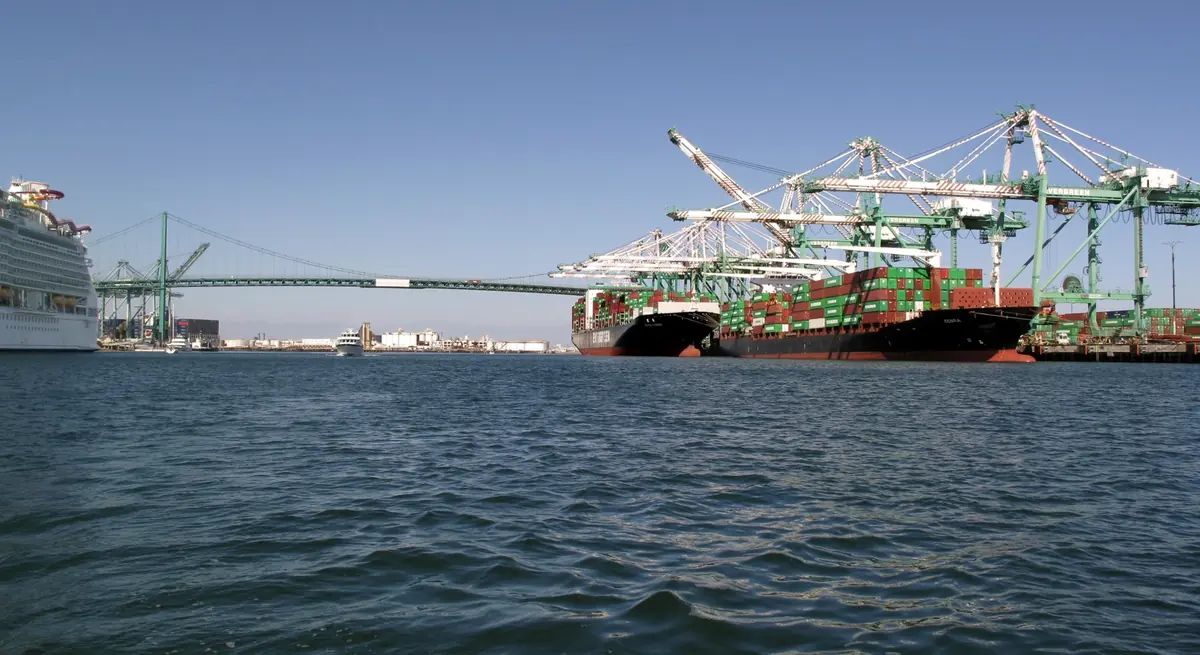
June figures have not yet been reported, but the tracker projects volume for the month at 2.33 million TEUs, up 18.7% year over year. If confirmed, the result would bring the first-half total for 2026 to 12.77 million TEUs, 2% more than in the same period of 2025.
Volumes are forecast to decline after July. Imports are projected at 2.22 million TEUs in August, down 4.5% year over year. September and October are each expected to reach 1.99 million TEUs, with respective declines of 5.7% and 3.8%. The November forecast stands at 1.92 million TEUs, 5.2% below the year-earlier level.
Global Port Tracker’s June 8 outlook had forecast July imports at 2.19 million TEUs, down 8.4% year over year, and placed first-half 2026 volume at 12.6 million TEUs. By July 8, those projections had risen to 2.47 million TEUs for July and 12.77 million TEUs for the first half. For comparison, imports totaled 25.4 million TEUs in 2025, only 0.3% below the 25.5 million TEUs recorded in 2024. The comparison is between successive forecasts, not finalized July port data.
NRF officials linked the earlier concentration of shipments to changes in the timing of the peak season.
“The May through July numbers are expected to be the highest of the year. The peak shipping season, which historically centered around October, has moved up in recent years amid reasons ranging from port labor disputes to expected tariff increases,” NRF officials said.
News on railway transport, industry, and railway technologies from Railway Supply that you might have missed: