Sydney airport metro delays pause Siemens train work
29.06.2026
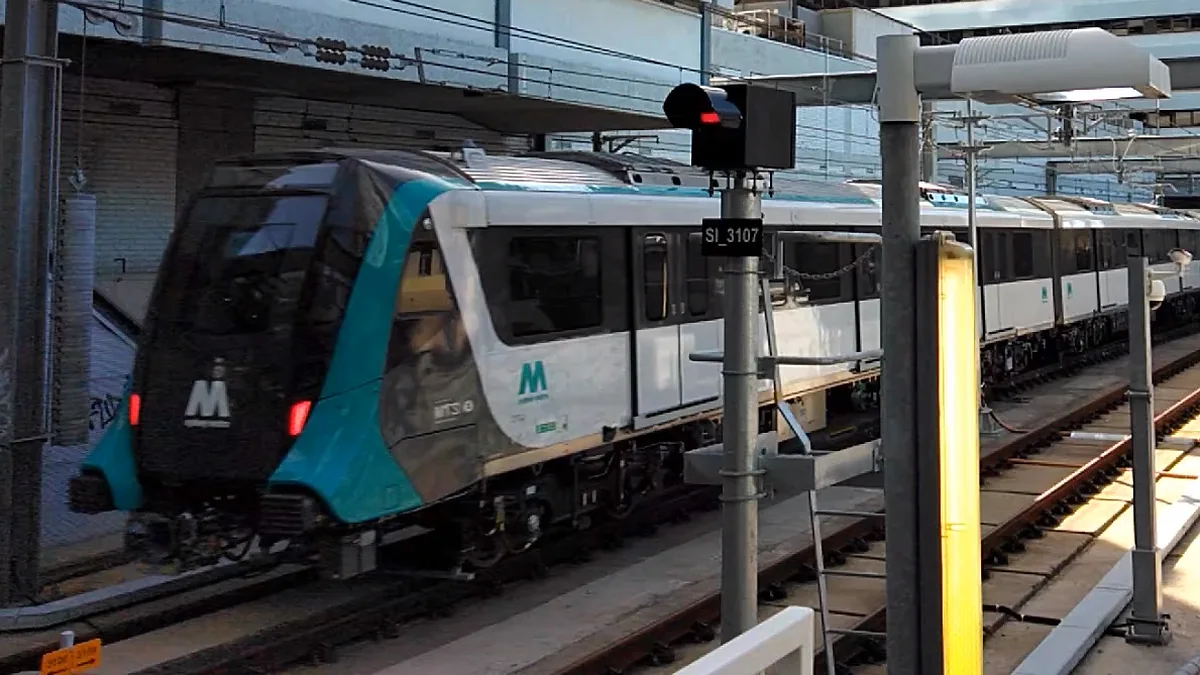
Sydney airport metro delays have led Siemens to pause production of new driverless trains in Europe after construction problems affected the delivery programme for the Western Sydney Airport line.
Internal Sydney Metro papers refer to a “pause in manufacturing” by Siemens between at least October and December. The pause was linked to delays in constructing the stabling and maintenance facility at Orchard Hills, on the route between St Marys and the new airport.
Sydney airport metro delays affect train production
The halt in Europe shows how problems on the 23-kilometre Western Sydney Airport metro line have reached beyond the Australian construction sites. The line had been planned to begin carrying passengers when passenger flights were due to start from the airport in October, but the project is now about 18 months behind schedule.
The first of the 12 Siemens driverless trains was originally expected in Sydney in November. Instead, it is due to reach Port Kembla by ship later this week. A confidential January update said the train, the third unit built, had been “delayed due to customer testing of the train in Vienna”.
The first two trains completed at Siemens’ production site in Vienna have been used for testing on tracks in Germany. Under the latest timeline, the remaining trains are expected to arrive in New South Wales gradually over the next 10 months, with the final two due in April.
Siemens trains and the Orchard Hills depot
After the first train is unloaded at Port Kembla, it will be moved to the Orchard Hills rail yards, where on-site testing is planned later this year.
The New South Wales government remains in a long-running dispute with the consortium responsible for building the line. The dispute involves claims over delays, scope creep and disruptions that could add as much as $2.2 billion to the cost of the project.
In December, the government confirmed that legal claims from the consortium led by Webuild, the Italian engineering company, could raise the final cost of the airport metro line by more than $1 billion, taking it above $12 billion.
A confidential Sydney Metro review from December listed “unresolved” tunnel and viaduct defects among the project’s “time risks”. It also warned of “across-the-board productivity loss and delayed starts”, and of stations and systems not being “completed to the required standard”, preventing handover to RATP Dev, the French company appointed to operate the line.
The same review pointed to delays in obtaining materials and equipment, citing “cash flow pressure and reduced commitment”.
Cost claims and political response
Natalie Ward, the Coalition’s transport spokeswoman, said the manufacturing pause added to evidence that the project was facing deeper problems than the government had acknowledged.
“The project was to open in four months’ time, and instead we are just receiving the first train,”
Transport Minister John Graham said he had been “very open” about the problems affecting the delivery timetable. He said the delays were linked to the former Coalition government’s failure to properly design fire emergency exits, which he said had created a public safety risk.
“We don’t apologise for putting the safety of metro passengers first in adding more emergency exits in tunnels on the advice of Fire and Rescue NSW,”
“We are protecting NSW taxpayer money as we work to resolve project issues with the lead contractor.”
Capacity and operating plan
The project’s 2020 business case estimated that about 880 passengers per hour would use the line when services begin. That would represent 11 per cent of train capacity in one direction. Patronage is forecast to increase to 3200 passengers per hour by 2036 and 6200 per hour by 2056.
Once the line opens, it is planned to run 12 trains per hour, providing combined capacity for 7800 passengers in each direction. The infrastructure will be able to support 20 trains per hour, which could carry almost 26,000 passengers if demand reaches that level.
The Siemens trains are around 30 centimetres wider than Sydney’s existing metro fleet, allowing more space for passengers travelling with luggage.
Initial operating hours on the airport line will run from 4.30am to midnight from Sunday to Thursday, and until 1am on Fridays and Saturdays. The timetable is intended to match Sydney Trains services on the heavy rail network.
The airport metro is part of a wider stations, systems, trains, operations and maintenance package, not only a vehicle delivery programme. Sydney Metro says the project includes six stations between St Marys and Bradfield City Centre, 12 metro trains, core rail systems and the Orchard Hills stabling and maintenance facility, with Parklife Metro due to operate and maintain the line for 15 years after opening. (sydneymetro.info)
Siemens’ official contract scope also covers the driverless three-car trains, a purpose-built depot, digital rail infrastructure, platform screen doors, testing and commissioning. This places the depot delay inside the same integrated delivery chain as train production, testing and final handover. (press.siemens.com)