Riga Central Station power supply enters decisive stage
Riga Central Station power supply testing is moving the new station closer to operation, as Rail Baltica’s Latvian project enters a critical systems phase in the southern section of the building.
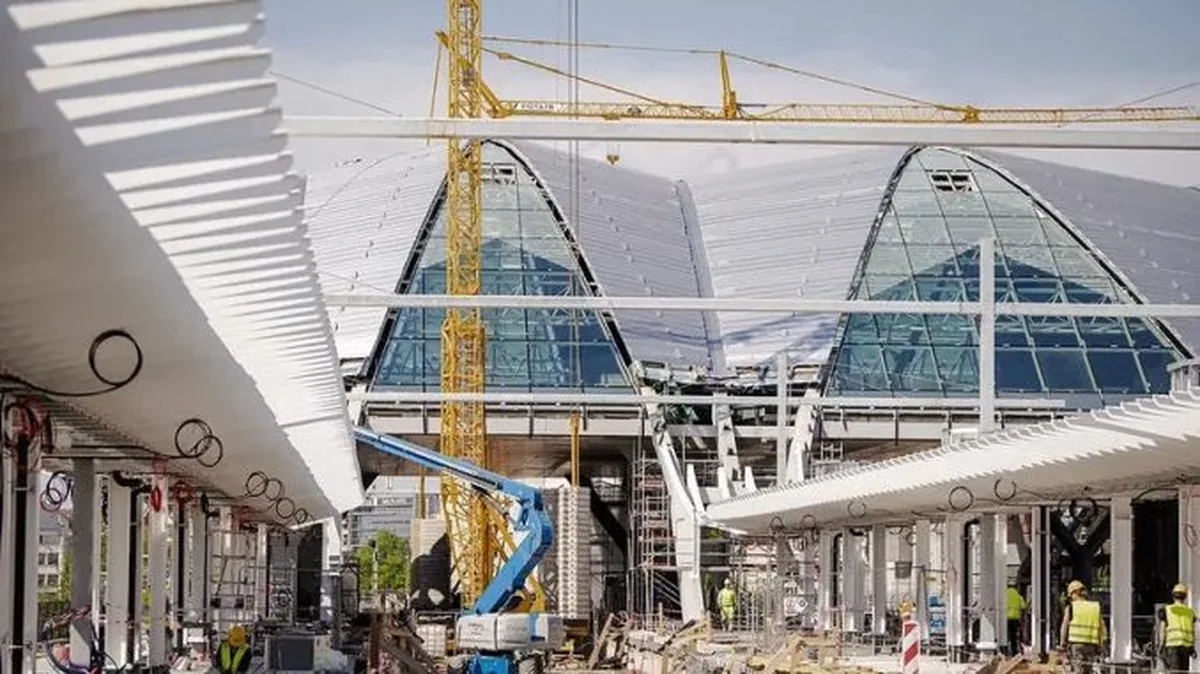
The work now moves beyond the main construction phase and into technical verification and commissioning. In practical terms, the southern part of the station is being prepared not only as a construction site, but as a working railway infrastructure facility. Permanent electrical systems, safety procedures, and internal networks are being brought into coordinated operation.
Riga Central Station power supply marks a technical turning point
At this stage, the building’s main engineering systems are being connected step by step to the permanent electricity source. That source is the 0.4/10 kV substation, which is being used for gradual activation and integrity testing. Because the systems are part of a large railway infrastructure project, the work is being carried out under controlled conditions and with enhanced safety measures.
The shift matters because it replaces the temporary electricity arrangements used during construction with permanent electrical infrastructure. That infrastructure is needed before the facilities inside the new Riga Central Station building can operate as intended. It also provides the basis for later system testing, safety checks, and preparations for temporary operations.
Jānis Naglis, a member of the Board of Directors of SIA Eiropas Dzelzceļa līnijas, the national implementer of Rail Baltica in Latvia, described the stage as a major moment for the project. “This is an important moment in the construction of the new Riga Central Station. With the implementation of the permanent power supply, the station is evolving from a construction site into an operational technical infrastructure facility, where the building’s systems can begin to function fully. This is a prerequisite for ensuring safe and efficient services for passengers in the coming years,” he said, according to the official Rail Baltica project update.
BERERIX leads work on a complex Rail Baltica stage
Construction work at the station is being carried out by the BERERIX consortium. Its CEO, Guntis Āboltiņš-Āboliņš, said the activation of permanent power supply is one of the most complex and critical stages in infrastructure projects of this scale.
“This requires precise coordination between the construction, electrical engineering, safety, and systems integration teams. The BERERIX team is carrying out this stage in accordance with international standards for railway infrastructure and the project’s safety requirements,” he said.
The Riga Central Station power supply stage is running in parallel with other works in the southern section. These include the completion of interior technical networks, platform infrastructure, facade works, finishes, and the integration of digital and security systems. Taken together, the works support the move from construction readiness toward future passenger use.
In the coming months, the project will move through functional system tests and integrated safety tests. Preparations for the start of temporary operations will also continue, while the wider package of station works remains tied to the approved project schedule.
Financing agreement sets the 2026 works deadline
Work on the southern section forms part of the financing agreement signed by Eiropas Dzelzceļa līnijas and the Central Finance and Contracting Agency (CFCA). Eiropas Dzelzceļa līnijas coordinates the implementation of Rail Baltica in Latvia, and the agreement is aimed at improving passenger infrastructure through the construction of the southern section of Riga Central Station.
The total planned value of the agreement is EUR 138.7 million. Of that amount, EUR 114.6 million comes from the Recovery Fund, while EUR 24.1 million is provided from the state budget.
Signed in November 2025, the agreement requires key works to be completed by August 31, 2026. The list includes roof installation, facade construction, platform canopy construction, finishes, passenger access infrastructure, and mechanical, electrical, and plumbing works. At that point, the certificate of substantial completion is to be issued.
Full passenger services depend on 1,520 mm infrastructure
FIDIC engineering services, construction supervision, and expert assessment are being provided by SIA FORMA 2. The agreement also provides for the involvement of the state-owned company Latvian Railways (LDz) as a project partner.
LDz is expected to become the future infrastructure manager. For that reason, it is involved in matters linked to the handover and management of the new Riga Central Station. Its participation is intended to support the technical readiness needed for future management functions.
The southern section of Riga Central Station will be able to begin full passenger services only after the 1,520 mm gauge railway infrastructure is completed. Final commissioning of the entire project depends on the completion of this infrastructure in the southern section, which is currently scheduled for mid-2028, as also stated in Rail Baltica’s earlier update on facade and roof glazing works at the new Riga Central Station.


